By Li Jingyao
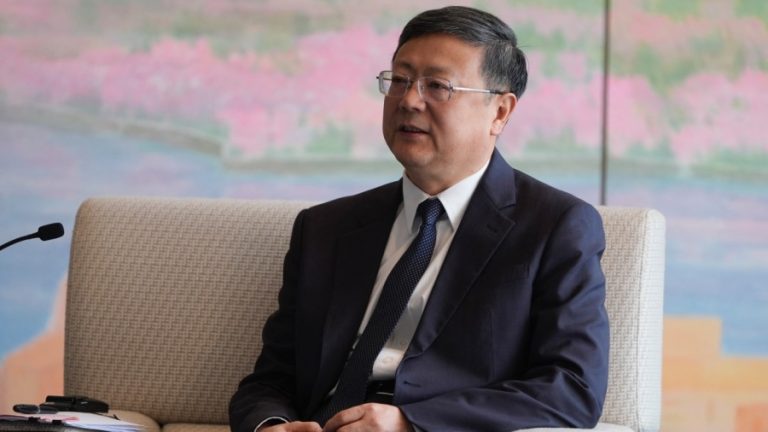
Chinese Communist Party (CCP) leader Xi Jinping is often seen reading from prepared notes during meetings with foreign dignitaries. By contrast, a recent meeting between Shanghai Party Secretary Chen Jining and South Korean President Lee Jae-myung drew attention online for a very different reason.
Footage circulating on Chinese social media shows Chen speaking fluidly during the meeting, without consulting written notes. The contrast quickly sparked discussion among netizens, some of whom questioned whether Chen’s confident performance risked drawing unwanted attention in a political system where standing out can carry consequences.
A moment that caught online attention
South Korean President Lee Jae-myung visited Shanghai on Jan. 6, where he met with Chen Jining in his capacity as the city’s top party official. In the widely shared video, Chen speaks at length with apparent ease, prompting online comparisons with Xi Jinping’s more scripted style during similar encounters.
Some commentators framed the moment starkly, suggesting that Chen appeared to outshine Xi—a comparison that, in China’s political environment, is often viewed as sensitive. Online remarks asked openly whether such a display could “invite trouble” for Chen.
Success
You are now signed up for our newsletter
Success
Check your email to complete sign up
U.S.-based political commentator Chen Pokong noted that fluent, unscripted exchanges are routine in democratic countries, but in China they can become a subject of scrutiny. In his view, the reaction says less about Chen’s conduct than about the unusually low bar set by Xi’s reliance on prepared remarks.
“This is basic competence for a public official,” Chen Pokong said, adding that the fact it drew attention at all reflected the system’s underlying constraints.
Language skills and subtle signals
Additional details in the video added fuel to the discussion. As Chen and Lee approached each other for a photo opportunity, a staff member could be heard saying, “The interpreter doesn’t need to come up.” Chen then greeted Lee in English, saying, “Good to see you.”
Observers interpreted this as further evidence of Chen’s comfort with English, reinforcing the contrast that netizens were already drawing.
During the meeting, Chen delivered a welcoming address praising Lee’s first official visit to China since taking office and his first trip to Shanghai. He spoke continuously, without referring to notes, a detail that viewers quickly seized upon.
Background and factional ties
Born in 1964, Chen Jining is a member of the CCP Politburo and currently serves as Shanghai Party Secretary as well as first secretary of the Shanghai Garrison Party Committee. He is widely regarded as part of the so-called “Tsinghua clique,” officials whose careers are closely associated with Xi Jinping’s alma mater.
Chen entered Tsinghua University in 1981 to study environmental engineering, later earning his doctorate in the United Kingdom before returning to teach at Tsinghua in the late 1990s. His academic credentials and technocratic profile have long distinguished him within the party.

Succession talk and political risk
Speculation about Xi Jinping’s eventual successor has intensified amid reports of purges targeting Xi’s allies since the Third Plenum in 2024. Several figures born in the 1960s have been mentioned as potential candidates, with Chen Jining frequently included among them.
Commentator Li Yanming has argued that Premier Li Qiang and Vice Premier Ding Xuexiang remain the most prominent contenders. Chen, however, occupies a more ambiguous position. He rose through the ranks with the backing of Chen Xi, a close Xi ally, worked alongside Li Ganjie at the Ministry of Environmental Protection, governed Beijing in partnership with Cai Qi for more than five years, and now presides over Shanghai, where both old and new local power networks intersect.
This layered factional background, Li Yanming suggested, places Chen at the center of elite maneuvering rather than safely within any single camp.
A precedent that fuels caution
Independent commentator Du Zheng has warned that being publicly labeled as a potential successor can itself be dangerous. Writing last year in Up Media, Du noted that Singaporean media attention has historically preceded political setbacks for several Chinese officials.
He cited Chen Jining’s November 2024 meeting with Singapore’s Senior Minister Lee Hsien Loong. Footage released by Lianhe Zaobao showed Lee expressing interest in building ties with China’s “next generation of leaders,” as the camera lingered on Chen. The moment triggered renewed overseas speculation about Chen’s future.
Du pointed to an earlier case involving Chen Min’er, another prominent Xi ally. In 2019, Singapore’s then–Deputy Prime Minister Heng Swee Keat publicly referred to Chen Min’er as a “next-generation leader” during a visit to Chongqing. Chen Min’er later failed to secure a seat on the Politburo Standing Committee at the 20th Party Congress and was reassigned to Tianjin, a move widely seen as a setback.
With that precedent in mind, Du argued, being singled out as a possible successor may invite suspicion rather than promotion within the CCP’s opaque power structure.
Standing out in a system that discourages it
During Xi’s first term, Hong Kong’s Oriental Daily, known for its pro-Beijing stance, once observed that “Xi prefers to use people he knows.” The remark, often read as faint praise, has since been interpreted by critics as a comment on Xi’s narrow personnel circle and deep-seated mistrust.
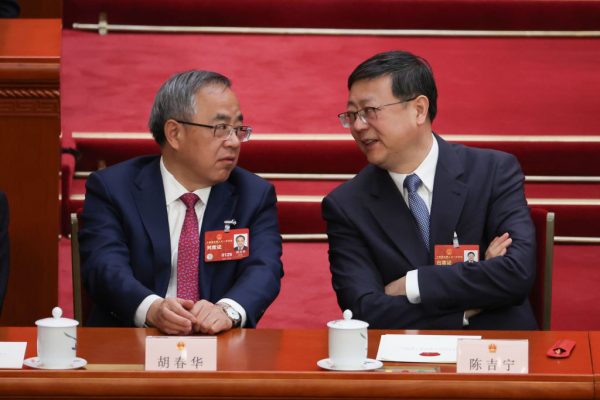
Against that backdrop, Chen Jining’s recent visibility—first through overseas succession talk, then through a widely shared meeting that drew unfavorable comparisons with Xi—has prompted some observers to wonder whether his polished performance could prove politically costly.
For many online commenters, the question is not whether Chen did anything wrong, but whether, in today’s Chinese political climate, doing too well can itself become a liability.