A Chinese man known by the nickname “Brother Wang” was identified by U.S. and Mexican law enforcement agencies as a key intermediary connecting Chinese chemical suppliers, Mexican drug cartels, and the U.S. narcotics market, the BBC reported.
After his arrest in Mexico, he escaped custody, was later recaptured, and eventually extradited to the United States. His case exposed a sprawling fentanyl precursor supply and money-laundering network linking Asia, the Americas, and Europe.
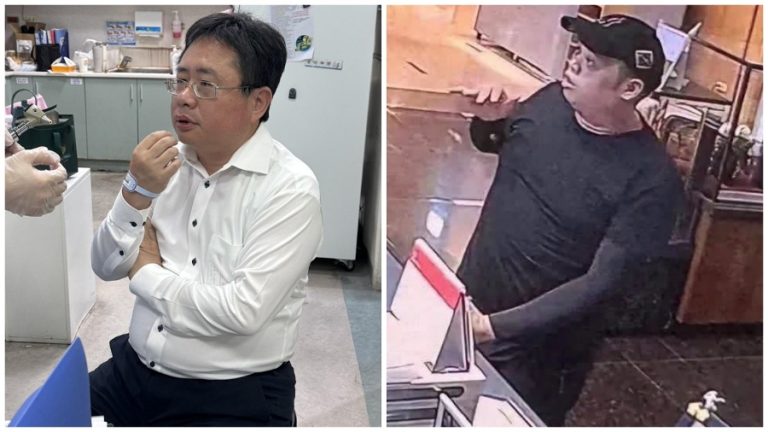
The 39-year-old Chinese citizen’s original name is Zhang Zhidong (also written as Zhi Dong Zhang) and the U.S. The Department of Justice alleges that, since at least 2016, he led a large-scale transnational drug trafficking and money-laundering organization that transported fentanyl, cocaine, and methamphetamine to the United States.
Zhang used shell companies and bank accounts to move large amounts of illicit proceeds. He has pleaded not guilty to the charges and is currently awaiting trial.
Peking University graduate gradually entered the local underworld
Zhang Zhidong graduated from Peking University in 2010 with a degree in Spanish. The following year, he traveled to Mexico, where he worked for a Chinese-owned iron ore company and was quickly promoted to a management position, according to the BBC.
Success
You are now signed up for our newsletter
Success
Check your email to complete sign up
A former classmate who studied with him at Peking University and later worked with him in Mexico, identified by the pseudonym “Alex,” described Zhang Zhidong as quick-minded, fluent in Spanish, familiar with local street slang, and skilled at interacting with people from different backgrounds, although he always retained a noticeable Beijing accent.
Operating in some mining areas and ports in Mexico, it was sometimes difficult to avoid contact with criminal organizations that controlled local transportation, land, and underground economies. Alex told the BBC that Zhang Zhidong quickly learned how to build relationships with “important figures, both official and unofficial,” in the local environment.
According to Alex’s description, Zhang Zhidong enjoyed taking risks and displayed a disregard for rules and consequences. He once crashed his employer’s car, and on another occasion drove colleagues at night to a remote road, where he fired a handgun at road signs.
In 2013, the mining company where Zhang Zhidong worked went bankrupt. While many Chinese employees chose to return to China, he remained in Mexico. Alex said that over the following year or two, Zhang began posting messages in a WeChat group for Peking University Spanish-language alumni, offering to exchange U.S. dollars at rates better than the market rate. Alex suspected that this may have been the beginning of Zhang’s involvement in underground money-transfer activities, although this claim has not been established by any court.
The BBC cited a man who identified himself as “Enrique” (a pseudonym), claiming to be a senior coordinator for the Sinaloa Cartel, who said that Zhang Zhidong later became romantically involved with a female relative of one of the cartel’s leaders and gradually gained access to the organization’s inner circle. However, this detail comes primarily from the account of an anonymous alleged cartel member and has not been independently verified through publicly available court documents.
‘Brother Wang’ allegedly became a fentanyl precursor broker between China and Mexico
Fentanyl is a powerful synthetic opioid, approximately 50 times more potent than heroin and 100 times more potent than morphine. Illegally manufactured fentanyl is often mixed with other drugs or pressed into counterfeit prescription pills, and even small amounts can cause fatal overdoses.
The BBC reported that Zhang Zhidong was known in Mexican criminal circles as the “King of Fentanyl.” Several cartel members interviewed by the BBC said that he was not merely a transporter, but was among the early figures who helped the Sinaloa Cartel establish procurement channels in China for chemical precursors used in fentanyl production.
A former cartel operative identified as “Luis” (a pseudonym) recalled that, on a hot afternoon in 2019, his superior ordered him to stand guard during a secret meeting. Zhang Zhidong arrived at the meeting to “sell products” — the so-called products being the precursor chemicals required to manufacture fentanyl.
Luis said that he was later trained as a “cook” in an underground laboratory, where he was responsible for converting chemical raw materials into finished fentanyl. He claimed that he personally witnessed at least five drug-production workers die during operations, suspecting that toxic substances had entered their bodies through gaps in protective clothing.
“Sometimes people would suddenly collapse, and we could only carry them out.”
Enrique claimed that the drug cartel would provide Zhang Zhidong with a list of required chemicals. Using his connections in China, Zhang would then locate suppliers, arrange for the raw materials to be shipped to Mexico by sea or air, and subsequently distribute them to clandestine laboratories in Sinaloa.
The U.S. Drug Enforcement Administration (DEA) has repeatedly stated in recent years that the illegal fentanyl supply chain typically begins at the stage of producing and selling chemical precursors. Some of these raw materials are sold by Chinese chemical companies and then transported to Mexico, where local criminal organizations synthesize the drugs, press them into pills, and smuggle them into the United States.
The U.S. Department of Justice (DOJ) has also prosecuted several Chinese chemical companies and their employees, alleging that they sold fentanyl precursors and other synthetic drug ingredients to customers.
Victoria Dittmar, a researcher at the crime research organization InSight Crime, pointed out that brokers like Zhang Zhidong occupy a critical intersection between chemical manufacturers and drug trafficking organizations. Individuals who possess both Chinese and Spanish language skills and can simultaneously access Chinese supply chains, Mexican criminal networks, and the U.S. financial system are relatively rare.
She told BBC that the most important value of such intermediaries is not necessarily personally manufacturing or transporting drugs, but rather helping participants from different regions, language backgrounds, and legal environments establish trust, arrange payments, and evade regulatory oversight.
READ MORE:
- Chinese Firm Used Crypto Networks to Move Funds, Chemicals Through Japan
- US Prosecutors Indict Chinese Fentanyl Precursor Manufacturers
- Trump Signs Executive Order Designating Fentanyl a Weapon of Mass Destruction
More than 100 shell companies used for money laundering
The U.S. Department of Justice stated that Zhang Zhidong allegedly built a large network consisting of coordinators, couriers, cash collectors, and bank account holders, which transported fentanyl and cocaine to multiple cities in the United States and then transferred drug proceeds overseas.
Prosecutors allege that Zhang recruited individuals to open bank accounts under other people’s names and established more than 100 shell companies. These individuals allegedly collected cash at various locations across the United States, deposited the money into company accounts, and then wired the funds to overseas beneficiary accounts in order to conceal the origins of the drug proceeds.
The Spanish newspaper El País reported that U.S. investigators also traced more than 150 shell companies and approximately 170 bank accounts linked to the network. Some charging documents allege that the organization laundered at least $20 million between 2020 and 2021 alone.
Mexican authorities have alleged that Zhang Zhidong’s network extended across the Americas, Europe, China, and Japan, and was involved in the export or distribution of more than 1,000 kilograms of cocaine, approximately 1,800 kilograms of fentanyl, and 600 kilograms of methamphetamine. They further alleged that the network handled more than $150 million in drug proceeds annually.
U.S. prosecutors have previously described Zhang Zhidong in court as “one of the world’s most dangerous drug traffickers,” accusing him of operating a global criminal enterprise responsible for supplying large quantities of cocaine, fentanyl, and methamphetamine to the United States.
However, the figures mentioned above are all allegations by law enforcement agencies and prosecutors and must still be tested through evidence presented in court. Zhang Zhidong’s lawyer declined to comment while the case is ongoing.
A 2025 international narcotics report released by the U.S. State Department stated that China’s chemical industry is enormous, with a large number of companies operating in the sector. Although Chinese regulatory authorities have taken measures such as strengthening controls, available personnel and technical resources remain insufficient to fully monitor the entire industry.
Escape from Mexico
Zhang Zhidong’s transnational operations suffered a major setback on October 31, 2024, when he was arrested in Mexico following a U.S. extradition request.
However, a Mexican judge later decided to place him under house arrest, a move that sparked controversy. In July 2025, Zhang escaped from the monitored location. According to multiple media reports, he left the residence through a hole in a wall or a tunnel, abandoned his electronic monitoring bracelet, and flew by private aircraft to Cuba before attempting to enter Russia.
Russian border officials discovered that he was using forged documents, refused him entry, and sent him back to Cuba. On July 31, 2025, Cuban authorities detained him, accusing him of allegedly using false documents in Cuba and participating in an illegal migration operation. In October of the same year, the Cuban government transferred Zhang to Mexico, which subsequently sent him to the United States.
The U.S. Department of Justice confirmed that Zhang Zhidong was transferred to U.S. custody on October 23, 2025, and made his first court appearance in Texas. He was subsequently ordered to remain detained pending trial.
News of Zhang Zhidong’s arrest caused a stir among the Peking University Spanish-language department alumni community. Alex told the BBC that alumni were all discussing the case: “It was truly shocking. He probably became one of the most famous people ever produced by Peking University.”
However, he added that this kind of “fame” was clearly meant ironically.
In Mexico’s Sinaloa state, Zhang Zhidong’s disappearance also quickly had an impact. Luis said that afterward, obtaining fentanyl precursors became “extremely difficult.” Enrique said that Zhang was the person who maintained the China connections, and after his arrest, the organization had to rebuild new procurement routes from scratch.
The U.S. Drug Enforcement Administration (DEA) also found during the same period that the purity of some illicit fentanyl samples had declined. The agency believed this was consistent with signs that Mexican drug producers were experiencing difficulties obtaining certain key precursor chemicals.
However, Dittmar warned that combating drug supply chains is always a “cat-and-mouse game.” When one chemical is placed under tighter control, drug manufacturers may seek substitutes; when a key broker is arrested, others may take over his network of connections.
Enrique revealed that the criminal organization had already identified another Chinese individual who could potentially replace Zhang Zhidong, but he declined to provide further details for security reasons.
Another coordinator responsible for moving the organization’s goods and personnel said: “Perhaps it all started with him, but he left behind many relationships that allow us to continue operating.”
“Even if he is gone, someone else will step in. The business will not stop.”