By Fu Longshan
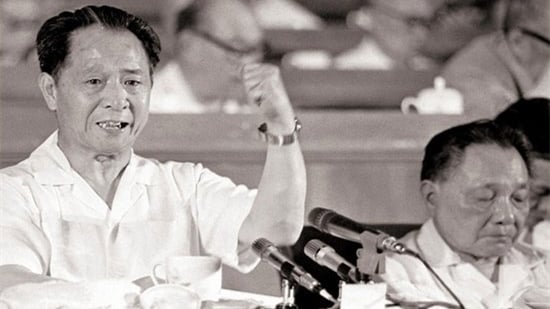
In the Chinese Communist Party (CCP) system, so-called “rehabilitation” is rarely an ending. More often, it marks the beginning of a new round of political bargaining—a redistribution of interests, a recalculation of responsibility, and a quiet struggle over historical judgment. Senior Party figures understand this instinctively. Once history is officially “corrected,” an unavoidable question follows: who answers for the blood spilled on the previous page?
Hu Yaobang never fully accepted the unspoken rule that some people must remain forever beyond accountability. This refusal—more than any lack of political skill—explains why Party insiders later branded him naive. It was not that he failed to understand the system. It was that, at several critical moments, he refused to internalize its darkest logic.
1978–1979: Rehabilitations that moved too fast
After late 1978, Hu Yaobang took the lead in a sweeping effort to overturn wrongful convictions from earlier political campaigns, including the Anti-Rightist Movement and the Cultural Revolution. The pace and scope of these rehabilitations unsettled many senior leaders. Veteran cadres, intellectuals, and victims of past Party line struggles were all affected.
Those who later spoke about the process recalled that Hu approached each case file with a simple conviction: people should not be made to suffer again. He had little patience for procedural hedging or for leaving political labels deliberately unresolved. Where others preferred ambiguity, Hu sought closure.
Success
You are now signed up for our newsletter
Success
Check your email to complete sign up
As justice seemed within reach for many, a phrase began circulating quietly inside the Party: “Yaobang’s heart is too soft. Once a file reaches his desk, history gets turned.”
It was not praise. It was a warning.
Hu was seen as holding something dangerous—the power to define history. For senior leaders, this was unacceptable. They feared anyone who might render judgment on the past rather than merely manage it. Such a person, they believed, could never be fully controlled.
From their perspective, Hu’s problem was not insufficient loyalty but excessive empathy. He responded emotionally to wrongful cases and disliked evasive language. He had a habit of speaking plainly, choosing ordinary human words over approved organizational phrasing. In a normal political system, this might have been a strength. Inside the CCP, it marked him as unpredictable.
Those Deng Xiaoping trusted most—particularly figures aligned with Chen Yun, the Party’s chief advocate of ideological and political discipline—shared a different trait. One could never be sure what they truly thought, but one could be sure they would never speak out of line. Hu Yaobang was the opposite.
Equally important was Hu’s personal trajectory. He had not followed the CCP’s preferred path of repeated political suppression followed by gradual rehabilitation. During the Cultural Revolution, he was a victim rather than a perpetrator. Afterward, he rose quickly as part of the effort to correct past injustices.
What he lacked, from the Party’s perspective, was a full cycle of being broken, silenced, and reconditioned. To senior leaders, this was dangerous. Someone who had never been fully crushed still retained the capacity to act according to conscience.
1980–1982: Power without patience
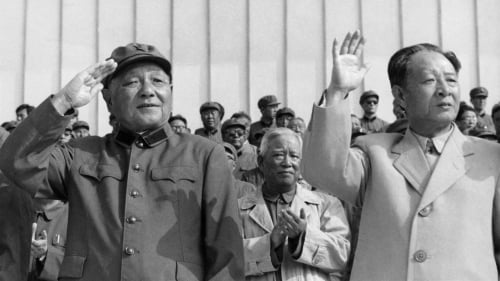
Hu Yaobang was neither a technocratic economic manager nor a conventional administrator. For years, he controlled levers that mattered far more than policy debates: the Organization Department, the Central Party School, propaganda work, rehabilitations, and cadre evaluation. These were the mechanisms that shaped the future of the system itself.
After becoming General Secretary in 1982—a position roughly equivalent to today’s top Party post—Hu exercised real influence over organization, personnel, and ideological training. Institutionally, this was legitimate. Politically, it alarmed the elite.
Some veteran cadres complained privately that Hu favored integrity over caution and paid insufficient attention to factional balance. A story circulated widely in Beijing. During a personnel discussion, someone urged Hu to slow down. His response was blunt:
“If we wait any longer, the wrongful cases will die of old age.”
The remark spread quickly, reinforcing the perception that Hu placed moral urgency above political calculus.
When the “Anti–Spiritual Pollution” campaign began in 1983—a movement aimed at curbing Western ideas and liberal thought—Hu implemented it cautiously, avoiding a broad crackdown. Reactions inside the Party diverged. Some said he was protecting intellectuals. Others accused him of being weak.
A line circulated internally: “He is not against it—he just opposes it in a way that does not look like opposition.”
For the leadership, this translated into doubt about whether Hu would apply the brakes when ordered.
In May 1985, Baixing magazine published an interview with Hu conducted by journalist Lu Kan. Hu spoke with unusual candor. The response inside the system was swift. As one insider put it:
“Yaobang took what could be said inside the room and said it out the window.”
What Hu Yaobang later regretted
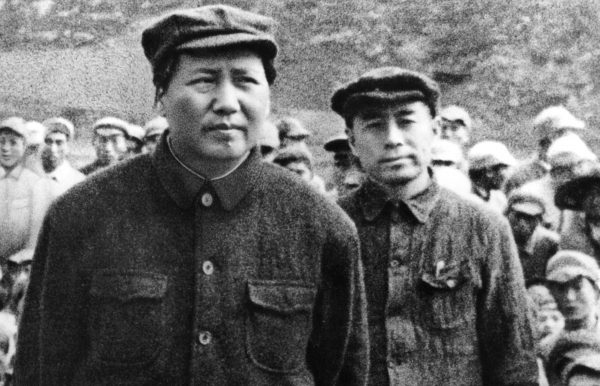
Between July 13 and August 24, 1988, Yang Shangkun—then Vice Chairman of the Central Military Commission and a longtime Party insider—visited Hu Yaobang’s home six times. Each meeting reportedly lasted around five hours.
The following passages are attributed to Yang Shangkun’s Diary and describe Hu’s account of key historical events.
On July 14, 1988, Hu is said to have told Yang that he never expected Deng Xiaoping to be so domineering or so intolerant of dissent, preferring instead to rule from behind the scenes. Hu expressed regret over having used questionable methods to bring down Hua Guofeng—the Mao-appointed successor—in order to support Deng’s return to power.
According to this account, Hu said the Xidan Democracy Wall movement of 1978–79 was encouraged by Deng to discredit Hua. Once Deng succeeded, however, the Democracy Wall was shut down and its most famous participant, Wei Jingsheng, was imprisoned.
On July 19, Hu reportedly said that the April Fifth Incident of 1976—when mass mourning for Premier Zhou Enlai in Tiananmen Square turned into political protest—had also been encouraged by Deng.
Earlier that year, Hu had discussed the background of the event in private meetings with the writer Shi Dongbing, held secretly at home. Hu recalled that after delivering Zhou Enlai’s eulogy in January 1976, Deng warned him that they could not remain passive and needed to act. Deng later suggested using the Qingming festival as an opportunity to escalate public mourning in Tiananmen Square.
According to Hu’s account, Deng asked him to involve the children of cadres to stir agitation among workers and direct criticism toward Jiang Qing and Zhang Chunqiao, leading figures of the Cultural Revolution. Some participants, however, turned their anger toward Mao Zedong himself—an outcome Deng had not anticipated.
When violence broke out and PLA soldiers were injured, Deng concluded that the incident had triggered his own political downfall. This, Hu said, was why the April Fifth movement was never fully rehabilitated.
Hu also claimed that on April 5, 1976, Deng personally visited Tiananmen Square to observe events, later praising the scale of the gathering while publicly claiming he had merely gone out for a haircut.
On Aug. 5, 1988, Hu reportedly warned Yang directly. Deng Xiaoping, he said, was the kind of person who dismantled the bridge after crossing the river.
“You should be careful,” Hu advised.
Hu then described what he considered his most shameful episode. In April 1980, under the pretext of purging “three kinds of people” (a term used to justify political cleanups), 24 public security cadres from Beijing were allegedly lured to Dali, Yunnan, and executed in secret.
According to this account, they possessed evidence linking Hu and Deng to behind-the-scenes orchestration of the 1976 events. Hu further claimed that some individuals also held evidence implicating Deng Rong and other politically connected activists in the 1966 killing of Bian Zhongyun, a school vice principal, and in mass killings in Beijing’s Daxing County during the early Cultural Revolution.
Although scapegoats had previously been convicted for these crimes, Hu said their later recantations were suppressed once Deng regained senior power.
When Hu later rehabilitated those scapegoats at Deng’s instruction, several Beijing public security officials allegedly leaked information to victims’ families, prompting protests. Hu said Deng reacted with fury and ordered those officials executed as well.
Hu claimed he objected, arguing that even the Gang of Four had not acted this way. Nevertheless, the officials were reportedly killed and later posthumously classified as having died in the line of duty.
On Aug. 6, Hu reportedly spoke of another regret. He admitted that whenever citizens wrote letters criticizing Deng, he forwarded them to security authorities and demanded harsh punishment. According to the account, more than 300 people were sentenced as a result, and over 60 later took their own lives.
Editor’s Note:
This article is a historical and political commentary compiled from publicly circulated accounts and excerpts attributed to Yang Shangkun’s Diary. Allegations involving internal CCP decision-making and extrajudicial actions cannot be independently verified. They are presented here as claims attributed to the cited sources and individuals.