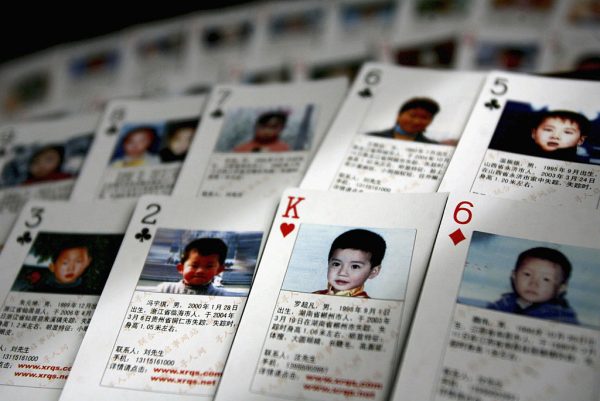
Since the start of 2026, mainland China has seen a surge in reports of missing people, including both children and young adults, which is drawing widespread public attention. In recent weeks, large numbers of missing-person cases have circulated across Chinese social media platforms, spanning provinces such as Henan, Hebei, Guizhou, Anhui, and Hunan. The scale and frequency of these reports have alarmed the public, triggering fear and anxiety. Many citizens have taken to social media to warn one another to protect their children—and themselves.
A former mainland Chinese journalist has issued a stark warning: the rapidly expanding industry of live organ harvesting, he argues, may become the final force that brings down the Chinese Communist Party (CCP), China’s ruling political authority.
Blogger’s compilation: 38 missing persons in just half a month
On Jan. 15, a Douyin blogger known as “Big Fat Fish” published a video compiling publicly available missing-person data from Jan. 1 to Jan. 15, 2026. Douyin is the Chinese domestic version of TikTok and one of the country’s most widely used platforms. The data were drawn from publicly posted missing-person notices, rescue-station announcements, civilian volunteer alerts, and official reports.
According to the compilation, 38 individuals were confirmed missing within the first fifteen days of the year. The cases span a wide range of ages—teenagers, young adults, middle-aged individuals, and the elderly. The youngest was just 11 years old; several were over 60, many reported through rescue stations. The blogger emphasized that this was only a limited compilation based on publicly accessible information—and may represent only the tip of the iceberg.

A flood of additional cases—shocking in scale
A search on Douyin reveals many missing-person reports not included in the above list. The volume is deeply unsettling.
- Jan. 3: A 13-year-old boy went missing in Weng’an County, Guizhou, while walking home from evening self-study.
- Jan. 4: Wen Xuebin, a 14-year-old student at No. 14 Middle School in Kaili City, Guizhou, went missing.
- Jan.4: A 16-year-old girl disappeared in Tongshan County, Hubei.
- Jan. 5: Wang Yingjie, a 10-year-old boy, went missing in Yuexi County, Anhui.
- Jan. 5: Huang Yang, a boy from Hengzhou City, Nanning, Guangxi, went missing.
- Jan.5: Zhao Xinran, a 14-year-old girl, disappeared in Dacheng County, Hebei.
- Jan. 6: Wang Xinyue, a 15-year-old girl, went missing in Jianchang County, Liaoning.
- Jan. 10: Li Bolin, a 16-year-old boy, disappeared in Changshou District, Chongqing.
- Jan. 11: Zang Qinghui, a 24-year-old man originally from Bijie, Guizhou, went missing while in Zhejiang Province.
- Jan. 16: Cai Yingxuan, a 15-year-old ninth-grade student at Zhenlin School in You County, Hunan, went missing.
Success
You are now signed up for our newsletter
Success
Check your email to complete sign up
‘More and more people Are disappearing:’ public fear spreads
As reports multiply, panic has spread across social media. Numerous Douyin users have posted urgent warnings:
“Missing cases are happening more and more often. Criminals are becoming bolder. With the Lunar New Year approaching, everyone must protect their children and themselves.”
“Why are so many people disappearing? What is happening to this society?”
“Vigilance is our only protection.”
“This is terrifying.”
“The number of missing persons is growing.”

Insider allegation: organ harvesting is state-directed—and searches are blocked
On Jan. 8, a deeply disturbing case emerged from Xincai County, Henan Province. A 13-year-old student surnamed Zhu, enrolled at Jinshi Qinghuayuan Senior High School, reportedly died suddenly on campus. Before the family arrived, school authorities allegedly transferred the body without consent. The child’s uncle intercepted the vehicle transporting the remains.
When the family finally saw the body, they reported blood at the corners of the child’s mouth and a large puncture-like hole in the chest. The cause of death appeared suspicious, prompting widespread online speculation that the body was being prepared for organ harvesting.
As discussion of the case spread, netizens noticed that multiple children had recently gone missing in Henan. Some speculated that Zhu’s death was part of a “backup plan” tied to organ procurement. Others linked the case to the recent launch of a nationally prioritized cell and gene therapy industrial park under construction in Zhengzhou, Henan’s capital. Still others declared grimly, “Henan has become Cambodia,” invoking comparisons to known hubs of human trafficking in Southeast Asia.
Some mainland bloggers warned that closed, factory-style facilities were already appearing in various regions—and that such industrial parks could soon spread nationwide.

Troubling statistics—and unanswered questions
According to People’s Livelihood Observation, citing the China Missing Persons White Paper (2020), China recorded one million missing-person incidents in 2020 alone. Online reports claim that by 2024, the number of missing persons had reached 3.09 million.
As early as 2013, China National Radio reported that approximately 200,000 children go missing each year, with a recovery rate of just 0.1 percent. Observers note a troubling contradiction: China has installed an estimated 700 million surveillance cameras nationwide—yet countless missing persons are never found.
Former police insider: ‘they’re not missing—they’re not being searched for’
Eric MY, an anti-CCP activist from Jiangsu Province, previously worked at a local Public Security Bureau’s law-enforcement and case-handling center. In a July 2025 interview with The Epoch Times, he made a blunt claim: the government is not failing to find missing children—it is choosing not to look.
“Why can’t they be found?” he said. “Because their organs have been removed. This is real.”
According to Eric, organ harvesting is directed at the government level, and investigations are blocked from above. Older individuals—such as those with mental illness who wander off—may be searched for. But children and young adults, he claimed, are categorically excluded because their organs are the healthiest and most valuable.
Commentary: live organ harvesting as the CCP’s moral breaking point
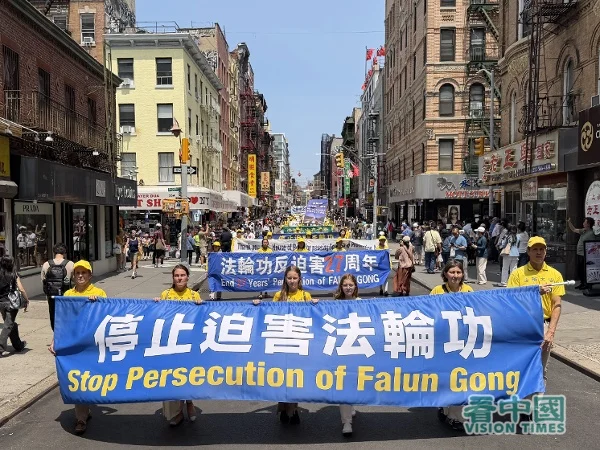
Wang Zhiyuan, head of the World Organization to Investigate the Persecution of Falun Gong (WOIPFG), recently told Vision China that incidents like those in Henan may be connected to the CCP’s long-standing involvement in live organ harvesting. Falun Gong is a spiritual practice banned in China since 1999, and its practitioners have long alleged systematic persecution by the state.
Wang warned that live organ harvesting, once targeting Falun Gong practitioners, has now expanded to society at large. He urged the public to remain vigilant and to act collectively to stop what he described as a crime against humanity.
Founded in 2003, WOIPFG investigates alleged abuses by the CCP, including organ harvesting. The organization has released reports featuring phone recordings, witness testimony, and other evidence it claims demonstrate that organ harvesting operates as state policy. United Nations human-rights reports and international tribunals have cited related materials.
‘The final straw’
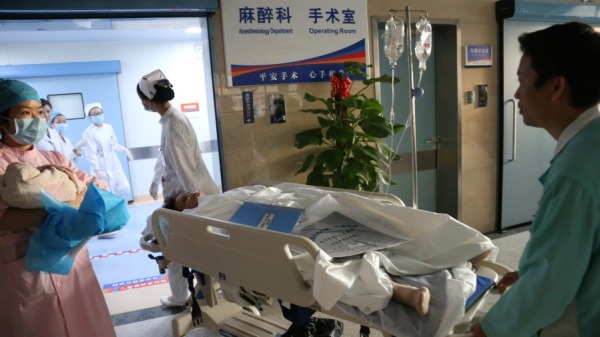
On Jan. 14, former mainland journalist Zeng Jieming wrote on X (under the account “Xiufeng Zhenren”) that the CCP—already facing ideological and economic collapse—is approaching its end. He argued that the cancer-like expansion of the live organ-harvesting industry, spreading throughout society, will become the final force to topple the regime.
Zeng wrote that organ harvesting represents a moral red line the public cannot tolerate. It pierces the most basic human instinct: parents’ determination to protect their children. When political neutrality or even loyalty to the CCP offers no protection—when a successful organ match can mean immediate death for you or your child—he argued, most people will have nothing left to lose.