By Li Muzi
Reports of missing people and young adults across mainland China have intensified public concern in recent months. A growing number of cases involving teenagers and people in their 20s and 30s have circulated widely online, prompting anxiety and, in some instances, speculation that the disappearances may be connected to organ harvesting.
Large numbers of missing people reports circulate online
Taiwan’s Liberty Times reported on Dec. 21 that a user account on the Chinese video platform Bilibili has uploaded nearly 300 missing-person videos since August. The cases span multiple regions across China and show a notable concentration of teenagers and young adults, a pattern that has heightened public alarm.
According to the report, the missing individuals come from at least 22 provinces and regions, including Guizhou, Shaanxi, Hubei, Yunnan, Henan, Hebei, Shandong, Shanxi, Jiangxi, Jilin, Anhui, Chongqing, Sichuan, Inner Mongolia, Gansu, Qinghai, Fujian, Jiangsu, Zhejiang, Hunan, Guangxi, and Hainan.
Most of those reported missing are in their teens through early 30s. Only a small number involve young children or elderly individuals. In some confirmed cases, individuals were lured to Southeast Asia and trafficked into scam operations. Many others, however, appear to have disappeared suddenly during routine activities such as commuting to work or school or traveling alone, without prior family conflict or warning signs.
Success
You are now signed up for our newsletter
Success
Check your email to complete sign up
Online commentary accompanying the videos reflects growing fear. Some commenters have speculated that the missing individuals were taken after being identified as suitable organ donors, a claim expressed through euphemistic language common on Chinese social media.

Online commentators warn that adults are also disappearing
Videos posted by Chinese netizens suggest that fear is no longer limited to the safety of children. One man said he and his wife no longer feel safe going out at night, citing the volume of missing-person videos appearing on his phone. He noted that recent cases increasingly involve adults.
Several bloggers have issued public warnings. On Dec. 11, a Douyin blogger based in Shandong known as “Zibo Taste Tour” said the number of missing people had risen sharply. He urged families not to allow children to go out alone, day or night, and claimed that people of all ages had gone missing in recent months. He described October as particularly alarming and mentioned the appearance of unfamiliar or unlicensed trucks on rural roads, advising residents to limit unnecessary travel.
On Dec. 12, another blogger, “Laixi Xiao Instructor,” said he had encountered numerous reports of missing adults. Some cases, he claimed, were never resolved, while others ended with bodies being discovered weeks later in rivers or ditches. He alleged that surveillance footage was often unavailable due to blind spots or malfunctioning cameras. “In the past, it was mainly children,” he said. “Now adults are also at risk.”
On Dec. 20, a Douyin blogger known as “Feng Ge Chat” warned viewers to exercise extreme caution when leaving their homes. He claimed that the disappearances reflected an organized operation and asserted that teenagers had become a primary target.
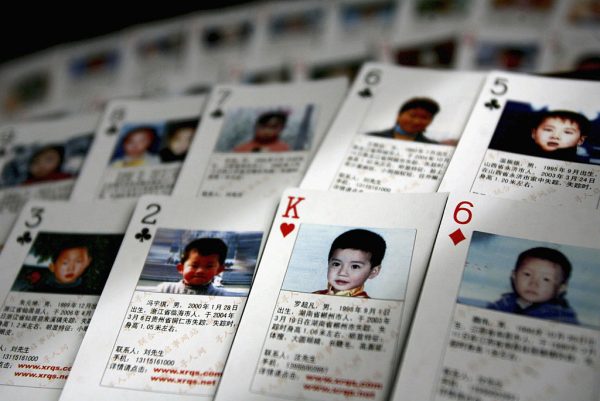
Recent individual cases heighten public alarm
Newly posted missing-person notices on Douyin in late December further intensified public concern. Among the reported cases:
- A 15-year-old girl, Liu Yiting, went missing near Rainbow Bridge in Luohe, Henan, around 6 p.m. on Dec. 21.
- A 14-year-old middle school student, Cao Duoyang, disappeared near his school gate in Ankang on Dec. 19.
- On Dec. 17, a 12-year-old girl went missing while on her way to school in Yunchen County, Shaanxi.
Such reports circulated widely and were frequently shared alongside warnings urging vigilance.
Claims that investigations are being obstructed
Some bloggers have claimed that the number of missing persons is far higher than officially acknowledged. One mainland blogger reported that 107 people went missing within a 22-day period in October. Another claimed that between Nov. 11 and Nov. 19, 79 people disappeared, including children as young as two. In two cases, mothers and daughters from Anhui and Hebei reportedly vanished together.
Eric MY, an anti-communist activist from Jiangsu who previously worked at a public security bureau’s law enforcement case-handling center, told The Epoch Times in July that authorities are capable of locating missing individuals but choose not to do so.
Under normal procedures, he said, police could request approval to use big-data tracking systems. “With China’s extensive surveillance network, there is virtually no one who cannot be found,” Eric said. “With a photo or a name, a person can be located nationwide within seconds.”
He claimed that requests to access surveillance systems in missing-person cases involving children and young adults were denied by higher authorities. According to Eric, investigations were blocked by legal affairs offices, and officers who pursued such cases risked being held accountable.
Eric alleged that organ harvesting is sanctioned at higher levels, which, he claimed, explains why certain cases are not pursued. He added that authorities may still search for older individuals or those with mental health issues, but that cases involving children and young adults are treated differently due to the perceived value of their organs. These claims have not been independently verified.