By Li Jingyao, Vision Times
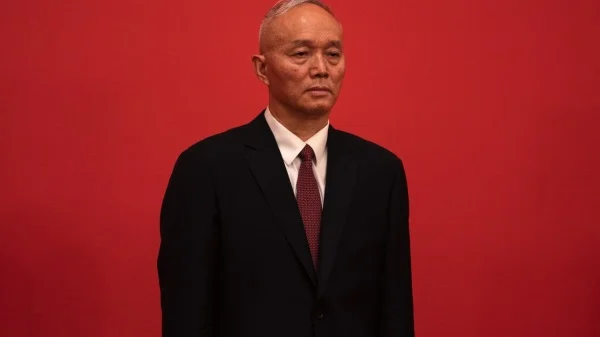
Following a major industrial explosion in Inner Mongolia, a subtle but telling change in official language has fueled speculation about renewed power struggles within the Chinese Communist Party (CCP). Analysts and commentators are now questioning whether current leader Xi Jinping is feigning illness, and whether Cai Qi is acting alongside him to launch a political counteroffensive against rival factions.
RELATED: Nearly One Million Chinese Officials Punished in 2025 as Xi Repeats ‘Anti-Corruption’ Line
Cai to the fore
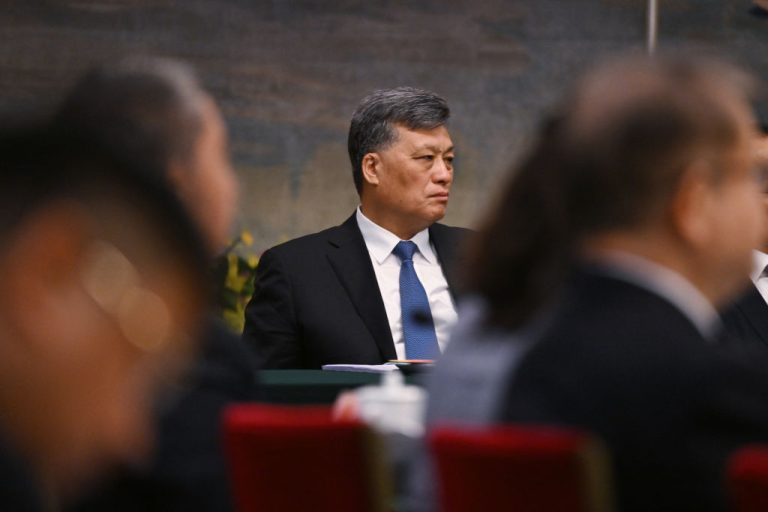
On Jan. 18, a steam tank explosion occurred at the Baotou Steel Plate Plant in Inner Mongolia. When the region’s Party Secretary Wang Weizhong visited the site to “direct rescue and response efforts,” he publicly emphasized the need to “swiftly implement Comrade Cai Qi’s instructions,” including search-and-rescue operations, support for victims’ families, and tightened on-site safety controls.
State media outlet Xinhua later reposted a Jan. 19 report from “Inner Mongolia Daily” containing that language. However, a subsequent version published by Inner Mongolia News quietly replaced “Cai Qi” with the vague phrase “central leadership comrades,” stating instead that Wang had called for “swift implementation of the instructions of central leadership comrades.” The edit did not go unnoticed.
Why Cai Qi — and where is Xi?
Success
You are now signed up for our newsletter
Success
Check your email to complete sign up
Independent commentator Cai Shenkun wrote on X that Wang Weizhong’s remarks would have given Cai Qi “a cold sweat,” as official media had abruptly elevated Cai to an unusually prominent role. “In similar incidents, it is almost always Xi Jinping whose name appears,” Cai noted. “Even Premier Li Qiang’s name is rarely seen. If a provincial party secretary is rushing to implement Cai Qi’s instructions, then where is Xi Jinping? Is the explosion not serious enough to warrant Xi’s directive, or has Cai Qi taken over part of Xi’s authority?”
Commentator Li Linyi told overseas media that Cai Qi, ranked fifth in the Party hierarchy and responsible for ideology, propaganda, and cybersecurity, does not normally handle production safety or accident response — areas under the State Council’s purview. “At most, Cai Qi’s involvement would concern public opinion control,” Li said. “In past major incidents, Xi Jinping would issue the first directive, stressing stability and propaganda discipline, sometimes followed by Premier Li Qiang.”
“Now neither Xi nor Li appears, and Cai Qi steps forward. Has Cai replaced Xi, or seized authority from Li Qiang? It inevitably raises questions about changes within Zhongnanhai’s power structure.”
Massive backlash
Screenshots of the reports circulated widely on X, triggering sharp reactions: “Cai has Sima Zhao’s ambitions,” one user wrote, invoking a historical metaphor for naked power grabs. Others commented, “Impatient to seize power,” “Xi down, Cai up,” and “Cai Qi feels like a modern Wei Zhongxian.”
In a December 29 article for Up Media, independent analyst Du Zheng argued that while the so-called Fujian military faction, represented by He Weidong and Miao Hua, has been overwhelmed by the Shaanxi faction led by Zhang Youxia, the Fujian network within the Party-state system, with Cai Qi at its center, still grips the levers of governance and shows signs of “coveting the highest seat of power.”
Du Zheng added that worsening economic conditions and deepening regime instability mean “Zhongnanhai already has all the prerequisites for dramatic change.” He described the current moment as a critical phase in which competing forces are openly and covertly maneuvering for dominance in what he termed the emerging “post-Xi era.”
Feigning illness?
U.S.-based political commentator Chen Pokong offered several interpretations on his media program. One possibility, he said, is that Xi Jinping has suffered a serious political setback. “Normally, changes to Xi’s position or authority would be gradual,” Chen noted, “but a sudden rupture cannot be ruled out.”
Another scenario is that Xi has abruptly fallen ill, leaving no one daring to issue directives on his behalf out of fear that he might be incapacitated or unconscious.
Chen did not exclude a third, more dramatic possibility: that Xi is pretending to be gravely ill to engineer a counterstrike against rivals such as Zhang Youxia and senior Party elders. This theory gained traction after online rumors emerged on January 20 claiming that Zhang Youxia and Liu Zhenli had been detained shortly after the Inner Mongolia explosion.
According to Chen, “It’s possible Cai Qi cooperated with Xi in staging a performance — Xi feigns illness and cannot issue instructions, so Cai steps in. Once their power grab succeeded, Cai Qi’s name was changed back to the generic ‘central leadership comrades.’”
Chen further speculated: “If Xi were pretending to be critically ill and on his deathbed, Politburo members and Central Military Commission leaders would certainly go to the hospital to visit him. If Zhang Youxia, Liu Zhenli, or Shi Taifeng were caught off guard, they could be arrested during such a visit.”
Editorial note: This article is based on publicly circulating reports and commentary from independent analysts. The claims described have not been independently verified by Vision Times, and relevant authorities have not publicly confirmed the allegations.