By Almarvin
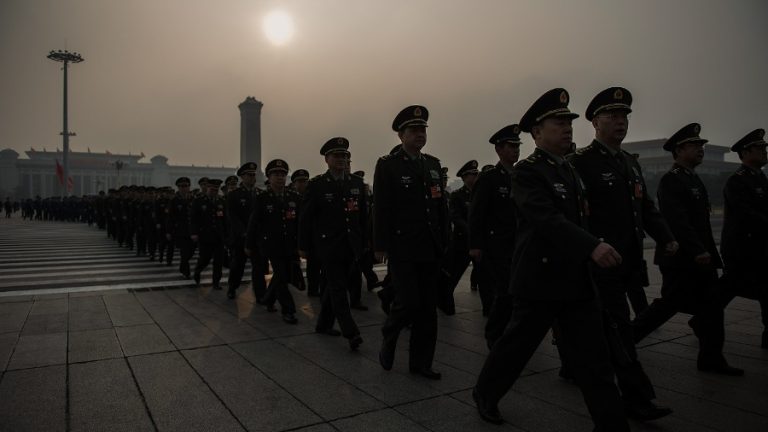
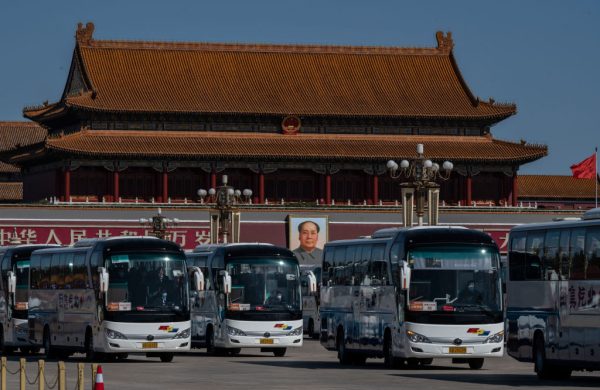
On the afternoon of Jan. 23, 2001, a fire broke out in Tiananmen Square. Within two hours, Xinhua News Agency issued an English bulletin stating that five people had set themselves on fire: one man and four women, including a young girl named Liu Siying.
In contrast, a CNN producer who was standing nearby reported seeing five individuals, two of whom were men, and no child. This discrepancy suggests that Xinhua altered the original account, replacing an adult male with a young girl.
A week later, state-run media revised the story again, claiming seven victims and adding the names Liu Yunfang (male) and Liu Baorong (female). The following analysis examines possible reasons for these changes.
Comparative Summary of Reports
| Detail | Xinhua (State Media) | CNN Eyewitnesses |
| Total People | 5 (later changed to 7) | 5 |
| Men | 1 (Wang Jindong) | At least 2 |
| Children | 1 (Liu Siying) | None observed |
| Camera Source | Surveillance/CCTV footage | N/A |
Liu Yunfang: the alleged ‘mastermind’
On Jan. 7, 2014, businessman Chen Guangbiao held a press conference in New York with two disfigured women he identified as Chen Guo and her mother, Hao Huijun. When a reporter noted that Falun Gong teachings forbid suicide and killing, Chen Guo responded on camera: “I listened to Liu Yunfang; he was the mastermind behind the whole incident.”
Success
You are now signed up for our newsletter
Success
Check your email to complete sign up
A classmate of Chen Guo at the Central Conservatory of Music, Wang Bo told overseas media that Chen Guo had stopped reading Zhuan Falun by 1999 and no longer recognized Li Hongzhi as her teacher. Wang Bo said Chen Guo believed that Liu Yunfang from Henan was the “true master” and even invited Wang Bo and her mother to Henan to hear Liu “teach.” Wang Bo warned her that this was dangerous, but Chen Guo ignored the warning.
Within the Falun Gong community, only the founder is recognized as a teacher; no disciple is permitted to “teach the law.” Liu Yunfang’s claim that he could do so suggests he was not a Falun Gong practitioner. Chen Guo’s reference to Liu as a “true master” further indicated that she had left Falun Gong by 1999.
Key witnesses and the question of Liu Siying’s presence
After revealing that Chen Guo had ceased practicing Falun Gong in 1999, both Wang Bo and her mother faced severe retaliation from the authorities and received long prison sentences.
During Wang Bo’s 2007 trial, human-rights lawyers Li Heping, Teng Biao, and four others managed to mount a “not-guilty” defense despite resistance from the 610 Office, the agency tasked with suppressing Falun Gong.
According to observations from CNN, no children were seen at the scene, raising doubts about Liu Siying’s involvement.
There was also a timeline discrepancy. Xinhua reported that the fire occurred at 2:41 p.m. and that the victims were taken “quickly” to Jishuitan Hospital, approximately 10 kilometers away. Hospital staff, however, confirmed that ambulances did not arrive until 5:00 p.m., a delay of more than two hours.
Medical inconsistencies were also apparent. Xinhua claimed that Liu Siying underwent a tracheotomy, yet four days later she appeared on television speaking clearly and singing. Medically, clear speech and singing so soon after a tracheotomy would be highly unlikely.
In addition, Health Times reported on March 3, 2001, that Liu Siying was stable, with “no serious complications.” Yet on March 17, just before her expected discharge, she died suddenly. Hospital officials cited a “history of myocarditis,” a detail absent from earlier reports.
The World Organization to Investigate the Persecution of Falun Gong (WOIPFG) obtained a nurse’s account stating that on the morning of March 17, Liu Siying was visited by the hospital director and a Beijing official and appeared lively. By noon, however, she fell into critical condition and died shortly thereafter.
Her death may have been intended to silence her, particularly given that her mother, Liu Chunling, had previously been killed on the Square. Video footage appears to show a man striking Liu Chunling’s head with a heavy object.
The role of Li Dongsheng and the ‘610’ informant
On Aug. 17, 2001 Xinhua reported that Liu Yunfang had authored a text titled Consummation, presenting a personal “Self-Immolation Theory” unrelated to Falun Gong. Political commentator Ouyang Fei speculated that Liu Yunfang was likely a 610 Office informant.
By 2001, Li Dongsheng had spent more than a decade at CCTV and held multiple senior roles: Deputy Head of the State Administration of Radio, Film, and Television (SARFT), Deputy Director of the Central 610 Office, and a key figure overseeing the media campaign against Falun Gong.
It appears that the 610 Office, through Li Dongsheng, used Liu Yunfang’s “Self-Immolation Theory” to deceive Chen Guo and her mother, culminating in the tragedy at Tiananmen Square on Jan. 23, 2001. Xinhua initially omitted Liu Yunfang’s presence to conceal his role as a 610 Office informant.
A week later, he was added to the narrative as a “failed immolator,” and CCTV’s Focus Interview program began broadcasting the incident to incite public hatred.
Li Dongsheng was later sentenced to 15 years in prison for bribery and abuse of power.
Jiang Zemin’s possible motives
By late 2000, the crackdown on Falun Gong was losing momentum. On Jan. 2, 2001, the Politburo reportedly discussed ending the suppression and offered compensation to practitioners.
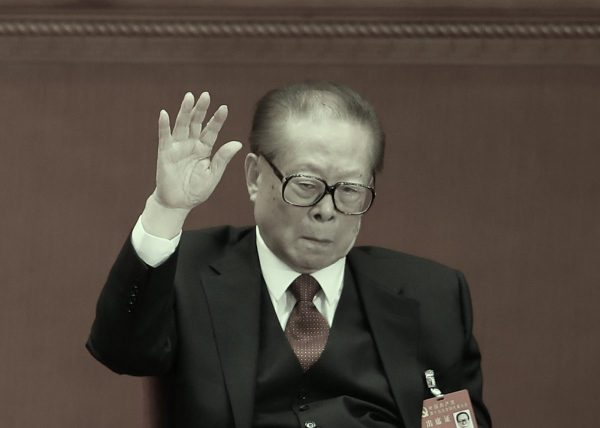
According to this analysis, Jiang Zemin may have orchestrated the “arson” to demonize Falun Gong practitioners, thereby reviving the suppression campaign and shaping public opinion through CCTV’s Focus Interview program.
The Tiananmen Square incident on Chinese New Year’s Eve 2001 remains a contested and politically charged episode. Divergent accounts from state media, foreign journalists, and eyewitnesses, combined with subsequent revisions and alleged manipulation, raise serious questions about the motivations behind the official narrative.
While the synthesis above reflects the claims and testimonies presented in the source material, further independent investigation would be required to substantiate these allegations conclusively.