By Jian Yi
The dictator’s fate—and the men closest to him
“The people say: if Stalin had died ten years earlier, perhaps we would have lived better lives… In history, every autocratic ruler has died defending his own hoe.”
—Nikita Khrushchev, speaking off script while drunk at the height of his power, during a reception for a Hungarian delegation
Khrushchev’s remark—uttered at a moment of supreme confidence—captures a grim constant of authoritarian politics: the greatest danger to a ruler rarely comes from declared enemies, but from those closest to him.
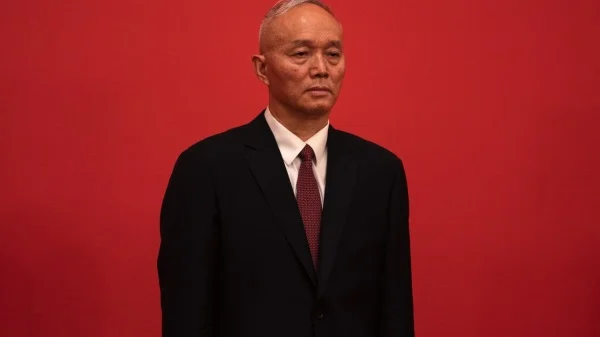
Cai Qi and Xi Jinping’s personal security
On Jan. 24, independent political commentator Cai Shenkun appeared on the program Fangfei Time and advanced a possibility that many listeners found deeply unsettling.
The figure at the center of his argument was Cai Qi, Xi Jinping’s closest and most indispensable confidant. Cai Qi is both a member of the Politburo Standing Committee of the Chinese Communist Party (CCP)—the regime’s supreme decision-making body—and director of the CCP General Office, which controls the daily operations, logistics, and security of the Party’s top leadership.
Success
You are now signed up for our newsletter
Success
Check your email to complete sign up
Cai Shenkun said: “We cannot rule out the possibility that at some moment unknown to us, Xi Jinping could suddenly be taken down by the military. That possibility exists. It’s even possible that one day Cai Qi, sensing that the situation has turned against him or become unfavorable, could join forces with the Central Guard Bureau and remove Xi Jinping. This is not merely possible—it is highly likely.”
He continued: “We don’t know where Xi Jinping’s enemies are right now. But to fundamentally change the CCP’s political trajectory, or to alter the balance of power at the top, it would have to be someone who controls Xi’s personal safety—his very life. Only such a person could do it.”
“Cai Qi is therefore critically important. He is someone who must be watched closely in the period ahead.”
The phrasing differs, but the conclusion is the same: within the CCP system operates what historian Qin Hui has described as a principle of profound political uncertainty.
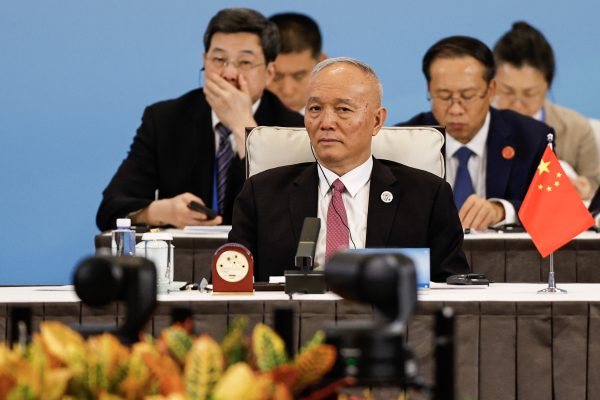
The ‘uncertainty principle’ of authoritarian politics
In an essay examining the Soviet experience, Qin Hui wrote: “Not only did foreigners and ordinary Russian citizens lack the ability to foresee events inside the Kremlin; even the ‘intimate comrades’ who worked together there day and night had little certainty about one another. In a society where everyone wears a mask, who dares claim to know what another person is truly thinking before the critical moment arrives?”
“People often infer the future from a person’s past. Yet under the Iron Curtain tradition, such inference repeatedly fails. For decades, the key ‘heretics’ who later drove reform in the Soviet Union and Eastern Europe were selected precisely because of their rigid orthodoxy.”
“Stalin eliminated all suspicious figures and chose Khrushchev. KGB chief Yuri Andropov selected Gorbachev, who at the time showed no trace of heterodoxy. Yet before long… And after the Soviet collapse, declassified archives revealed that the first person to propose a ‘thaw’ after Stalin’s death was not Khrushchev at all, but Beria—the chief executioner who had killed countless people under Stalin.”
In authoritarian systems, loyalty is opaque, intentions are concealed, and proximity is never benign.
When the next turn comes
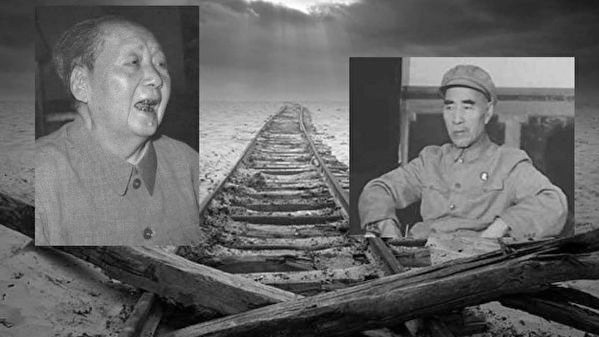
On Sept. 13, 1971, a Hawker Siddeley Trident aircraft—tail number 256—crashed in Öndörkhaan, Khentii Province, Mongolia. Aboard was Lin Biao, Mao Zedong’s designated successor, who was fleeing China after a failed coup attempt.
When officials from China’s embassy in Mongolia returned with photographic confirmation of the crash, the atmosphere of extreme tension in Zhongnanhai’s East Hall gradually dissipated. Most people quietly left.
Only Zhou Enlai and Ji Dengkui remained.
Suddenly, sobbing broke out. Ji froze. Had he not seen it with his own eyes, he would not have believed that the person crying uncontrollably—shoulders trembling as he faced the wall—was Zhou Enlai.
When Ji stepped forward to console him, Zhou Enlai said only six words:
“You don’t understand. You don’t understand.”
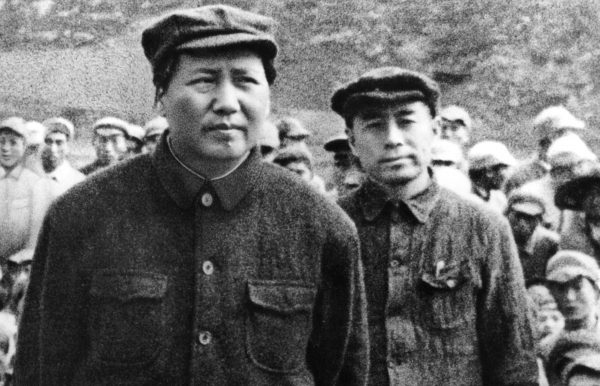
Later observers suggested that Zhou had grasped the full meaning of Lin Biao’s death. Liu Shaoqi had been persecuted to death. Peng Dehuai had been purged. Lin Biao had fled and died. With Lin gone, Zhou may have realized that he himself was next in line.
Cai Qi’s power—and his danger
Today, Cai Qi stands beside Xi Jinping much as Zhou Enlai once stood beside Mao Zedong—simultaneously chief administrator, bodyguard, strategist, steward, enforcer, secretary, and even court eunuch.
Cai Qi controls Xi Jinping’s personal security and holds intimate knowledge of his health. In concrete terms, this places Xi’s life and death squarely in Cai Qi’s hands.
After Xi Jinping completed his sweeping purge of the People’s Liberation Army—toppling senior commanders through investigations overseen by the Central Military Commission—Cai Qi, whose power within the Party has reached its apex, could easily become Xi’s next target.
At the same time, the more Cai Qi and Public Security Minister Wang Xiaohong know about Xi’s inner dealings, the more dangerous they themselves become in Xi’s eyes. Knowledge, in such a system, is a mortal liability.
Li Keqiang’s death and the shadow of suspicion
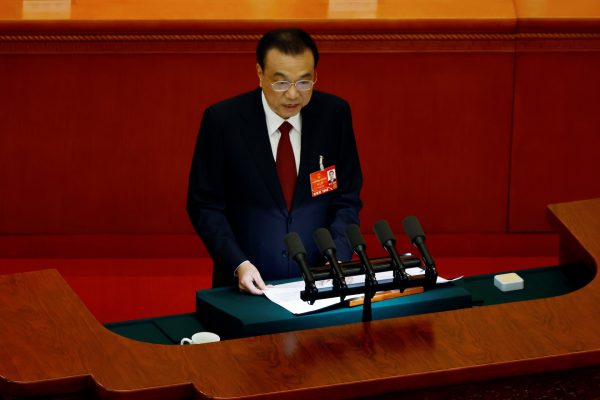
On Oct. 27, 2023, former premier Li Keqiang died at the age of 68, just seven months after leaving office, while staying at Shanghai’s Dongjiao State Guesthouse. The CCP announced that he had suffered a “sudden heart attack.”
That explanation has failed to convince either the outside world or large segments of the Party itself.
As director of the CCP General Office, Cai Qi oversees the health, medical care, and security arrangements of top Party leaders. Inevitably, suspicion surrounding Li Keqiang’s death has focused on Xi Jinping and his closest aide, Cai Qi.
Online, persistent allegations have circulated claiming that Li Keqiang was assassinated by Xi’s inner circle, with Cai Qi at the center of those suspicions. Whatever their ultimate truth, one fact is indisputable: Cai Qi knows far more about the circumstances of Li’s death than almost anyone else alive.
That knowledge alone could seal his fate.
As Xi’s other political rivals fall one after another, tensions between Xi Jinping and Cai Qi are likely to surface ever more openly.
At times, Cai Qi’s fleeting expressions—caught inadvertently on camera—seem to betray something deeper: not loyalty, but disdain.
A look of contempt?
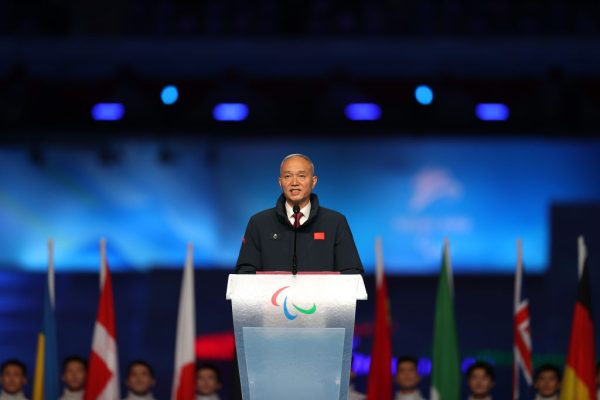
On March 18, 2024, during Xi Jinping’s inspection tour of Hunan Province, he visited the First Normal School of Hunan. As he prepared to depart and board his vehicle, Chinese state television aired a brief but striking shot.
Xi stood with his back to Cai Qi, waving to carefully staged “crowd actors.” Behind him stood Cai Qi, Vice Premier He Lifeng, Organization Department head Li Ganjie, and National Development and Reform Commission chief Zheng Shanjie.
As Xi basked in the moment, Cai Qi clapped perfunctorily, his hands resting loosely at his abdomen. His posture was casual, bordering on dismissive. His expression hovered between a smile and a smirk. He glanced sideways at Xi from the corner of his eye, his mouth twisted slightly to one side.
The expression looked less like admiration than mockery.
It appeared, unmistakably, to be contempt.

A familiar pattern
The relationship between Cai Qi and Xi Jinping today bears an unsettling resemblance to that between Wang Lijun and Bo Xilai more than a decade ago. When tensions between Bo and his police chief reached their breaking point, Wang Lijun fled to the U.S. Consulate in Chengdu, later declaring his readiness to “fight Bo Xilai to the death.”
Such a scene could unfold again.
This time, between Xi Jinping and Cai Qi.