The CCP’s ‘no mass return to poverty’ warning is an admission of failure
When the CCP’s official mouthpiece Economic Daily published a directive warning that China must “ensure no large-scale return to poverty,” the phrasing deserves careful attention. In the Party’s policy vocabulary, the emphatic prohibition of an outcome is a reliable indicator that the outcome is already unfolding. Officials do not expend political capital warning against scenarios they consider remote.
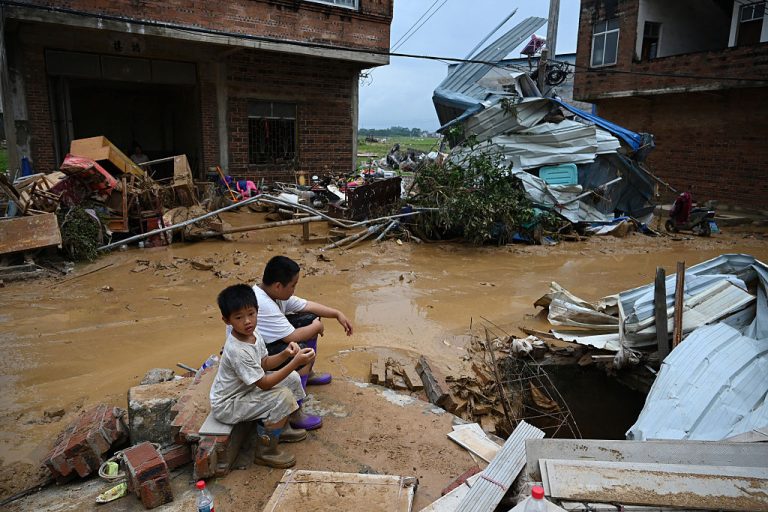
China’s economy is simultaneously dealing with slowing growth, rising unemployment, mass closures of small and medium-sized businesses, and local government finances stretched to the breaking point. Families lifted out of poverty over the past two decades sit on extremely thin foundations; a single illness, natural disaster, or factory closure can push them back below the poverty line. A recent Wall Street Journal investigation concluded that large swaths of the Chinese economy have descended into disorder.
Five structural failures Beijing has no plan to fix
Prominent economist Xiang Songzuo and other analysts argue that China’s economic crisis goes well beyond a cyclical slowdown.
Research data show that 95 percent of China’s population earns less than 5,000 yuan (roughly $690) per month. After more than 40 years of the “reform and opening” program the Party credits with transforming China into an economic power, the country remains, by this measure, a low-income nation. Only approximately 70 million people, out of a population of 1.4 billion, earn above that threshold. The rest live on incomes far below what the Party’s official narrative suggests. The methodology used by the World Bank and similar institutions to calculate China’s economic size has drawn sustained criticism from independent scholars. Purchasing power parity adjustments, which make China’s GDP appear far larger in international comparisons by accounting for local price differences rather than market exchange rates, are widely seen by critics as inflating the country’s actual living standards. If they are right, the gap between China’s projected and real economic weight is considerably larger than official figures suggest.
Income inequality compounds a severe regional divide. Approximately 80 percent of China’s wealth is concentrated in the Yangtze River Delta and Pearl River Delta regions, two coastal industrial clusters centered on Shanghai and Guangzhou respectively. Together, those regions account for more than 60 percent of national GDP. The three northeastern provinces, the northwest, and most of central China are falling further behind. Deindustrialization, mass outmigration of working-age populations, and collapsing local tax bases define life across vast areas of the country. So long as this imbalance goes unaddressed, analysts argue, China cannot escape the “low-income trap,” a situation in which a country’s average wages stagnate before it has fully industrialized. The divide shows up not only in income totals but in employment opportunities, access to quality healthcare, and the basic provision of public services.
Success
You are now signed up for our newsletter
Success
Check your email to complete sign up
Finance has fared no better than manufacturing. Banks posted positive profit growth in the first quarter of 2026, while manufacturing enterprises are operating at losses or razor-thin margins across the board. Business owners report that borrowing costs have become unbearable and that the operating environment continues to deteriorate. China’s manufacturing sector, once seen as the engine of its rise, has fallen dramatically behind international competitors in core areas: automotive powertrains, premium consumer brands, aviation engines. Decades of capital flooding into property and finance left these sectors starved of investment, a misallocation the property bubble’s collapse has made visible without correcting.
Credit discrimination compounds the damage. Private firms have historically accounted for roughly 50 percent of China’s tax revenue, 60 percent of GDP, 70 percent of technological innovation, 80 percent of urban employment, and 90 percent of new job creation, a set of contributions Chinese economists sum up in the phrase “five-six-seven-eight-nine.” Those firms are now in severe difficulty. Between January 2025 and April 2026, state-owned enterprises issued 3.1 trillion yuan in new bonds. Private firms issued 237 billion yuan. Bank credit flows show a similarly lopsided pattern: state firms receive far more, on far better terms. Among China’s 120 million registered market entities, more than 99 percent are small and micro-enterprises or individual traders. All of them face tightening credit, rising costs, and collapsing expectations simultaneously. The private-sector dynamism that built the Pearl River Delta and Yangtze River Delta into global manufacturing hubs is visibly draining away, taking the economy’s productive foundation with it.
Analysts describe the fifth failure as “rootlessness,” a fundamental deficit in foundational science and core technology. China’s accumulation of basic technical knowledge remains far below the level required by the ambitions the Party publicly claims. Dependence on foreign technology across key sectors is deep. A small number of companies, including Huawei, have prioritized genuine original research. At the systemic level, however, China’s most abundant capital flows have gone to finance and property, crowding out investment in basic science and engineering innovation. The result is a country unusually exposed when foreign governments impose technology sanctions or export controls, with its long-term competitive capacity being degraded from the inside.
State enterprises are borrowing heavily to prop up GDP, and the returns are deteriorating
China’s National Bureau of Statistics reported that domestic demand contributed more than 85 percent of GDP growth in the first quarter of 2026, and that profits at large state-owned industrial enterprises rose 10.1 percent year-on-year. The Ministry of Finance reported that overall state-enterprise operating revenues fell 0.5 percent, and profits fell 5.1 percent. The gap between those two sets of figures, 15 percentage points, is too large to be explained by methodology alone.
Upstream monopoly enterprises, the energy giants and commodity conglomerates that face no competition, remain profitable. Downstream competitive industries, mid-sized state firms, infrastructure operators, and state-run service companies are losing money at scale. When upstream firms raise prices, those increases do not translate into system-wide recovery; they crush the profit margins of downstream producers instead, raising the specter of stagflation.
With private enterprise and households effectively withdrawing from the economy, state-owned firms have been conscripted to fight deflation alone, borrowing heavily to invest and propping up GDP figures in the short term.
Guangzhou Automobile Group, one of Guangdong province’s flagship state-owned manufacturers, poured enormous capital into new battery plant construction. Fixed-asset investment numbers rose. The company’s own profits fell 15 percent. A price war now engulfing the electric vehicle industry has pushed the entire sector into losses.
In Zhejiang province, state-backed industrial funds have poured money into semiconductor investments. On paper, valuations look healthy. In practice, cash flows are absent, exit rates are negligible, and debt-loop risks are accumulating. Across the board, state-sector investment is being directed by bureaucratic mandate rather than market demand, building up excess capacity and hidden liabilities on a large scale. Each yuan of investment is generating less output than the last. Small and medium-sized service businesses are closing in waves. The risks are being offloaded onto the broader population through currency depreciation, cuts to savings deposit rates, and rising prices for public services. Even in Guangdong and Zhejiang, China’s two most economically advanced provinces, this model is visibly flagging.
Xi Jinping’s security priorities are accelerating the economic damage
The Wall Street Journal’s investigation into Chinese economic conditions concludes that Xi Jinping, the CCP’s general secretary and China’s top leader, has explicitly subordinated economic wellbeing to national security. Hundreds of billions of dollars are flowing toward artificial intelligence, semiconductors, and electric vehicles, industries the Party has designated as strategic. Reforms that would improve employment and living standards for ordinary households have stalled.
Military spending has grown sharply. In some localities, education and welfare budgets have been cut to compensate. In Foshan and other manufacturing centers in Guangdong, factory floors sit empty, workers are idle or have taken severe pay cuts, and the emerging strategic industries are far too small to absorb the labor shed by the property collapse. Strategic sectors are gaining a somewhat larger share of a shrinking pie, while employment and living conditions deteriorate for most people. Social safety nets remain weak. Consumer confidence continues to fall.
The Party’s repeated insistence that mass return to poverty “must not be allowed to happen” reflects the real weight of unemployment, small-business closures, and local fiscal distress pressing in from all sides. The residual damage from the property crash, the collapse in consumer sentiment, the dark outlook among business owners, and the scale of corporate debt remain unresolved. The downward pressure is intensifying.