Reports of a Coup inside the CCP
According to reports circulating rapidly in recent days, senior People’s Liberation Army (PLA) figures Zhang Youxia and Liu Zhenli have allegedly been detained. These rumors drew international attention on Jan. 23 when retired U.S. General Michael Flynn—former director of the Defense Intelligence Agency and former National Security Advisor—publicly commented on what he described as a “coup” unfolding within the Chinese Communist Party.
Flynn reposted commentary by independent Chinese political analyst Cai Shenkun and issued a stark warning, naming Xi Jinping directly: “Breaking: Ongoing CCP/CHINA coup d’état!!!”
There appears to be great unrest inside the CCP and its military leadership.
These are coup-like conditions, and the consequences will impact U.S. foreign policy, U.S. military posture in the Indo-Pacific, and the overall direction of U.S.–China relations.
President Xi—be prepared, because internal instability in China will not end well.”
Flynn tagged U.S. Secretary of State Marco Rubio, Secretary of Defense Pete Hegseth, and China analyst Gordon Chang in the post.
Success
You are now signed up for our newsletter
Success
Check your email to complete sign up
Gordon Chang added pointedly that if China’s highest-ranking active-duty officer—along with more than fifteen others—has indeed been removed from the chain of command, then a fundamental question must be asked: Is anyone still truly in control of the world’s largest military?
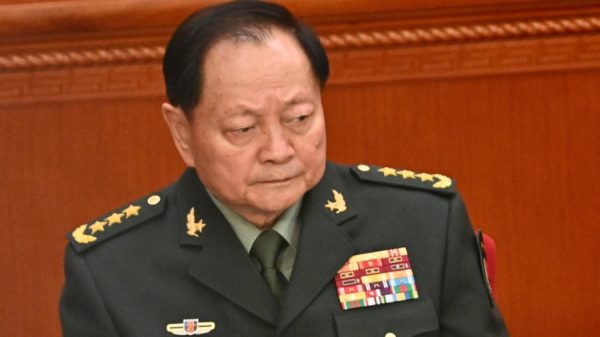
Three generals vanish from view
On Jan. 23, a high-level CCP training seminar for provincial- and ministerial-level cadres concluded in Beijing. The event only deepened speculation. Not only were Central Military Commission (CMC) Vice Chairman Zhang Youxia and CMC member Liu Zhenli absent, but Zhang Shengmin—head of the CMC’s Discipline Inspection Commission—also failed to appear.
In recent days, the conspicuous absence of Zhang Youxia, Liu Zhenli, and Organization Department chief Shi Taifeng from public view triggered a tidal wave of speculation. At least six or seven versions of events have been circulating, with observers closely watching every movement of the CCP leadership and its official propaganda outlets.
On Jan. 23, Shi Taifeng resurfaced, seated beside Politburo Standing Committee member Cai Qi as he presided over the seminar’s closing ceremony. Yet Zhang Youxia and Liu Zhenli were again nowhere to be seen—and this time, Zhang Shengmin was missing as well.
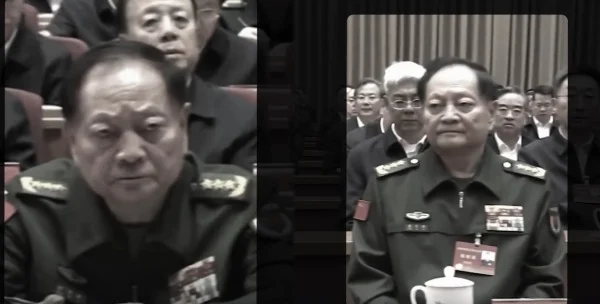
The contrast with the 2024 Third Plenum–related seminar was striking. Then, although Zhang Youxia did not appear at the closing ceremony, Liu Zhenli, Miao Hua, and Zhang Shengmin were all present.
More telling still, Zhang Youxia had attended the opening day of the 2024 seminar. During that session, cameras captured a moment that quickly spread online: seated below the podium, Zhang fixed Xi Jinping with what many described as the stare of a tiger poised to strike.
Similar moments were recorded on multiple occasions thereafter. Among observers, a consensus formed that Zhang Youxia’s dissatisfaction with Xi Jinping had been long in the making. Once a pivotal figure in helping Xi consolidate power, Zhang’s alliance with Xi fractured irreparably as Xi’s ambition to monopolize authority became increasingly explicit.
‘Strengthen the trunk, weaken the branches’
The roots of this rupture can be traced back to Oct. 22, 2021, when Study Times—the official newspaper of the CCP Central Party School—published an article titled “Jia Yi of the Western Han and the ‘Strategies for Public Order.’”
As is well understood within China’s political system, such historical essays are rarely academic. They are signals—thinly veiled commentary on present power struggles and preparations for future political action.
A key phrase in the article was “strengthen the trunk, weaken the branches.” It warned:
“History proves that when the tail grows too large, it becomes unmanageable and breeds danger. When peripheral branches grow excessively, the main trunk cannot survive. They must be pruned early.”
The article asserted that “the greatest hidden danger of disorder lies with the feudal lords,” arguing that the inversion of power between ruler and ministers was the mortal threat to the Han dynasty. The message was unmistakable: weaken powerful subordinates to safeguard the supreme authority of the center.
This was a near-perfect reflection of Xi Jinping’s political mindset at the time. Xi views intra-Party relations not as collective leadership, but as ruler–subject hierarchy. His ambition has been to impose across the Party—and society at large—the Legalist logic found in The Book of Lord Shang.
Zhang Youxia helped Xi secure power. Xi, in turn, sought to “weaken the feudal lords.” From that moment, the breach between the two men began.

A power struggle moves into the open
After Zhang Youxia failed to appear at the seminar’s opening ceremony, the struggle between him and Xi Jinping entered an unusual phase of partial public exposure.
Online discourse quickly split into two camps. One claimed that Zhang, still holding military authority, remained untouchable. The other insisted that Zhang’s entire family had been detained and that Xi’s power was fully secure.
Notably absent from both narratives was any claim that “Zhang Youxia firmly supports Xi Jinping.”
These competing narratives bear the clear imprint of rival CCP factions leaking information abroad—weaponizing public opinion to attack opponents while testing reactions inside and outside China.
At the same time, CCP propaganda outlets responded with uncharacteristic silence. In the face of an overwhelming storm of speculation, they neither refuted rumors nor rushed to stabilize public opinion.
All signs point to one conclusion: in the first month of 2026, the conflict between Zhang Youxia and Xi Jinping has become nearly transparent on the world stage.
Why, then, were Zhang Youxia, Liu Zhenli, and Zhang Shengmin absent from the closing ceremony? What does this signify?
Two years ago, at the conclusion of the Third Plenum seminar, then-serving General Miao Hua—along with Liu Zhenli and Zhang Shengmin—were all present. Only Zhang Youxia was missing.
Yet just two years later, not a single senior military figure appeared in the front rows.
Is Zhang Shengmin preoccupied with handling cases involving Zhang Youxia and Liu Zhenli? Or have Zhang Youxia, Zhang Shengmin, and Liu Zhenli collectively come to treat Xi Jinping’s study sessions with open contempt? The answer will soon emerge as more information about Zhang Youxia and Liu Zhenli comes to light.

No good ending
What is already clear is that the rumors surrounding Zhang Youxia have provoked reactions within the U.S. military and intelligence community. How the Chinese Communist Party chooses to respond will be closely watched and intensely analyzed.
But regardless of the outcome, one conclusion stands. As General Flynn warned, internal turmoil within the CCP will not end well—for the regime itself.