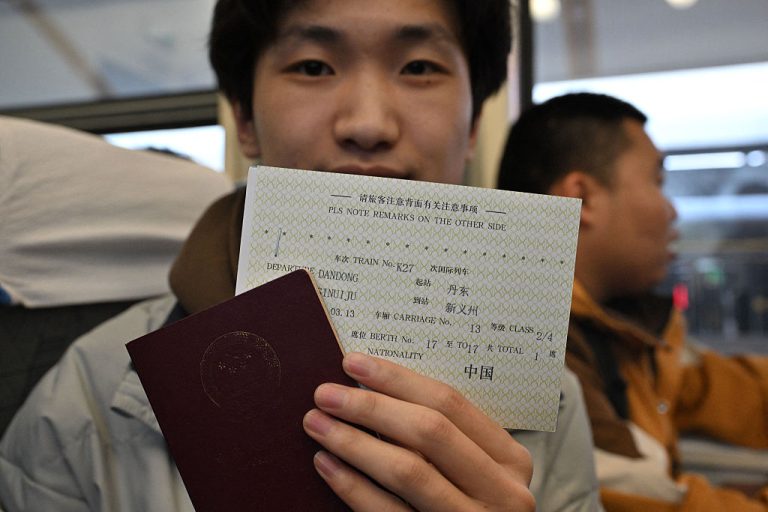
China is restricting overseas travel for leading artificial intelligence researchers at private companies including Alibaba and DeepSeek, Bloomberg reported in late May, citing people with direct knowledge of the arrangements. Researchers and engineers are required to surrender their passports to their employers and obtain government approval before any overseas trip, a form of control once reserved for nuclear scientists and senior executives at state-owned firms.
Teachers, nurses, and village officials have been living under the same constraints for years.
Beijing upgraded travel bans on AI researchers from advice to mandatory requirement
As recently as March 2025, Chinese authorities were advising top AI founders and researchers to avoid traveling to the United States, treating the guidance as a recommendation, with executives instructed to report their plans before departing and to brief authorities on their return. By May 2026, that guidance had hardened into a formal pre-approval requirement, applicable regardless of destination.
The most documented case involves Manus, an AI startup that relocated from Beijing to Singapore in 2025. When Meta announced a $2 billion acquisition of Manus in December 2025, Chinese regulators opened an investigation. In March 2026, the Financial Times reported that Manus CEO Xiao Hong and chief scientist Ji Yichao had been barred from leaving the country by China’s top economic planning body, the National Development and Reform Commission (NDRC).
On April 27, the NDRC formally blocked the acquisition, ordering the two parties to unwind a deal that had already substantially closed.
Success
You are now signed up for our newsletter
Success
Check your email to complete sign up
Stanford’s 2026 AI Index put the gap between the best U.S. and Chinese AI models at 2.7 percent, down from a range of 17.5 to 31.6 percentage points in mid-2023. China now files 69.7 percent of global AI patents and produces 23.2 percent of global AI publications.
The number of AI researchers migrating from China to the United States has dropped 89 percent since 2017. For frontier AI and semiconductor researchers at Chinese firms, travel has become part of Beijing’s security calculus; their passports and conference schedules are treated as national security variables when the regime worries about technology leakage.
Schoolteachers and nurses face the same system
According to the New York Times, in a public school in southern China, a music teacher spent a summer trying to visit her sister in Malaysia. Her principal rejected the application outright. In Zhejiang province, a nurse who had long wanted to visit Vietnam never submitted the paperwork at all, calculating that the four-level approval process made the trip not worth attempting.
A primary school in Guangdong has written into its employment contracts that unauthorized overseas travel during holidays may constitute a disciplinary violation resulting in dismissal.
In Inner Mongolia, one university has formalized the surveillance dimension explicitly, requiring employees to avoid unauthorized media interviews or meetings with foreign nationals while abroad, to report any contact with what the institution labels “anti-China forces” to the nearest Chinese consulate, and to surrender their passports within one week of returning home. Failure to comply carries a five-year overseas travel ban.
None of these workers handle classified material or manage public funds. The national security justification Beijing applies to nuclear scientists is being applied, unchanged, to music teachers and hospital nurses.
Researchers who returned to China can no longer leave freely
The implicit bargain of the “sea turtle” recruitment programs, under which China lured back overseas talent with competitive salaries and research funding, did not include passport controls. It does now.
Chinese exile writer Murong Xuecun, based in Melbourne, Australia, told Voice of America that the pattern fits the Party’s most fundamental operating logic. “Viewing people as a kind of asset, or even a kind of material, a brick or a screw, is an ideology this regime has never abandoned,” he said.
“Under that ideology, targets matter, missions matter, the ‘nation’ as a whole matters, but the individual does not.” He urged anyone in the overseas Chinese community considering returning to China to think carefully about who they would be dealing with, and about the parts of their future they would no longer control.
A Stanford computer science graduate who had worked for Google and Meta before returning to China as a recruited hire at a major university found this spring that he could no longer take his annual trip to the United States to visit family. His employer informed him he had been classified as a “key reserved talent” subject to a special overseas travel approval process. He had no legal avenue to contest the designation.
The controls operate through employer regulations, local government directives, and institutional contracts, with no unified statute that affected workers can challenge or even cite. For tens of millions of Chinese citizens who hold public-sector jobs, overseas travel now requires approval from an employer, a school principal, or a department head whose criteria are never published.