By Li Muzi
According to unverified online reports, Beijing has shown signs of heightened security following claims that Chinese Communist Party Central Military Commission Vice Chairman Zhang Youxia had been taken into custody.
On Jan. 26, videos circulating online showed large numbers of black-clad personnel stationed outside Xinhua Gate, the main entrance to Zhongnanhai. Camouflage-uniformed soldiers were also reported to be deployed around Tiananmen Square. Separate videos and posts claimed that soldiers and military vehicles were appearing on roads in Hebei, Jiangsu, and other regions, while several major highways around Beijing were suddenly closed.
Some netizens questioned the situation, asking, “Is this to keep people from entering, or to stop people from leaving?”
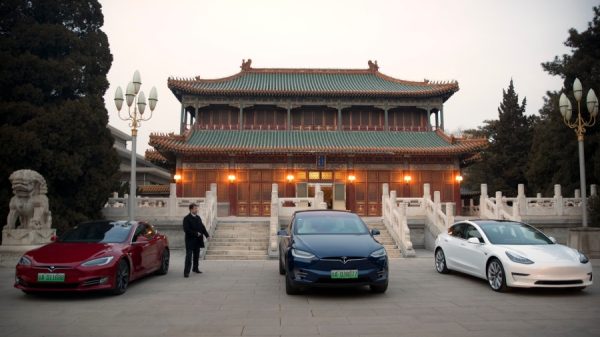
Heightened security around Zhongnanhai and Tiananmen Square
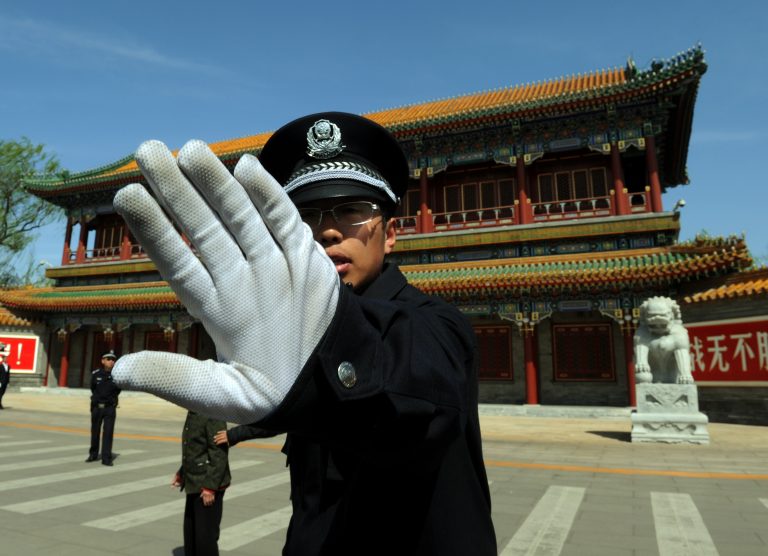
Based on aggregated social media posts, security around Zhongnanhai appeared to be significantly tightened on Jan. 26. Observers said the central median outside Xinhua Gate was lined with more black-clad personnel than usual, described as “three steps one guard, five steps one post.”
Success
You are now signed up for our newsletter
Success
Check your email to complete sign up
According to online claims, these individuals were members of the Central Security Bureau.
Security measures were also reportedly tightened near Tiananmen Square, where multiple layers of personnel were seen deployed. In Beijing’s core areas, particularly around Zhongnanhai and along Chang’an Avenue, alert levels were described as unusually high. Some secondary roads leading into the area were temporarily closed or placed under credential-only access, limiting entry by non-essential vehicles and pedestrians.
Neighborhood checks and subway patrols
On Jan. 26, a post on the overseas platform X, which had drawn more than 250,000 views, described conditions in Beijing that morning: “Neighborhoods checking rental registrations, police checking IDs on the subway, and police dogs patrolling station halls. A sense of safety and unease rising at the same time.”
Commenters under the post shared similar experiences. Some said they received calls from neighborhood committees asking about rental information, often with vague explanations such as “it’s the end of the year.” Others reported more frequent ID checks on subway lines.
One commenter wrote that the atmosphere felt oppressive, saying, “This isn’t ‘Safe Beijing,’ this is ‘High-Pressure Beijing.’” Others described the measures as “creating fear” and said the situation felt like a citywide lockdown.
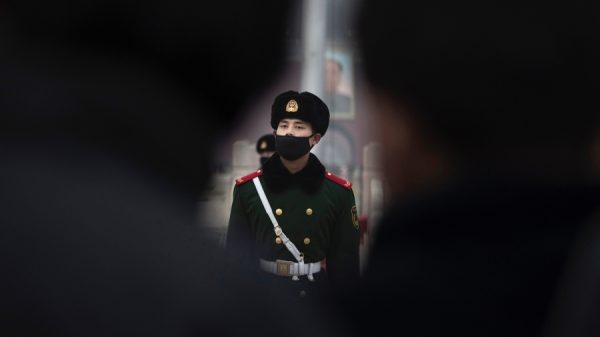
Videos show reported military movements in multiple regions
On Jan. 27, numerous videos showing soldiers and military vehicles on public roads appeared on China’s Douyin platform. One widely shared clip claimed that units of the PLA’s 82nd Group Army stationed in Baoding, Hebei, were moving in the direction of Beijing, with troops, armored vehicles, and tanks assembling.
The video alleged that the movements were not isolated but involved units from multiple regions.
Netizens reacted with questions such as “Is this an internal conflict?” and “Who are they protecting?” Others expressed hope that soldiers would remember they come from the people and are meant to protect civilians.
Additional videos from Xuzhou, Jiangsu, showed long lines of armed soldiers in camouflage uniforms marching along city streets. Other clips showed military vehicles traveling at high speed on highways. Some mainland netizens speculated that the movements were part of a routine rotation, while others offered more cynical interpretations.
Separate videos circulating online claimed that civilian vehicles were barred from highways, with only military vehicles allowed to pass. On Jan. 26, large numbers of military vehicles were also reportedly seen on the streets of Tianjin.
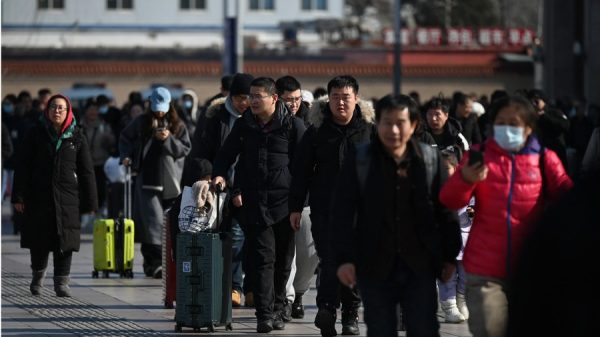
Reports of expressway closures around Beijing
Multiple online posts claimed that key expressways leading into Beijing, including the Beijing–Harbin and Beijing–Hong Kong–Macau routes, were suddenly closed without prior official notice. Highway electronic signs reportedly instructed vehicles to exit, while navigation traffic data and speed alerts disappeared.
Many users said they were unable to enter Beijing, prompting renewed questions among online users about whether the restrictions were intended to control access to the capital or to prevent departures.
Dissidents comment on internal power struggle
On Jan. 26, Canada-based Chinese dissident Sheng Xue, currently vice chair of the Federation for a Democratic China, wrote on X that Xi Jinping had failed to fully control the situation and that the move against Zhang Youxia had encountered resistance.
She suggested that a third force may have emerged, possibly involving an alliance of senior party elders opposed to Xi. Sheng wrote that turmoil within the CCP could be a positive development, but emphasized that the most important question was which force would ultimately move to stabilize the situation. She added that the United States, Japan, and Taiwan should pay close attention to these developments.
Another X user, writing under the name “Wen Rui,” described the relationship between Xi Jinping and Zhang Youxia using a metaphor of two people riding in the same car at high speed. The post suggested that both sides believed the other would not act decisively, but that Xi ultimately chose confrontation, setting the system on what the writer described as an irreversible course toward collapse.
Editor’s Note:
This article is based on social media posts, online videos, and commentary circulated on overseas platforms. The information described has not been independently verified and reflects claims and observations reported by netizens and commentators.