Li Jingyao
The Hong Kong government’s new law mandating bus passengers to wear seat belts has sparked public complaints. Less than a week after its implementation, the law was urgently suspended on Jan. 30 due to “technical deficiencies.”
According to Ming Pao, the bus seat belt law, which took effect on Jan. 25, was suspended because the legal provisions were “technically insufficient.” Secretary for Security Tang Ping-keung stated that the police will not currently enforce the bus seat belt regulation and will focus on advising passengers instead. He recommended that citizens wear seat belts if available and reiterated that existing laws requiring seat belts in private cars and minibuses remain in effect.
Former Legislative Council member Kong Yuk-fun pointed out last Friday that after reviewing the legislation, she found that the regulation only applies to buses registered on or after Jan. 25 of this year. She urged the government to clarify this to avoid public confusion.
In interviews with Commercial Radio and now News, she said that when the law was enacted in 2004 requiring minibus passengers to wear seat belts, it also only applied to new vehicles, so there was no reason to doubt the wording when considering bus passengers. She noted that as of Sept. 18 last year, Legislative Council meeting documents and officials’ statements still mentioned “new buses,” and she hopes the government will further explain the recent claim that the new regulation is technically insufficient.
Success
You are now signed up for our newsletter
Success
Check your email to complete sign up
She suggested that responsible officials should personally ride long-distance buses wearing seat belts for the entire journey to understand the real situation, making the policy more persuasive. She believes this incident reflects that the regulation review process was too rushed and hopes the government will write legislation more thoroughly in the future and give the Legislative Council sufficient time to review it.
In addition, Secretary for Transport and Logistics Chan Mei-bao also admitted that there were technical deficiencies and that the law did not fully reflect the original legislative intent. She said the government will promptly arrange to delete the relevant provisions and improve the law before consulting the Legislative Council again. This means that bus passengers will temporarily no longer be required to wear seat belts.
Controversy over the new seat belt law
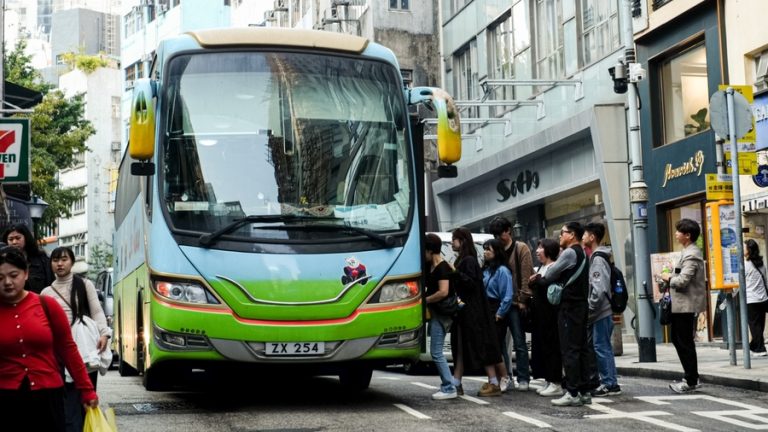
The new bus seat belt law has sparked public debate in Hong Kong, with many saying it is inconvenient and imposes excessive penalties. Passengers whose seats are equipped with seat belts but who do not wear them could face a fine of HK$5,000 and up to three months’ imprisonment, making it one of the world’s strictest penalties for bus seat belts.
During the implementation of the new law, several “incidents” occurred. One passenger was trapped for 45 minutes because they could not unlock a seat belt whose buckle was stuffed with tin foil, and firefighters eventually needed 20 people to assist. There were also reports of seat belts allegedly being cut.
According to BBC, a passenger, Mr. Chan, said he only realized that buses would be included in the regulation when he learned at the end of last year that police had disguised themselves as bus passengers and issued tickets to those not wearing seat belts.
He said the notification period was seriously insufficient, “because there was no consultation, and the regulation was unclear.” He also said that after the law took effect, it caused “trouble” for passengers, as they had to unbuckle the seat belts to get off the bus, creating inconvenience.
Commentator Shen Sihai told Vision Times that the absurdity of the new seat belt law is that it “makes no logical sense.” First, authorities have not explained why standing passengers are considered safe and do not need seat belts.
Second, if bus passengers must wear seat belts, why are subway and tram passengers not required to do so? Subways travel at higher speeds, and trams are also not slow, and accidents can occur. If the goal is safety, why not extend it to all public transport?
Third, the fines are excessive. Private car drivers and passengers not wearing seat belts are fined only HK$400, but bus passengers face HK$5,000. Shen believes that penalties should be gradual: a first offense should be HK$100, with fines increasing for repeated violations.
The new seat belt law was part of the 2025 Road Traffic (Safety Equipment) (Amendment) Regulation, submitted by the government to the Legislative Council last September. At the time, the government adopted a “promulgate first, review later” procedure, meaning the law automatically took effect when published in the Gazette, before being submitted to the Legislative Council for review.
After submission, the law was reviewed by the previous Legislative Council’s “Subcommittee on Three Subsidiary Legislation Related to Road Traffic.” According to meeting records, several subcommittee members stated that no public consultation was necessary for the amendments, including members of the DAB (Guo Lingli and Ho Chun-hin) and the Liberal Party (Li Zhenqiang and Lam Shun-chiu).