By Xiao Ran
Reports that former Central Military Commission Vice Chairman Zhang Youxia has fallen from power have underscored the intensity of internal power struggles at the top of the Chinese Communist Party.
Political commentator Zhen Fei cited disclosures from a retired officer of the former PLA 31st Group Army, alleging that Zhang’s arrest had been long planned by Xi Jinping and carried out through forces under Public Security Minister Wang Xiaohong, with a possible armed confrontation at the scene.
According to the same source, large numbers of officers have recently submitted resignation or transfer requests, while army commanders have collectively remained silent. Zhang Shengmin is said to have resigned, coded language is circulating within the ranks, and the military has entered what insiders describe as a “pre-war radio silence” posture.
The source claimed that a major development could occur as early as Jan. 30, and that Xi Jinping may ultimately be forced to compromise.
Success
You are now signed up for our newsletter
Success
Check your email to complete sign up
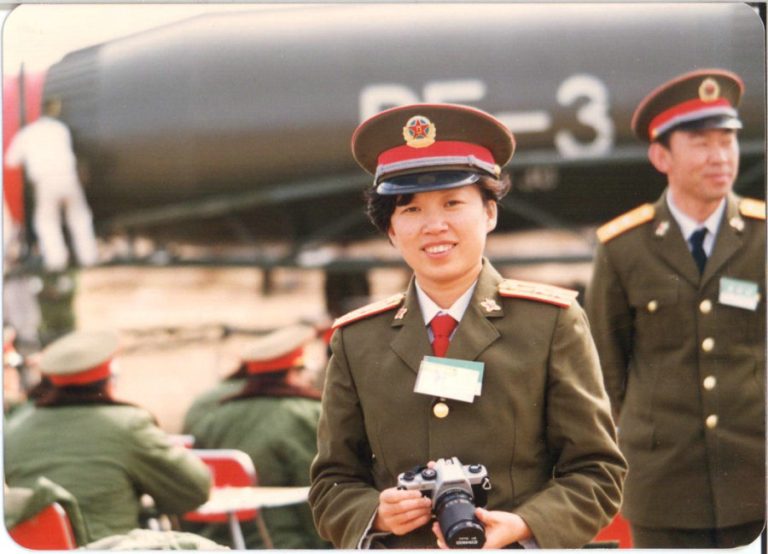
Former PLA Daily journalist Jiang Lin told Vision Times that Xi’s anti-corruption campaign has evolved into a Stalin-style purge rooted in long-standing structural corruption within the military. She said this trajectory is pushing China toward dynastic rule under the Xi family and a political model increasingly resembling North Korea’s, marked by pervasive surveillance and deepening fear among officials.
Meanwhile, commentator Zhang Tianliang analyzed a purported “secret letter” attributed online to Zhang Youxia, questioning its authenticity and arguing that Xi’s move was driven primarily by the need to eliminate opposition ahead of the 21st Party Congress.

Alleged details of Zhang Youxia’s arrest
Zhen Fei said the disclosures originated from conversations with a former cadre of the PLA’s 31st Group Army. The officer was described as a veteran with long service and close contact with senior figures including Miao Hua and He Weidong.
According to the source, Miao Hua was known for pursuing personal gain by any means, while He Weidong had built a reputation for conducting surprise inspections late at night.
After Zhang Youxia was taken into custody, the officer reportedly used old networks to gather information and concluded that the military was in a state of disorder.
Officers at regimental and divisional levels and above were said to be submitting resignation or transfer applications in large numbers. Organizational departments were described as overwhelmed, unable to process the volume of requests and left with no option but to forward them up the chain.
The source claimed that Xi Jinping demanded public statements of support from group army commanders. Their response, he said, was collective silence.
In the PLA, seniority and loyalty carry significant weight. The officer said Zhang Youxia, as a veteran commander, enjoyed exceptionally high prestige. His removal, the source argued, severely shook morale.
According to the account, Xi is widely viewed within the military as lacking credibility and is described by some officers as “despicable.”
The officer characterized the current situation as one of “passive resistance.”
Senior officers are seeking transfers.
Mid-level officers are lying low.
At the grassroots level, units are avoiding taking initiative.
If the situation continues, the officer warned, the military could face a de facto work stoppage within days or weeks.
Focus on the arrest operation
The arrest itself has become a focal point of speculation.
Zhang Youxia was reportedly protected by at least a company-sized personal security detail drawn from the Snow Leopard Commando Unit of the People’s Armed Police Second Mobile Contingent. The Snow Leopard unit, established in 2002, is considered one of China’s most elite special operations forces.
According to the source, a “peaceful removal” would have been impossible.
Snow Leopard personnel were said to be personally loyal to Zhang and unlikely to surrender without resistance. Barring insider betrayal, which the officer considered unlikely, the only plausible outcome was a forced operation by public security units.
These forces, the source said, are trained for urban apprehension missions, including security operations in Zhongnanhai.
The incident allegedly triggered widespread resentment within the PLA. Elite army units were seen as having been subdued by “local police,” a humiliation some officers said they could not accept. The source claimed that vows of eventual retaliation were openly voiced, raising the possibility of future confrontation between the military and the Ministry of Public Security.
Two competing narratives
Zhen Fei outlined two prevailing interpretations of the episode.
One holds that Xi Jinping had long been preparing the move, publicly cooperating with Zhang Youxia and party elders while privately planning a decisive strike.
The other suggests that Zhang Youxia and Liu Zhenli had been plotting a military challenge, only to be betrayed by an insider and arrested preemptively.
The retired officer reportedly favored the first explanation, describing the arrest as Xi’s “fatal blow.”
Zhang Tianliang added that at a Jan. 29 Defense Ministry press briefing, officials denied reports that Zhang Youxia had leaked nuclear secrets to the United States, contradicting coverage by The Wall Street Journal.
If Beijing had intended to substantiate such allegations, Zhang said, it would have confirmed them publicly.
In his assessment, Xi’s move was not driven by corruption or espionage claims, but by the need to eliminate opposition ahead of the 21st Party Congress.
Zhang Youxia, now 75, was eligible for retirement. Xi, Tianliang argued, was unwilling to wait.
Major decisions in the CCP are made in small meetings, with Party Congresses serving largely as formalities. With 2026 seen as a critical year for provincial and ministerial appointments and Central Committee selection, Xi needed to secure military backing before the Fifth Plenum.
Allowing Zhang Youxia to remain a dissenting figure into the next Party Congress, Zhang said, was not an option.
Zhang Shengmin and the spread of coded language
According to further disclosures cited by Zhen Fei, Zhang Shengmin has resigned.
The source described Zhang Shengmin as having risen from a grassroots propaganda officer, valued for his writing skills, later entering the Rocket Force without strong ties to the traditional ground forces faction.
His position was said to be precarious.
As head of the military discipline apparatus, Xi expected him to enforce investigations. Yet traveling to inspect military regions was considered dangerous amid rising anger within the ranks.
The source claimed that soldiers might resort to violence without hesitation, and that Zhang Shengmin’s background in political work left him without protection from the army’s dominant ground force culture.
Faced with the risk of offending both Xi and the military, resignation was described as the least damaging option.
The officer claimed Zhang Shengmin had stepped down, leaving Xi without a trusted executor of orders.
Within the ranks, a coded phrase has reportedly begun circulating: “Are you a regimental propaganda officer?”
The line originates from the television series Wreaths at the Foot of the Mountain, set during the Sino-Vietnamese War. In the drama, it is used to mock a politically connected but inexperienced cadre, implying opportunism, cowardice, and betrayal.
In the current context, the phrase is said to function as a test of loyalty at social gatherings, probing whether someone aligns with Xi Jinping and Zhang Shengmin or with Zhang Youxia.
It also implicitly questions whether the person being addressed is a “traitor.”
The rapid publication of a PLA Daily editorial defining Zhang Youxia’s case reportedly intensified backlash within the military. The editorial was seen as rushed and overly blunt.
Its swift citation by Xinhua News Agency was interpreted as evidence of Xi’s urgency in setting the narrative, even as resistance within the ranks grew.

A military in ‘radio silence’
The retired officer said the PLA has entered a Level One readiness posture, with response mechanisms triggered on 24-, 48-, or 72-hour cycles.
Outwardly, everything appears calm. Internally, he described an atmosphere of extreme tension, likening it to a state of “pre-war radio silence,” often seen as a precursor to large-scale action.
Reports that the Eastern and Western Theater Commands reposted Defense Ministry statements on the short-video platform Douyin were dismissed by the officer as performative, given the platform’s entertainment-oriented nature.
Other theater commands, he said, have remained completely silent.
Despite the tension, the officer predicted that Xi may ultimately be forced to compromise.
He suggested that Zhang Youxia may have anticipated such a scenario and quietly secured tacit agreements with trusted commanders through informal rituals, such as shared toasts, leaving no written trace.
Once events unfolded, these commanders would automatically adhere to a strategy of collective silence.
According to the officer, the rift between Xi and Zhang dates back to 2023.
With the post of chief of the general staff effectively vacant, the risks to command and control increase with each passing day.
While Zhang Youxia and Liu Zhenli are said to be under secret detention, the officer argued that Xi would not dare execute them, as doing so could trigger an uncontrollable crisis.
Disputed ‘secret letter’ and Xi’s motives
Zhang Tianliang offered a detailed analysis of a purported “secret letter” attributed to Zhang Youxia and circulated online by self-media figure Cai Renkun.
The letter claims that Zhang anticipated his arrest, rejected accusations of wrongdoing, opposed personal dictatorship and lifelong rule, warned against war over Taiwan, criticized alignment with Russia, and called on Xi to step down at the 21st Party Congress.
Zhang said the letter’s tone portrays Zhang Youxia as principled and morally upright, leading many readers to lament a missed opportunity for resistance.
However, Zhang said he believed there was a 95 percent chance the letter was fabricated.
Among his reasons were violations of CCP linguistic conventions, unrealistic assessments of coup mechanics under a system where command authority and ammunition are tightly controlled, and historical inconsistencies with Zhang Youxia’s career trajectory.
He also challenged claims in the letter regarding elite decision-making mechanisms, arguing that they misrepresented structures that in practice function as extensions of Xi’s personal authority.
Zhang concluded that Xi’s overriding motive was the elimination of potential opposition before the 21st Party Congress.
By arresting even a long-time ally with deep family ties, Zhang said, Xi created an atmosphere of fear designed to deter dissent.
A former PLA journalist on corruption and Stalin-style purges
In her interview with Vision Times, Jiang Lin said the PLA’s corruption problem is deeply rooted.
She traced it back to the 1980s, when budget constraints led to tolerated profiteering and entrenched bribery networks. Over decades, the buying and selling of positions became normalized.
Xi’s early anti-corruption campaign, including the takedowns of Xu Caihou and Guo Boxiong, was initially welcomed within the military.
But Jiang noted that the scale of subsequent purges has been unprecedented.
Since Xi took power, dozens of generals have fallen or disappeared, with investigations expanding steadily down the ranks.
Zhang Youxia’s arrest, Jiang said, was particularly shocking given his closeness to Xi.
Despite long-standing family ties and his role at the helm of military affairs, he was accused of multiple offenses, each considered politically fatal, beginning with disloyalty to the chairman of the Central Military Commission.
According to Jiang, the system will always produce replacements eager to rise.
“Once positions are cleared, new people will move in,” she said. “Fear and ambition work together.”
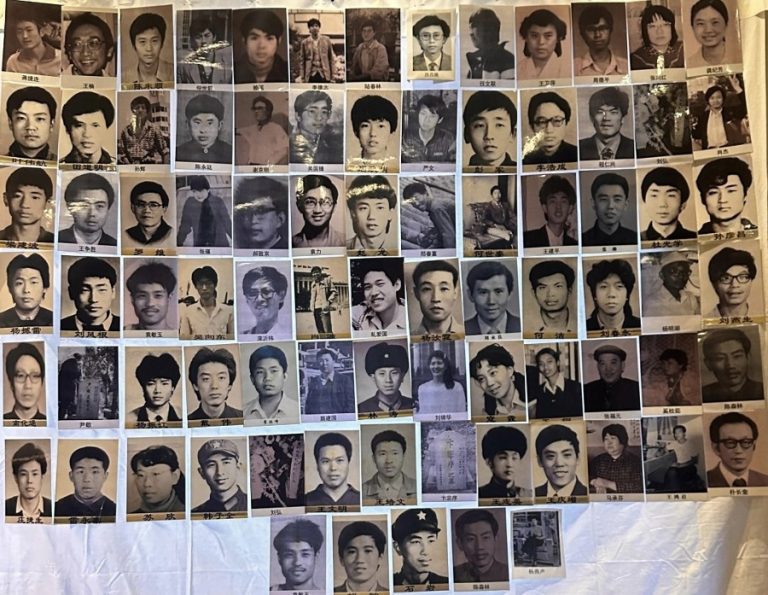
Having personally witnessed the 1989 Tiananmen crackdown, Jiang said the promise of reform during the early years of opening-up was ultimately illusory.
More than three decades later, with no official reckoning for June Fourth, she said she had fully abandoned hope.
Under Xi Jinping, she concluded, China has continued moving toward an extreme form of authoritarian rule, increasingly resembling a dynastic system akin to North Korea.
Editor’s Note:
This article is based on interviews conducted by Vision Times, commentary from overseas Chinese-language analysts, and disclosures attributed to former PLA officers and journalists. Claims involving internal military operations, arrests, force deployments, and internal communications cannot be independently verified and are presented as allegations or assessments attributed to the cited sources.