By Li Deyan
On the evening that Zhang Youxia and Liu Zhenli were officially announced to have fallen from power, the People’s Liberation Amry (PLA) Daily newspaper published an editorial accusing the two senior officers of “splitting the Central Military Commission.” The language was widely interpreted as elevating the case to the highest political level within the Communist Party.
A political classification unlike previous cases
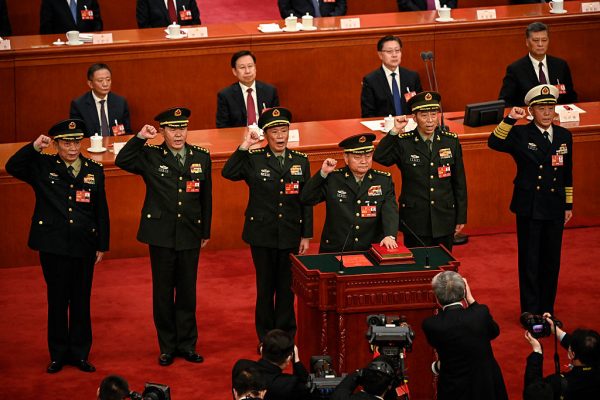
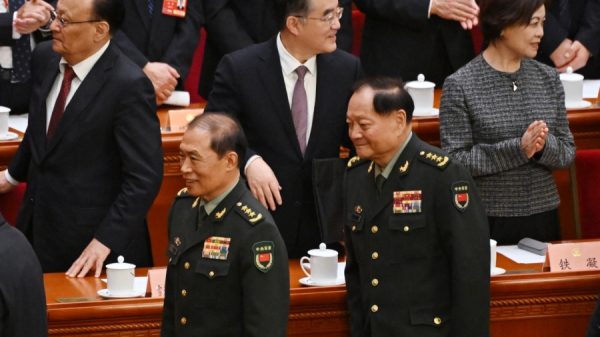
On Jan. 24, 2026, China’s Ministry of National Defense announced that Zhang Youxia, a Politburo member and vice chairman of the Central Military Commission, and Liu Zhenli, chief of the Joint Staff Department of the commission, were under investigation for “serious violations of discipline and law.”
According to multiple sources who spoke to overseas Chinese-language media, the initial political classification applied to Zhang and Liu went beyond routine disciplinary violations. The two were internally accused of “splitting the Central Military Commission,” a charge that directly touches on the CCP’s system of centralized military command and the principle of the commission chairman’s ultimate authority.
In the current political context within the PLA, such a charge has been interpreted by outside observers as signaling that the case has been elevated to the very highest level of party decision-making.
Success
You are now signed up for our newsletter
Success
Check your email to complete sign up
Within the CCP, phrases such as “splitting the party” or “splitting the center” are reserved for a very small number of officials at the highest ranks. They are typically used only for individuals deemed to pose a substantive threat to the party’s supreme power structure. Such political classifications are rarely stated explicitly in public documents, yet they carry decisive weight in internal handling.
Sources said that commanders across the PLA’s theater commands and service branches are now circulating internal documents issued in the name of the Central Military Commission. These materials reportedly include an expanded internal version of the PLA Daily editorial published on Jan. 24, titled “Resolutely Winning the Tough and Protracted Overall Battle Against Military Corruption.” At the same time, officers and troops have been instructed to maintain complete alignment with the commission, with no room for deviation.
According to individuals familiar with military affairs, using a front-page editorial in the military’s official newspaper to set a political tone at such an early stage of an investigation is rare, even by the standards of recent years’ military purges. This has led observers to conclude that the top leadership has already determined the case to be political in nature, with subsequent investigations proceeding more as implementation than genuine inquiry.
The Ministry of National Defense announced the downfall of Zhang and Liu at around 3 p.m. on Jan. 24. That same evening, PLA Daily published the editorial that framed the anti-corruption campaign as a “tough battle, a protracted battle, and an overall battle.”
‘Tough battle,’ ‘protracted battle,’ ‘overall battle’
Pan, an analyst familiar with the CCP party–military operations, told overseas Chinese media that the editorial indicated the cases were not ordinary disciplinary matters but had been deliberately elevated to the level of political struggle and line disputes.
He noted that this was the first time the military’s anti-corruption drive had been described simultaneously as a “tough battle,” a “protracted battle,” and an “overall battle.” According to Pan, the term “tough battle” reflects the extremely high rank of the targets, as Zhang and Liu occupied core positions within the CCP’s military power structure.
“Protracted battle,” he said, suggests the purge is not a short-term cleanup but a systematic investigation into entrenched power networks and interest chains within the PLA.
The phrase “overall battle,” Pan added, is particularly significant. It implies that anti-corruption efforts are no longer limited to individual acts of corruption but have been defined as a comprehensive struggle involving political loyalty, command structures, organizational lines, and the chairman responsibility system itself.

Silence across the military
Sources said Xi Jinping’s handling of the cases has sent shockwaves through the PLA. Several mid- and senior-level officers were reportedly ordered to suspend leave and cancel travel plans, receiving instructions to remain on standby. Command, propaganda, and political systems within the military were also tightened, contributing to a tense atmosphere that analysts say reflects underlying power struggles.
After the Ministry of National Defense announced the cases, PLA Daily swiftly published an editorial condemning Zhang and Liu for “seriously trampling on and undermining the chairman responsibility system and endangering the party’s ruling foundation.”
Days later, observers noted an unusual absence of public statements from Central Military Commission departments, theater commands, and service branches. None had issued the customary declarations of “resolute support for the central decision” or pledges of loyalty to Xi.
This mirrored the situation following the Lin Biao incident of 1971, during which Mao Zedong’s former second-in-command, General Lin Biao, died with his wife and son while trying to escape to the Soviet Union following an alleged coup attempt against Mao.
Despite Lin being roundly criticized by the Party media, it was not for weeks that the PLA issues calls for loyalty to Mao.
As reported in “Xi Jinping’s Military Circle Shrinks as PLA Generals Vanish from Command Roles“, the disappearance of senior officers from public view has increasingly been accompanied by tightened internal controls rather than overt displays of collective loyalty.
Meanwhile, the contrast with earlier purges conduced by the Xi leadership is striking. After the CCP announced the expulsion of Xu Caihou in June 2014 and Guo Boxiong in July 2015, military headquarters and regional commands issued statements within days expressing unified support and pledging to eliminate the disgraced leaders’ lingering influence. State media amplified those responses extensively.
Chen Pokong, a U.S.-based political commentator, said Zhang and Liu enjoyed relatively positive reputations within the PLA. Both were veteran generals with combat experience from the Vietnam War and were the only two active full generals with such backgrounds. Chen said Xi took considerable political risk by moving against them and feared resistance within the military.
According to Chen, the absence of widespread loyalty statements may indicate skepticism within the ranks, despite prior mobilization efforts by Xi and senior officials such as Cai Qi. He suggested that dissatisfaction may be circulating internally and that some of Zhang’s former subordinates could be seeking information about his whereabouts or attempting to intervene. In this context, Xi’s actions appear aimed at preventing any form of military instability.
Analysts note that not every high-level purge has triggered collective military statements. When the CCP announced the downfall of Central Military Commission member Fang Fenghui and General Zhang Yang in January 2018, or when Vice Chairman He Weidong and several other senior officers were removed in October 2025, the PLA did not issue broad, unified declarations.
Commentator Li Linyi said Fang and Zhang were treated as residual figures from earlier cases involving Guo and Xu and did not warrant mass statements. By comparison, Zhang Youxia’s seniority and influence far exceeded those figures. The continued silence following Zhang and Liu’s cases may reflect changed political practices, but it could also suggest that the leadership hopes the matter will cool quickly to avoid potential backlash within the military.
Meanwhile, reports have emerged of officers resigning or disengaging from active duties. Tang Baijiao, a U.S.-based democracy activist, wrote on X that the case has yet to be fully resolved and that disputes persist over the legality of Zhang’s detention. According to Tang, Zhang’s family and some subordinates have openly expressed dissatisfaction and called for corrective action. Further moves have reportedly been halted, while Xi’s authority faces its first serious challenge within the military, increasing the risk of internal friction.
Editor’s Note: This article is based on media reports, disclosures from overseas Chinese-language outlets, and commentary by analysts familiar with Chinese party–military affairs. Allegations regarding internal political classifications and military responses cannot be independently verified and are presented as claims attributed to the cited sources.