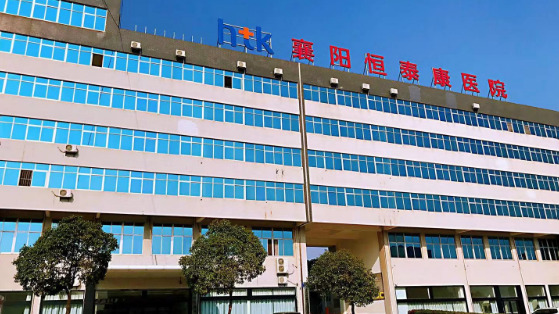
In recent weeks, multiple psychiatric hospitals across Hubei Province have been exposed for fabricating diagnoses and treatment items to siphon money from China’s basic medical insurance fund. Facilities in Xiangyang and Yichang allegedly lured patients with free hospitalization and transportation, only to turn their inpatient records into tools for systematic fraud.
What initially appeared to be a regional scandal has now expanded into something far larger. Emerging evidence indicates that Xiangyang Hengtai Kang Hospital—one of the key hospitals under investigation—is effectively controlled by Chen Bang, chairman and ultimate controlling shareholder of Aier Eye Care Hospital Group. More striking still, reporting shows that every psychiatric hospital under his control has a prior record of defrauding medical insurance.
The ‘Aier System’ behind the fraud
According to The Beijing News, psychiatric hospitals in several Hubei cities used inducements such as free inpatient care to attract patients, then engaged in coordinated insurance fraud. Further investigation revealed a hidden architecture of ownership behind these hospitals—capital tied to what media have come to call the “Aier system.”
An investigative report by Qingliu Studio (清流工作室) makes clear that the misconduct at Xiangyang Hengtai Kang Hospital is not an anomaly. Under Hunan Hengtai Kang Rehabilitation Medical Industry Development Co., Ltd.—a company ultimately controlled by Aier Medical Investment Group—at least seven psychiatric hospitals have been repeatedly penalized by medical insurance regulators for “insurance arbitrage” (套保). In one official administrative penalty decision, the violation is explicitly labeled “fraudulent acquisition of medical insurance funds.”
The seven implicated hospitals are:
- Hengnan Hengtai Kang Hospital Co., Ltd.
- Qiyang Shukang Psychiatric Rehabilitation Specialty Hospital Co., Ltd.
- Hanshou Hengtai Kang Psychiatric Rehabilitation Hospital Co., Ltd.
- Tangyin Hengtai Kang Psychiatric Specialty Hospital Co., Ltd.
- Yizhang Renhui Psychiatric Hospital Co., Ltd.
- Nanxian Hengtai Kang Psychiatric Rehabilitation Hospital Co., Ltd.
- Yongzhou Guohui Psychiatric Hospital Co., Ltd.
Success
You are now signed up for our newsletter
Success
Check your email to complete sign up
All seven are controlled by Hunan Hengtai Kang Rehabilitation Medical Industry Development Co., Ltd., which is in turn controlled by Aier Medical Investment Group Co., Ltd. The ultimate beneficiary and de facto controller at the top of this structure is Chen Bang, the founder of Aier Eye Care.
Identical tactics, repeated punishments
Across these hospitals, regulators identified nearly identical fraud techniques: duplicate billing, excessive charges beyond approved standards, and the artificial “splitting” of treatments into multiple billable items. The goal was singular—extracting maximum funds from the medical insurance pool.
Three hospitals—Tangyin Hengtai Kang, Yizhang Renhui, and Nanxian Hengtai Kang—were punished more than once in recent years. The remaining four were also fined, primarily for overcharging and duplicate billing.
These methods closely mirror those uncovered by The Beijing News in its Hubei investigation. In that reporting, medical staff admitted to fabricating treatment records based on inpatient data. At Xiangyang Hong’an Hospital, for example, multiple patients never received psychotherapy or behavioral correction therapy—yet such treatments appeared on their insurance claims. A male nursing aide stated bluntly that staff fabricated a fixed amount of treatment fees every day.
Aier Eye Care’s rapid distancing
As the scandal widened, Aier Eye Care issued a statement on Feb. 6 attempting to sever any perceived connection. The company claimed that Xiangyang Hengtai Kang Hospital is not part of the Aier Eye Care listed entity but rather a fourth-tier subsidiary jointly established by Aier Medical Investment Group and other investors.
The statement emphasized that Aier Medical Investment does not participate in daily operations at Xiangyang Hengtai Kang and asserted that Aier Eye Care has no equity control, business linkage, or management relationship with Hunan Hengtai Kang Rehabilitation Medical Industry Development Co., Ltd. or its subsidiaries.
Legally speaking, these psychiatric hospitals may indeed sit outside the balance sheet of the Aier Eye Care listed company. But when it comes to insurance arbitrage, Aier Eye Care’s own history raises even deeper concerns.
The ophthalmology ‘charity loop’
On Oct. 16, 2025, Qingliu Studio published another investigation, “Charity Fund Recycling at Ophthalmology Hospitals: How Donations at Aier Eye Care and Others Flow Back to Themselves.” The report questioned whether major eye-hospital chains were using charitable programs as a vehicle for extracting medical insurance funds.
After reviewing annual filings from at least 14 charitable foundations, the investigators found that ophthalmology giants such as Aier Eye Care and Huaxia Eye Hospital donated large sums to charities—only for the money to return, through opaque and indirect channels, to their own corporate accounts.
This “left hand donates, right hand receives” structure points to a hidden profit logic. Prior media reports suggested that these companies profit from the difference between insurance reimbursements and the real cost of surgeries.
A 2022 Sina Finance report, citing a former Aier Eye Care employee, revealed that cataract surgeries are covered by China’s medical insurance system. For each procedure, Aier Eye Care receives more than 1,300 yuan in reimbursement—far above the actual cost. The surplus becomes corporate profit.
The same source said hospitals aggressively upsell patients—initially promised free surgery—on more expensive “aspheric intraocular lenses,” with the price difference paid out of pocket. Doctors are assessed based on their “conversion rate” to mid- and high-end lenses. For wealthier patients, lenses costing 4,000 to 5,000 yuan—or even 20,000 to 30,000 yuan—are recommended, completing a calculated shift from “free” care to high-margin services.
Under this logic, the more money donated, and the more “free” surgeries performed, the greater the downstream profits.
A systemic pattern, not an isolated case
From psychiatric hospitals fabricating treatment records to ophthalmology chains running circular charity schemes, the medical empire controlled by Chen Bang appears to expose only the visible edge of a much larger structure of insurance extraction.
What has surfaced so far may be less an exception than a business model—one embedded in China’s privatized healthcare expansion, shielded by complex ownership structures, and enabled by weak oversight of medical insurance funds. Across the country, similar arrangements may still be operating quietly, untouched simply because no one has yet forced them into the light.