By Li Ting
United Nations experts recently expressed deep concern over ongoing allegations of forced labor targeting Uyghurs, Kazakhs, Kyrgyz, Tibetans, and other minority groups in the Xinjiang Uyghur Autonomous Region and other parts of China. Former Canadian diplomat Michael Kovrig directly labeled this phenomenon as “CCP enslavement,” emphasizing that it is not isolated abuse but a systematic mechanism embedded in the state labor transfer program.
In a Substack article, Kovrig noted that UN experts warned these forced labor practices are carried out under the guise of “poverty alleviation” and “vocational training,” implemented through state-led labor transfer schemes affecting minority groups across multiple provinces. Workers face systemic monitoring, surveillance, and exploitation, and under pervasive fear of punishment and arbitrary detention, they cannot refuse, resign, or return home. In many cases, the severity of coercion may already constitute forced transfer and enslavement under crimes against humanity.
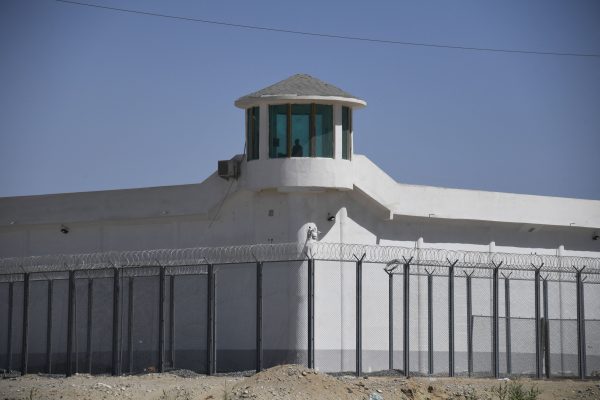
According to the experts, Xinjiang’s “poverty alleviation through labor transfer” program is a core tool. The region’s 14th Five-Year Plan (2021–2025) projected 13.75 million labor transfers, with actual numbers reaching record highs. Tibetan areas have implemented similar “training and labor transfer action plans,” using the pretext of training and relocating “surplus rural labor,” employing coercive measures such as militarized vocational training. In 2024, an estimated 650,000 Tibetans were affected.
Furthermore, the “whole-village relocation” program generates “consent” through repeated visits, implicit threats, prohibiting criticism, or cutting off basic services. From 2000 to 2025, about 3.36 million Tibetans were affected by housing reconstruction and settlement policies, with roughly 930,000 rural Tibetans relocated either individually or as entire communities.
Success
You are now signed up for our newsletter
Success
Check your email to complete sign up
Kovrig emphasized that these labor and land transfer policies forcibly disrupt traditional agricultural or nomadic livelihoods, relocating minorities to areas where they can only engage in wage labor. This erodes their language, communities, lifestyles, culture, and religious practices, causing irreparable harm. “This is a systematic government effort to forcibly reshape the cultural identity of Uyghurs, other minorities, and Tibetans under the guise of poverty alleviation,” he stated.
The situation is further aggravated by the fact that products made through forced labor are entering global supply chains indirectly via third countries, exposing the limitations of targeted trade restrictions and human rights due diligence mechanisms. Kovrig argued that the problem is not a lack of international principles but systematic evasion due to limited independent access and continuous monitoring.

Having been arbitrarily detained in China for over 1,000 days between 2018 and 2021, Kovrig has firsthand experience of the CCP’s coercion and opacity. He urged investors and companies operating and sourcing in China to rigorously conduct human rights due diligence in line with the UN Guiding Principles on Business and Human Rights, fully accounting for supply chain risks.
“Companies must ensure their operations and value chains are not tainted by forced labor.” He reiterated the UN experts’ call for independent UN human rights mechanisms to be allowed unrestricted access to China for investigations.
This warning once again highlights the need for the international community to strengthen supply chain transparency and accountability mechanisms.