When then-leader Mao Zedong unleashed the brutality and chaos of the Cultural Revolution in 1966, along with the violent “Destroy the Four Olds” campaign that devastated China’s historical and cultural inheritance, Chiang Kai-shek was pursuing a much different project across the Taiwan Strait: A state-led revival of traditional Chinese heritage.
North of Taipei lies Grass Mountain, where Chiang established his official residence after retreating to Taiwan. He renamed the area Yangmingshan, reflecting his lifelong admiration for the Ming philosopher Wang Yangming. Taiwan, officially known as the Republic of China (ROC), has maintained de facto self-rule since 1949, when the ROC government retreated to the island after being defeated on the mainland by communist rebels during the Chinese civil war.
RELATED: Beijing’s Year-End Military Drills Around Taiwan Signal Coercion, Not Confidence
Though Taiwan operates as a sovereign nation, Beijing views it as a breakaway province and has vowed to reclaim the self-governing island by “any means necessary,” including the use of military force.
Steeped in tradition
Chiang once said: “I began studying Wang Yangming’s philosophy of ‘the unity of knowledge and action’ when I was 18, after reading Mr. Gu Baoxing. Over the next 50 years, I read and reread, studied and restudied his works. His Instructions for ‘Practical Living’ and ‘Questions on the Great Learning’ are small booklets that I never tire of reading; my heart is drawn to them endlessly, and I find much joy in them.”
Success
You are now signed up for our newsletter
Success
Check your email to complete sign up
Chiang’s emphasis on traditional culture was not merely rhetorical. In Taipei, major avenues were renamed with Confucian virtues, Loyalty, Filial Piety, Benevolence, Justice, Faithfulness, Peace, along with moral concepts drawn from the classical canon.
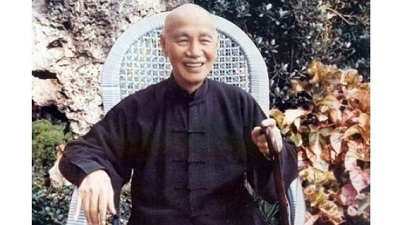
Though Chiang later converted to Christianity, his worldview remained deeply rooted in Confucian tradition. He saw himself as a defender of cultural continuity, determined to preserve what he believed formed the spiritual backbone of the Chinese nation.
A cultural counteroffensive to Mao’s revolution
When Mao launched the Cultural Revolution, Chiang responded with the Chinese Cultural Renaissance Movement, initiated in November 1966 to protect Chinese heritage and openly counter the CCP’s cultural destruction of ancient relics.
RELATED: How the Cultural Revolution Systematically Destroyed China’s Cultural Heritage
On Oct. 10, 1966, Chiang issued an address warning that the Communist Party was attempting to erase China’s civilization: “The survival and decline of any nation depends entirely on the quality of its traditional culture. Once an outstanding culture is destroyed, the national spirit is lost with it, and the entire nation becomes nothing more than a name without substance.”
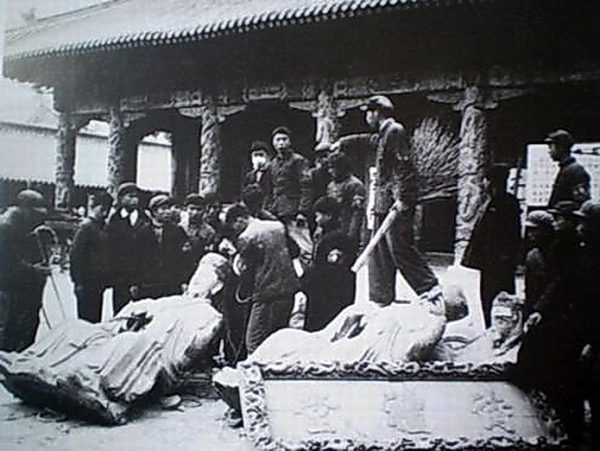
He condemned Mao’s Red Guards for targeting five thousand years of tradition, and concluded with a call for ideological resistance: “Only when we realize the Three Principles of the People, safeguard historical culture, defend human rights and freedom, and achieve total victory in the war to resist communism and restore the nation, only then can we work together with the nations of the world to uphold international peace and security. This is the unshakable faith of our military and people, and the responsibility we inherit from the Revolution of 1911.”
A cultural legacy
Chiang placed heavy emphasis on Chinese language and history education, instructing: “The national language is the foundation of a country’s culture. Whether students study the humanities or the sciences, they must pay special attention to it.” Schools in Taiwan expanded instruction in classical literature, ethics, and civic morality, embedding traditional culture deeply into daily life.
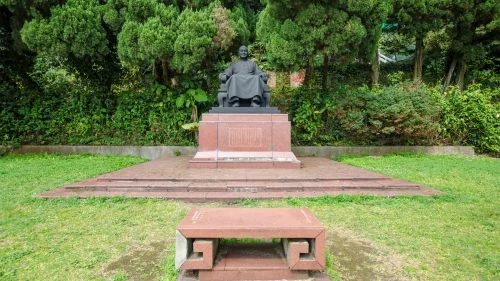
In 1969, compulsory education was extended from six to nine years, strengthening literacy while also ensuring cultural continuity. During the CCP’s campaigns attacking Confucianism, Chiang elevated Confucius as a symbol of resistance. Taiwan established the Confucius-Mencius Society and founded Chinese Culture University, dedicated to preserving and developing Chinese heritage.
Scholars such as Xu Fuguan and Mou Zongsan promoted “New Confucianism,” arguing that Chinese civilization should not be abandoned but renewed as a moral guide for humanity.
One of the most significant acts of preservation was the relocation of key treasures from Beijing’s Palace Museum to Taiwan. Without this transfer, many priceless artifacts might have been destroyed during the Cultural Revolution. When Chiang Kai-shek died on April 5, 1975, his will declared: “To practice the Three Principles of the People, to recover the mainland, to revive national culture, and to stand firm in the democratic camp, these were the lifelong aspirations of my life.”
After his death, the cultural revival mission was continued by his son Chiang Ching-kuo. The movement helped Taiwan become one of the strongest living repositories of traditional Chinese culture in the modern world by preserving rituals, classical learning, and heritage at a time when mainland China was tearing much of it apart.