By Tian Jingxin
According to Reuters and the Associated Press, with only nine months remaining until the critical 2026 midterm elections, the U.S. House of Representatives on Wednesday, Feb. 11 narrowly passed the landmark Security and Voter Eligibility Act (SAVE Act) with 218 votes in favor and 213 against. The Republican-led legislation aims to fundamentally reshape the integrity of federal elections, requiring voters to provide proof of citizenship and imposing criminal penalties on election officials who violate the rules.
Bill aims to close election loopholes
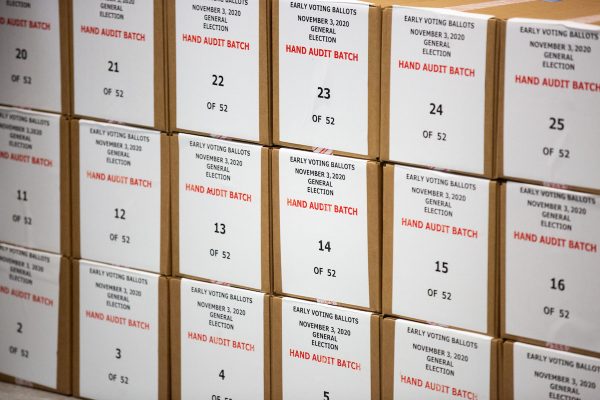
The act’s provisions are designed to address long-standing Republican concerns over election vulnerabilities. It requires voters to provide legal documents proving U.S. citizenship—such as a U.S. passport, birth certificate, or Real ID—when registering for the midterms or any future federal elections. The bill also stipulates that election officials who knowingly register voters without the required proof will face federal criminal penalties.
House Republicans added a key provision requiring all voters in future federal elections, whether voting in person or by mail, to present or attach a photo ID. This measure directly targets the mail-in voting system, which Republicans consider prone to fraud.
Public support: 83% of voters favor voter ID
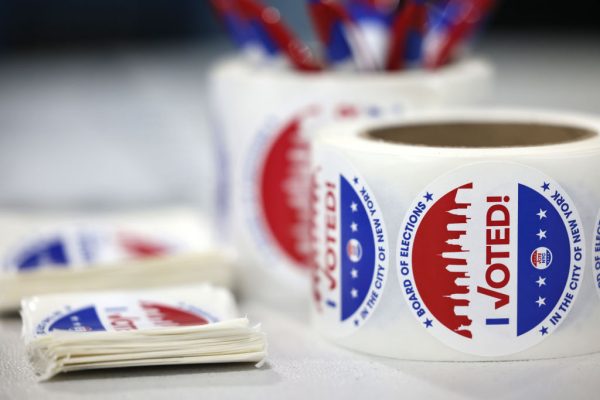
During debates, Republican lawmakers cited authoritative Pew Research Center polling to counter Democratic claims of “voter suppression.” The data show that 83 percent of American voters support presenting photo identification when voting. Notably, this support crosses party lines, with 71 percent of Democratic voters also backing the measure as a safeguard for election security.
Success
You are now signed up for our newsletter
Success
Check your email to complete sign up
“Americans want their elections to be honest and transparent,” House Speaker Mike Johnson said after the vote. “When over 80% of the public supports showing ID, those who block this bill are the real threat to democracy.”
Legislative background
The bill is largely driven by Republican skepticism over anomalies in the 2020 election. Several lawmakers referred to the so-called “Biden curve,” where in swing states such as Wisconsin, Michigan, and Pennsylvania, Trump had a large lead on election night, only to see hundreds of thousands of votes, almost all for Biden, appear overnight, causing a vertical jump in the vote-count curve. Supporters argue that the lack of strict identity verification was the main cause of this “statistical miracle.”
The act also seeks to prevent interference with election monitoring. In 2020, Republican poll watchers were expelled or restricted to distant areas at counting centers in Detroit and Philadelphia, with Detroit even covering windows with cardboard to block external oversight. The newly passed law ensures bipartisan representatives can closely supervise counting, and any obstruction of lawful monitoring will be treated as a federal felony.
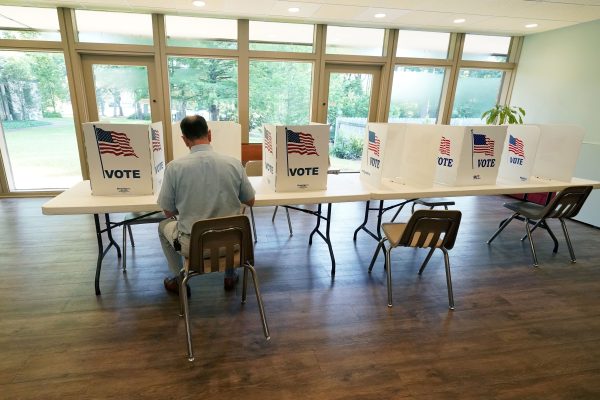
Political divide
Although polls show broad public support for voter ID, nearly all House Democrats voted against the bill, arguing it would disenfranchise low-income and minority voters. The sole Democratic exception was Henry Cuellar from a Texas border district, who joined Republicans in voting in favor.
The bill now moves to the Senate. While it faces potential obstruction in the Democrat-controlled chamber, Republicans have vowed to make it a central issue for the 2026 midterm elections, signaling to voters who is defending election security and who is trying to preserve opportunities for fraud.