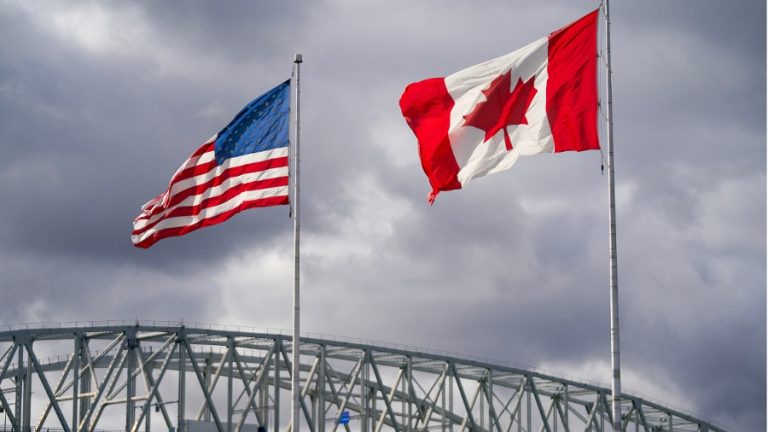
On July 20, 2026, President Donald Trump signed three presidential proclamations imposing an additional 50 percent tariff on roughly $20 billion worth of Canadian goods under Section 338 of the Tariff Act of 1930. The measures, set to take effect Aug. 19 unless negotiations intervene, target sectors including dairy, alcoholic beverages, automobiles and a broad basket of other products ranging from honey and cement to hockey equipment.
The administration framed the action as a response to what it called Canada’s longstanding “discriminatory treatment” of U.S. products.
While the tariffs primarily hit Canadian exports entering the United States, their effects on the cost of goods are expected to ripple in both directions through supply chains, consumer prices and potential Canadian retaliation.
Higher prices for American shoppers on dairy, alcohol and more
The most immediate price pressure will fall on U.S. consumers of the targeted Canadian products. Civil Eats reported that the new 50 percent levies apply to dairy products such as milk, cream and whey protein, as well as alcoholic beverages including beer, wine and spirits, and other food and agricultural items like honey, fruit and vegetable seeds, salt and essential oils.
Industry groups noted that while the tariffs could support American dairy farmers by reducing Canadian competition, “they will also likely contribute to higher food prices.”
Success
You are now signed up for our newsletter
Success
Check your email to complete sign up
Canada has long been a major supplier of agricultural products to the United States. Between 2021 and 2025, the U.S. imported an average of $37.8 billion in farm products from Canada annually. The new duties will raise the landed cost of those goods for American importers, wholesalers and retailers.
Because many of the listed items—especially specialty dairy ingredients used in processed foods, supplements and packaging materials—have limited short-term substitutes, a substantial portion of the tariff is likely to be passed on to consumers.
Historical patterns from earlier tariff rounds support this expectation. Research cited by Civil Eats found that previous Trump-era tariffs increased overall prices enough to amount to a tax increase of roughly $1,000 per U.S. household in the prior year. With a 50 percent rate—far higher than many earlier measures—the absolute cost increase on affected goods could be steeper, particularly for households that regularly purchase Canadian dairy products, craft beers or certain packaged foods.
Retailers may absorb some of the cost initially through thinner margins or by shifting to domestic or third-country suppliers, but full substitution is unlikely for products where Canadian producers hold established market share or unique supply advantages.
Energy, potash, fish, critical minerals and goods already subject to Section 232 tariffs are exempt, which limits the overall footprint to about 5 percent of total U.S. imports from Canada. Still, the concentrated impact on food and beverage categories means grocery and liquor store shelves are where American consumers are most likely to notice higher prices first.

Pressure on Canadian exporters and the risk of higher domestic costs
On the Canadian side, the tariffs do not directly raise the price of goods sold inside Canada. Instead, they reduce the competitiveness of Canadian products in their largest export market. ATB Financial estimated that the measures could affect roughly $36 billion (Canadian) in exports based on broader Harmonized System codes, or about 6 percent of Canada’s total shipments to the United States—higher than the White House’s $20 billion figure because of differences in product classification granularity.
Ontario, Quebec and British Columbia face the greatest exposure through vehicles and parts, dairy, beverages, cement and wood products.
Exporters in these sectors will confront lower volumes or the need to cut prices to remain competitive in the U.S. market, squeezing margins and potentially leading to reduced production, layoffs or temporary oversupply at home. In theory, excess domestic supply of dairy or certain agricultural goods could put downward pressure on Canadian retail prices.
In practice, Canada’s tightly regulated dairy system under supply management limits the ability of producers to flood the domestic market, so price relief for Canadian consumers is likely to be modest.
The greater risk to Canadian grocery and consumer prices lies in retaliation. According to the Associated Press, Canadian officials, including Ontario Premier Doug Ford, have signaled a willingness to respond on a “tariff-for-tariff, dollar-for-dollar” basis. If Ottawa or the provinces impose reciprocal duties on U.S. food and beverage imports—items such as fresh produce, processed foods, meats or alcoholic beverages that appear regularly in Canadian stores—those costs would flow through to Canadian households.
ATB Financial noted that the new U.S. tariffs arrive atop existing duties on steel and aluminum, compounding uncertainty for businesses that rely on cross-border inputs, packaging or equipment. Higher operating costs for Canadian processors and retailers could eventually appear in shelf prices even without formal retaliation.
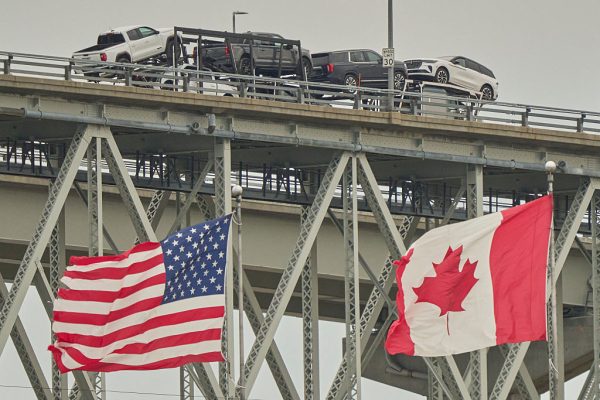
Incomplete pass-through and longer-term uncertainty
Experience with earlier Canadian retaliatory tariffs offers a useful benchmark for how much of any new duty will ultimately reach consumers. A Bank of Canada staff working paper examined daily product-level prices from seven major Canadian retailers during a previous round of 25 percent tariffs.
It found that prices of tariffed goods rose gradually, peaking at about 6 percent after three months—implying pass-through of roughly one-quarter of the tariff rate. There was little spillover to untariffed substitutes, and prices largely reversed once the tariffs were removed. Adjustment occurred mainly through the frequency of price changes rather than large one-time jumps, and effects were stronger when products were explicitly labeled as tariffed.
Applying similar dynamics to the current 50 percent U.S. tariffs suggests that American retailers may pass through only a fraction of the full duty in the first few months, especially if they can draw down inventories or find alternative sources.
On the Canadian side, any retaliatory tariffs would likely follow a comparable pattern of gradual and incomplete pass-through. The Bank of Canada analysis also showed that price effects shifted with trade-policy news, underscoring how expectations and media coverage themselves influence inflation outcomes.
RELATED:
- Trump Imposes 50% Tariffs on Most Canadian Goods Under Rarely Used 1930 Law
- Congress Targets Chinese Connected Vehicles With Sweeping Security Bill
Beyond immediate price changes, the tariffs introduce broader economic friction. Reduced export earnings for Canadian producers can slow investment and employment in affected regions, while higher input costs for U.S. manufacturers that rely on Canadian components may feed into the prices of finished goods.
Both countries face the risk that prolonged uncertainty discourages long-term supply-chain planning, potentially locking in higher structural costs even if the tariffs are later reduced or eliminated.
Negotiations remain open during the 30-day window before the duties take effect. If the two governments reach an agreement that narrows the product lists or suspends the measures, much of the projected price impact could be avoided.
Absent a deal, however, the 50 percent tariffs are poised to raise the cost of specific goods for American consumers, squeeze Canadian exporters, and—should retaliation follow—add upward pressure to grocery and household budgets on both sides of the border.
The ultimate magnitude will depend on how completely firms pass costs through, how quickly alternative suppliers emerge, and whether the dispute escalates or is contained through diplomacy.