By Chen Jing
In prison, there is at least a sentence. In some parts of central China, there may be none.
The focus is Xiangyang, a city in Hubei province more often associated with the historical legacy of Zhuge Liang or the fictional heroism of Jin Yong’s martial arts epics. Known in popular imagination as a place of loyalty and righteousness, Xiangyang — along with nearby Yichang — is now cited in a sharply worded commentary that alleges a striking rise in psychiatric hospitals.
A local resident is quoted as saying that in these cities, psychiatric facilities are “as common as beef noodle shops,” a comparison meant to underscore how widespread they have become.
Opening a restaurant in China is relatively simple. Opening a hospital, by contrast, requires layers of regulatory approval. Psychiatric institutions, in particular, face strict oversight and high entry barriers. Against that backdrop, the commentary questions how so many such hospitals have appeared in parts of Hubei.
Success
You are now signed up for our newsletter
Success
Check your email to complete sign up
The piece points to a recent media investigation that described aggressive recruitment tactics: offers of free hospitalization, free meals and lodging, and even complimentary transportation. In a healthcare system where ordinary treatment can impose heavy financial strain on families, such promises stand out.
According to the commentary, the investigation found that some of those admitted were elderly individuals described as mentally lucid, migrant workers said to be physically healthy, and even staff members affiliated with the hospitals themselves. The allegation is that each admission generates reimbursement claims from China’s national medical insurance fund, effectively turning patients into revenue sources.
The critique goes further, arguing that the issue extends beyond suspected insurance fraud to what it characterizes as “legal kidnapping.” In the author’s telling, once labeled mentally ill, individuals may find it difficult to challenge the diagnosis. Protesting becomes evidence of “mania.” Silence may be recorded as “depression.” Complaints of injustice can be categorized as “persecutory delusions.”
One patient in Yichang is cited as saying he was confined for five years and questioned how that differed from prison. The commentary emphasizes that prison sentences, however severe, are defined by a fixed term. Psychiatric hospitalization, it argues, can be indefinite.
The report referenced in the piece includes an account of a June 2025 suicide in a Yichang facility, described as an act of despair by someone unable to endure open-ended confinement. The commentary also alleges instances of physical abuse by caregivers in closed wards, portraying such environments as zones effectively insulated from outside scrutiny.
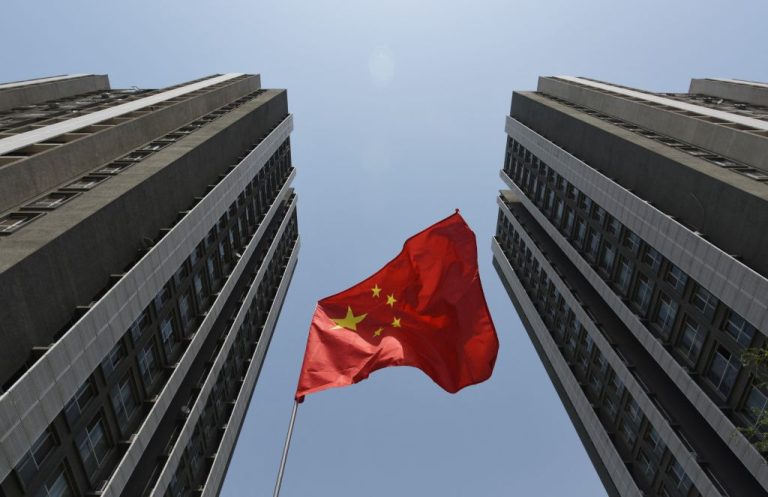
From there, the author broadens the argument beyond individual hospitals. The psychiatric ward becomes a metaphor for governance under the Chinese Communist Party (CCP).

‘Patients’ have limited recourse
First, the piece draws a parallel between medical diagnosis and political labeling. Just as a doctor’s declaration can define a patient as ill, the commentary argues, authorities can define an individual as guilty of crimes such as “picking quarrels and provoking trouble,” with limited recourse.
Second, it compares involuntary hospitalization to restrictions on movement. The text references difficulties in obtaining passports, moving money abroad, or navigating expanding border-control watchlists, presenting these as mechanisms that constrain citizens’ freedom.
Third, it juxtaposes alleged abuse inside hospitals with what it describes as coercive enforcement practices in broader society.
The commentary also invokes historical precedent, referencing the Soviet Union’s use of psychiatric institutions — known as Psikhushka — to confine dissidents. In that system, opposition to the state could be interpreted as evidence of mental illness.
In contemporary China, the piece contends, psychiatric confinement — including in Ankang hospitals, which are run by public security authorities — has been used against petitioners and dissidents. It argues that labeling someone mentally ill can function as a tool of silencing.
The text ultimately frames the alleged abuses in Hubei as part of a wider political logic. If certain hospitals are accused of turning patients into “medical insurance consumables,” the author concludes, then the broader system risks reducing citizens to “political consumables.”
The closing lines return to metaphor. In what the writer describes as a “giant psychiatric hospital,” remaining clear-headed becomes both painful and dangerous. Yet lucidity, the commentary asserts, is also the only path to eventual freedom.
(This article reflects the author’s personal views and opinions and do not necessarily reflect the views of Vision Times.)