By Zhang Yu
Jimmy Lai has been sentenced to 20 years in prison under charges brought pursuant to Hong Kong’s National Security Law.
The sentence marks one of the most severe penalties imposed on a media figure since the law took effect in 2020. Lai, founder of the now-closed Apple Daily, did not face accusations involving violence or armed activity. Prosecutors instead relied on national security provisions to pursue charges linked to his public statements, media activities, and international advocacy concerning Hong Kong.
Supporters describe the case as politically motivated and characterize the prosecution as targeting dissent. Authorities maintain that the proceedings were conducted in accordance with law and that national security concerns justified the charges.
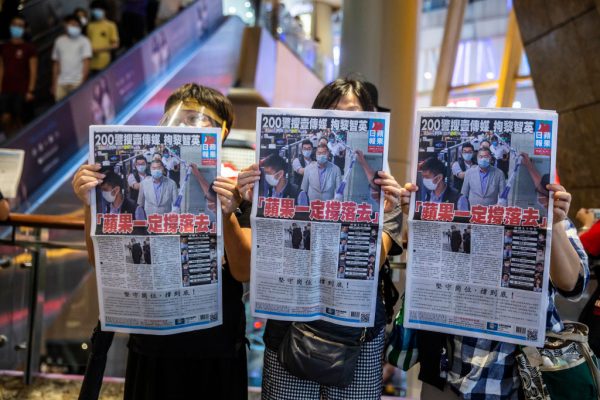
Lai, now in his seventies, built Apple Daily into one of Hong Kong’s most widely read newspapers. The publication was known for its critical coverage of the Hong Kong and Beijing governments and for its support of the city’s pro-democracy movement. It ceased operations in 2021 following asset freezes and arrests of senior staff.
Success
You are now signed up for our newsletter
Success
Check your email to complete sign up
In public appearances and writings prior to his detention, Lai openly criticized government policy and defended press freedom. He granted interviews to international media outlets and engaged with foreign officials regarding developments in Hong Kong. In democratic systems, such conduct typically falls within protected political speech. Under the National Security Law framework, however, authorities have treated certain forms of external communication and advocacy as potential threats to national security.
Legal experts have noted that the law grants broad interpretive authority to authorities and allows for expansive definitions of offenses such as “collusion,” “incitement,” and “conspiracy.” Critics argue that the vagueness of these provisions lowers the threshold for prosecution and reduces procedural safeguards. Hong Kong officials reject that characterization and state that judicial independence remains intact.
The length of Lai’s sentence has drawn particular attention. Observers say a 20-year term for a nonviolent defendant in his seventies effectively amounts to life imprisonment. They argue that the severity signals a deterrent intent, sending a broader message to journalists, business leaders, and civil society figures about the consequences of challenging official narratives.
Beijing and Hong Kong authorities have repeatedly stated that the National Security Law restored stability after the 2019 protests and that it targets only a small number of individuals who endanger national security. In official statements, they have emphasized that press freedom continues to be protected so long as media activities do not violate the law.

The case has become a reference point in international discussions about Hong Kong’s autonomy and the scope of civil liberties under Chinese Communist Party governance. Foreign governments and press freedom organizations have called for Lai’s release, framing the prosecution as an example of shrinking media space in the city. Chinese officials have criticized such comments as interference in internal affairs.
The core dispute surrounding the case centers on how national security is defined and applied. Under the current legal structure, authorities possess significant discretion in determining whether speech, reporting, or international engagement constitutes a security risk. Supporters of the law argue that such tools are necessary to safeguard sovereignty. Critics contend that the framework enables political considerations to influence judicial outcomes.
Apple Daily’s closure remains a significant milestone in Hong Kong’s media landscape. The newspaper had operated for more than two decades and was known for its confrontational editorial line. Its shutdown followed the arrest of senior executives and the freezing of company assets, actions authorities said were consistent with national security enforcement.

Lai’s dual identity as a businessman and media proprietor heightened the symbolic weight of the case. He maintained international visibility and consistently aligned himself with pro-democracy advocacy. Observers say this prominence contributed to the broader impact of his prosecution.
For supporters, Lai’s refusal to moderate his public positions represents a defense of press freedom and civic rights. For authorities, his activities crossed legal boundaries established under the National Security Law. The court’s decision reflects the prevailing interpretation of that law within Hong Kong’s current governance framework.
The 20-year sentence is now part of the evolving record of how the National Security Law is being implemented. It stands as a significant development in the ongoing debate over the future of press freedom, judicial independence, and political expression in Hong Kong.
(The article represents solely the author’s personal stance and views and does not necessarily reflect those of Vision Times.)