By Meng Hao
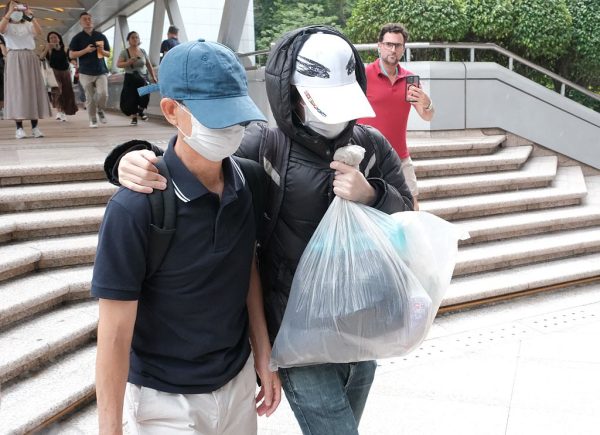
On Feb. 11, Hong Kong’s West Kowloon Magistrates’ Courts found 69-year-old Kwok Yin-sang guilty of “attempting to deal with the property of an absconder.” He became the first family member of an overseas wanted activist to be convicted since the implementation of the Safeguarding National Security Ordinance, widely known as “Article 23,” the Hong Kong legislation enacted in 2024 to supplement the Beijing-imposed National Security Law.
Kwok Yin-sang was charged for attempting to cancel and withdraw approximately HK$88,600 (about US$11,300) from an insurance policy registered under his daughter, Anna Kwok, executive director of the Washington-based Hong Kong Democracy Council (HKDC). The case was adjourned to Feb. 26 for sentencing, and the defendant remains in custody.
The conviction came alongside two other developments within the span of two days: the 20-year prison sentence handed down to media entrepreneur Jimmy Lai, and the release of a new national security white paper by China’s State Council. Overseas activists described the sequence as a coordinated signal of intensified repression, prompting renewed concern among Hong Kong democracy advocates abroad and in the international community.
The insurance policy at the center of the case was purchased in 1991 by Kwok Yin-sang for his then two-year-old daughter. It was later transferred to Anna Kwok when she reached adulthood. She is one of 34 overseas activists wanted by Hong Kong’s National Security Department on charges of “colluding with foreign forces,” with a bounty of HK$1 million (approximately US$129,000) placed on her.
Success
You are now signed up for our newsletter
Success
Check your email to complete sign up
International human rights organizations have criticized such prosecutions of relatives as collective punishment in violation of international law. Beijing has continued to press forward despite international objections.
Beijing’s white paper and national security data
On Feb. 10, the State Council Information Office released a nearly 20,000-word white paper titled “The Practice of ‘One Country, Two Systems’ in Hong Kong in Safeguarding National Security.” The document asserts that China’s central authorities bear ultimate responsibility for Hong Kong’s national security, that the Hong Kong Special Administrative Region has fulfilled its constitutional obligations, and that the National Security Law and Article 23 legislation have ended what it describes as a previously “undefended” security environment.
According to the white paper, as of January 2026, 98 people had been prosecuted under the National Security Law, and 78 had been convicted.
Western governments, human rights groups, and media organizations characterized the document as an effort to legitimize expanded controls and to downplay concerns over declining civil liberties. They viewed its release in close proximity to Jimmy Lai’s sentencing as a forceful response to international criticism.
Anna Kwok and allegations of transnational repression
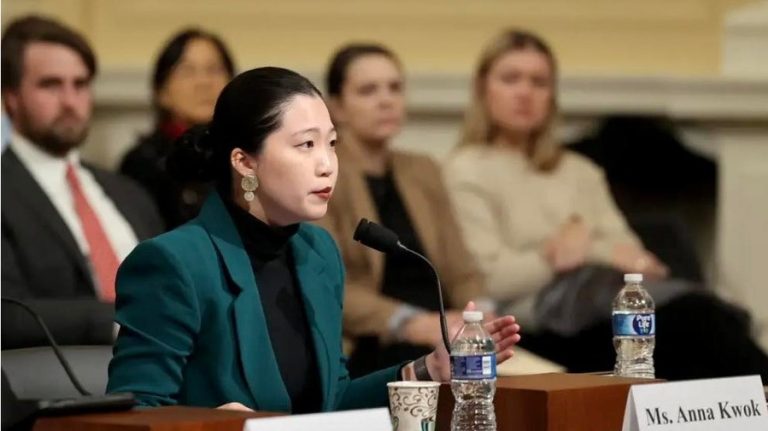
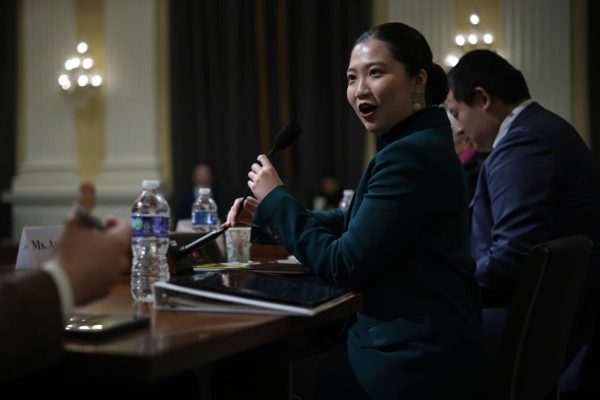
Anna Kwok, executive director of HKDC, played a role in international advocacy during the 2019 anti-extradition protests in Hong Kong. She coordinated global newspaper advertisements urging G20 leaders to “Stand with Hong Kong” and later testified before the U.S. Congress regarding Beijing’s policies in the territory. She publicly revealed her identity in 2022 and has since focused on documenting political prisoner cases and foreign interference.
Since 2023, Hong Kong authorities have taken a series of actions against her.
In July 2023, the National Security Department announced bounties for eight overseas activists, including Anna Kwok, offering HK$1 million (about US$129,000) for information leading to their capture. Police accused her of lobbying foreign governments to impose sanctions on Hong Kong.
In June and December 2024, Hong Kong’s Secretary for Security, Chris Tang, invoked powers under Article 23 to revoke the passports of Anna Kwok and six other activists, effectively barring them from using Hong Kong travel documents. The government also prohibited individuals from handling their funds or financial assets.
On April 30, 2025, national security police arrested Kwok Yin-sang and Anna Kwok’s 35-year-old brother. Authorities alleged that her father had met her overseas and knew she was a wanted person yet still attempted to cancel the long-standing insurance policy. Her brother was later released on bail.
On Feb. 11, 2026, the court convicted Kwok Yin-sang. Acting Principal Magistrate Cheng Nim-chi ruled that knowingly attempting to deal with funds belonging to an absconder constituted an offense. Anna Kwok responded on social media platform X, writing: “Today, my father was convicted simply for being my father. This is retaliation by the Hong Kong government against my advocacy work. This is hostage-taking. This is transnational repression.”
Elaine Pearson, Asia director at Human Rights Watch, described the prosecution as “cruel and unjust collective punishment.” Anna Shui-lam, spokesperson for Amnesty International Hong Kong Overseas, called it a “disturbing escalation of repression.” Eighty-seven organizations issued a joint statement condemning the targeting of family members as “hostage-taking.” The United Nations Secretary-General’s annual report listed the bounty against Anna Kwok as a reprisal against individuals cooperating with the United Nations.
US sanctions and international response
Following the issuance of bounties, Anna Kwok and the HKDC worked with allies in Hong Kong and Washington to advocate for sanctions.
On March 31, 2025, the U.S. Department of State and the Department of the Treasury announced sanctions against six Chinese and Hong Kong officials, including Hong Kong Secretary for Justice Paul Lam, Commissioner of Police Raymond Siu, and Dong Jingwei, head of the Office for Safeguarding National Security of the Central People’s Government in Hong Kong. U.S. authorities accused them of using the National Security Law to conduct transnational repression, intimidation, and harassment of overseas activists, citing three rounds of bounties targeting 19 Hongkongers.
HKDC welcomed the sanctions, stating that acts of repression must have consequences. Anna Kwok described the move on social media as a countermeasure against cross-border repression.
Overseas advocates warn of expanding pressure on families
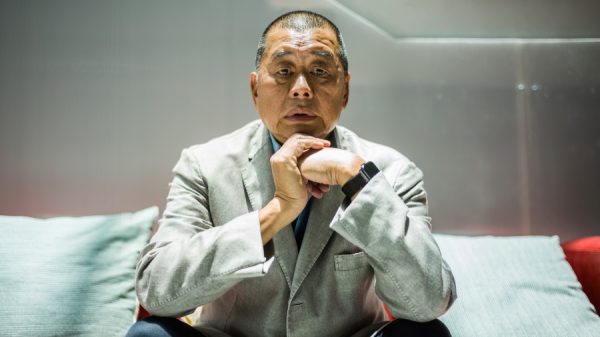
Wong Koon-ngan, president of the Hong Kong-Canada Alliance, said in an interview that the conviction of Kwok Yin-sang, Jimmy Lai’s sentencing, and the white paper were not isolated events.
He noted that former Hong Kong Chief Executive Leung Chun-ying had publicly suggested that Jimmy Lai’s children, who had lobbied Western governments, should also be placed on wanted lists. Wong said these actions indicate a deliberate extension of enforcement to family members.
He argued that targeting relatives creates psychological pressure on overseas activists and aims to deter both domestic and international supporters. He urged democratic governments to reconsider Hong Kong’s special trade status, apply diplomatic pressure, and impose sanctions on officials involved in what he described as transnational repression.
Hong Kong parliament speaker Johnny Chiang, based in Canada, offered a similar assessment. He said that when authoritarian systems approach what he characterized as their final stage, they adopt harsher measures against dissent. He described the prosecution of family members as unlawful and linked it to what he sees as political decline and internal fragility within the Chinese Communist Party.
Chiang cited Jimmy Lai’s 20-year sentence as an example of authorities silencing influential voices. He said that if Lai were free, his public statements would carry significant influence in Hong Kong. By imposing heavy sentences and prosecuting relatives, Chiang argued, authorities aim to deter overseas activism.
Chiang also criticized what he described as a “stability maintenance” system in which security agencies pursue high-profile cases to justify expanded funding. He characterized this as a corrupt practice within the national security apparatus.
Drawing on personal experience, Chiang said that his own family members had been arrested because of his activism. While acknowledging feelings of guilt, he said this has strengthened his resolve rather than diminished it.
He stated that the Chinese Communist Party has abandoned any pretense of compliance with international human rights standards. “To stop Hongkongers from continuing to suffer suppression under the National Security Law or Article 23,” he said, “the only method is to eliminate the CCP.” He urged the international community not to expect legal or human rights commitments from Beijing.
Both Wong Koon-ngan and Johnny Chiang said that the shift from targeting individuals to prosecuting relatives, combined with actions beyond Hong Kong’s borders, reflects what they described as the regime’s increasing reliance on coercive measures. They called on democratic governments to respond with coordinated action and to reassess political and economic engagement with China.