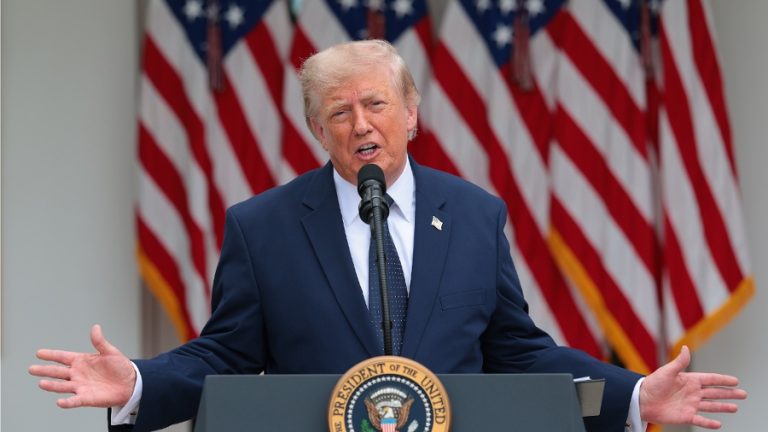
President Donald Trump told Americans in a primetime address on July 16 that the Chinese Communist Party (CCP), the one-party regime that rules China, carried out “the largest compromise of election data in history” by illicitly acquiring some 220 million U.S. voter files. He called for a full accounting of what he described as long-buried weaknesses in the American election system, including disputed questions surrounding the 2020 presidential election.
Speaking from the East Room of the White House, Trump said the stolen files contained voters’ names, home addresses, phone numbers, party affiliations, and other sensitive personal data. He described the breach as “an unprecedented election security nightmare.”
Declassified intelligence points to a years-long Chinese operation
Trump said the allegations rest on newly declassified intelligence gathered by the White House Government Transparency Task Force and the President’s Intelligence Advisory Board, with the heads of U.S. intelligence agencies personally reviewing the findings. The material spans several years and draws on records from the CIA, FBI, National Security Agency, and Department of Homeland Security.
According to the president, the assessments conclude that Beijing obtained the voter records, set up a dedicated unit to exploit the data, and sought to influence the 2020 election and his reelection campaign. One heavily redacted report released by the White House states that the Chinese government obtained voter registration data from 18 states. Another says Beijing planned to use the data for “public opinion analysis” of U.S. elections.
Trump argued that the Party had every reason to want him defeated in 2020. His first-term tariffs on Chinese goods put severe economic pressure on Beijing, and the Party leadership, he said, wanted a different occupant in the White House.
Success
You are now signed up for our newsletter
Success
Check your email to complete sign up
He reserved some of his sharpest language for America’s own intelligence bureaucracy. “Those responsible for sounding the alarm instead kept the information secret and hidden,” Trump said, charging that neither he nor Congress was ever told that China had gained access to American voter data. He also accused the regime of Venezuelan strongman Nicolás Maduro of studying how digital technology could be used to influence American elections, and pointed to what he called a “deep state” effort to keep such findings from the public.
“Our purpose in disclosing this information is not to weaken confidence in elections, but to earn that confidence by confronting vulnerabilities and correcting them very, very quickly,” the president said.
The White House says the disclosures prove elections are less secure than Americans believe
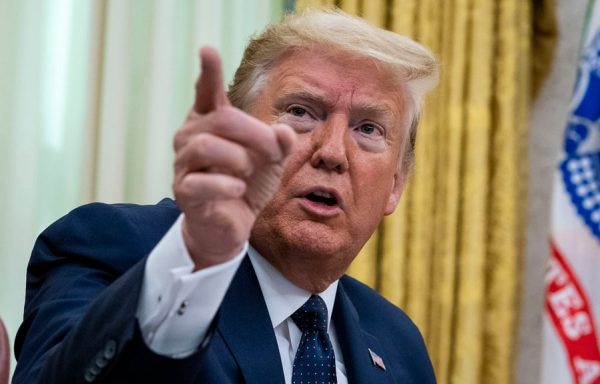
Hours before the address, White House press secretary Karoline Leavitt told reporters the speech would show Americans a hard truth. “We should have the safest and most secure elections in the history of the world,” she said, “and what the president will be speaking about tonight will show you that perhaps that is not the case, and we need to make some adjustments moving forward.”
Trump repeated his position that the 2020 presidential election deserves continued scrutiny, saying federal investigations remain open, including an inquiry involving election records in Fulton County, Georgia. Director of National Intelligence Tulsi Gabbard has been driving the declassification push, and the White House says more documents are coming.
ABC and NBC refused to air the address on their main networks
The address drew wide media attention even before it aired. According to Reuters, ABC and NBC declined to carry it live on their primary broadcast networks, routing coverage through their streaming news channels instead. Trump used the speech itself to accuse the mainstream press of covering major news selectively and of playing down election security concerns for years.
Republican Sen. Bernie Moreno of Ohio, who was briefed on the speech in advance, set expectations high in a post on X. “This may be the most important Oval Office address since the Cuban Missile Crisis,” he wrote. “The time for complacency with China is over.”
A Reuters poll published in April found that about 63 percent of Republican respondents believe fraud occurred in the 2020 presidential election, compared with roughly 21 percent of independents, a gap that shows how partisan the underlying question has become.
Trump demands the Senate pass his proof-of-citizenship voting bill
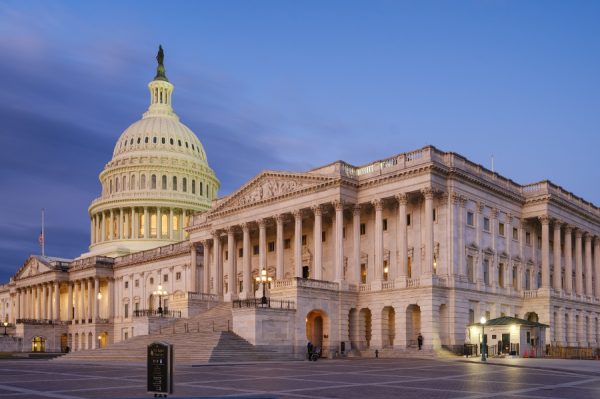
The address served a legislative purpose as well. Trump renewed his call for Congress to pass the SAVE America Act, which would require proof of U.S. citizenship for federal voter registration and direct states to check federal databases and purge ineligible registrations from their rolls. The bill has passed the House and awaits action in the Senate.
Supporters argue the legislation would restore public confidence by ensuring that only eligible citizens vote in federal elections. Opponents counter that the requirements could make registration and voting harder for some legitimate voters.
With the 2026 midterm elections approaching, the speech serves a campaign function as well. Trump has made election security a signature second-term priority, and his administration has moved aggressively on election administration, including a shakeup of the leadership of the Election Assistance Commission, the federal agency that sets voting system guidelines. Analysts read the primetime address as an effort to consolidate his base and set the terms of the midterm fight, with Republicans campaigning on fraud prevention and Democrats on voting access.
Trump’s claims about Chinese acquisition of voter data and the 2020 election remain contested inside the United States. A 2021 assessment by the National Intelligence Council found that China “probably” collected information on election-related targets during the 2020 cycle but concluded that Beijing did not interfere with election infrastructure, vote tabulation, or the transmission of results. The Trump administration maintains that as more declassified files become public, Americans will be able to weigh the full record for themselves.