By Zhang Zheng, Ryan Wu, and Liu Di, Vision Times
FLUSHING, New York — On Feb. 21, the fifth day of the Lunar New Year marking the Year of the Fire Horse, New York City’s largest Lunar New Year parade returned to the heart of Flushing, Queens. Celebrating its 30th anniversary, the annual event has grown into the largest Lunar New Year parade on the U.S. East Coast, drawing thousands of spectators from all walks of life and backgrounds.
Organized by the Flushing Chinese Business Association, this year’s parade expanded by roughly 20 percent compared to previous years, with increased participation from non-Asian groups, including Hispanic community organizations. Organizers said the broader representation reflects both the event’s cross-cultural appeal and the evolving diversity of New York.

A cultural feast
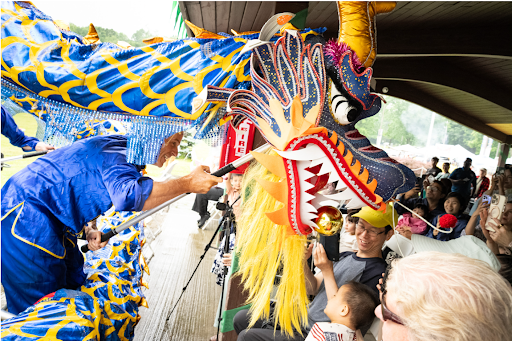
The parade began promptly at 11 a.m., led by mounted officers of the New York Police Department, followed by a police motorcycle unit, marching bands, the Asian American Police Executives Association, and other city departments. Nearly 100 community groups and 50 floats filled the streets of downtown Flushing with festive colors and music. Spectators lined the route, offering greetings of “Happy New Year,” “Gong Xi Fa Cai,” and “Good luck in the Year of the Horse.”
RELATED: From ‘Golden Dumplings’ to Sweet Rice Wine: The Symbolism Behind Chinese New Year Traditions

Success
You are now signed up for our newsletter
Success
Check your email to complete sign up
Among the most prominent participants were Falun Gong practitioners, whose Tianguo Marching Band performed traditional-themed pieces including “Falun Dafa Is Good,” “Sacred Song,” and other selections. Additional groups included dragon and lion dance troupes, taiko drummers, waist drum teams, and lotus-themed performers. The Epoch Times and NTD Media Group were also in attendance.

Greeting from officials
Numerous elected officials attended to extend Lunar New Year wishes to the Asian community. U.S. Rep. Grace Meng told the crowd that the Year of the Fire Horse symbolizes passion and strength. Although many in the community are facing challenges, she said, “we stand together,” and pledged to continue advocating for all residents. She also thanked younger generations for their active participation.

Republican mayoral candidate Curtis Sliwa told Vision Times that it’s important to celebrate diversity and culture. “The growing impact of the Chinese community here should be recognized,” said Sliwa, “It’s very important that we focus on the history and culture of the Chinese and the impact that they have in our city, our state, and our country.”

New York State Comptroller Tom DiNapoli expressed hope that the new year would bring health, happiness, and prosperity. He emphasized solidarity with Chinese, broader Asian, and immigrant communities across Queens and New York State.
New York City Comptroller Mark Levine greeted attendees in Cantonese, saying, “大家好、恭喜发财、新年快乐,” (Hello everyone, wishing you prosperity and a Happy New Year!) and described the Flushing parade as “unparalleled.” He pledged continued support for the community.

New York City Councilmembers Phil Wong and Sandra Ung also offered greetings, wishing residents success, health, and good fortune in the new year. “We’re very happy to see the city increasingly embracing Chinese culture and inviting our representatives to events and demonstrations in the city,” said Wong, adding that it’s “very important” for Chinese Americans to be more involved in the development and politics that impact all New Yorkers.

“Wishing everyone and happy and healthy New Year,” said Ung, who represents District 20.
Queens Borough President Donovan Richards highlighted Queens’ diversity and reaffirmed support for immigrant communities. Queens District Attorney Melinda Katz thanked NYPD officers from the 109th Precinct and underscored the importance of community engagement in preventing youth involvement in the criminal justice system.
In closing remarks, Peter Tu, chief advisor of the Flushing Chinese Business Association, said the parade has evolved over three decades from a neighborhood celebration into one of New York City’s signature annual cultural events, symbolizing the Chinese community’s growth and deep roots in the city.
Championing cultural diversity
Many attendees praised the parade’s strong emphasis on traditional Chinese culture. Doris Tegge, an IT engineer, and John Sommo Jr., an accountant, said the event deepened their appreciation for Chinese heritage. Tegge noted she had traveled to China and observed that “in today’s China, you would not see a parade like this.” She added that she hopes Chinese people will one day enjoy greater freedom to celebrate their traditions.

Litao Zhao, a U.S.-raised Chinese American IT engineer, and his wife Mariam Navi said the event demonstrated America’s cultural inclusiveness. They described the Falun Gong procession as “magnificent” and expressed support for the group’s principles of “Truthfulness, Compassion, and Forbearance,” calling them values “the world needs.”
Falun Gong, also known as Falun Dafa, is a meditation practice rooted in the principles of truthfulness, compassion, and forbearance. Despite being peaceful in nature, China has launched a brutal campaign to eradicate the practice since 1999. Thousands have since perished at the hands of Chinese police, with many adherents today still undergoing routine monitoring, arbitrary travel bans, and arrests.

Phoenix Tesla, a radio-frequency engineer visiting from Denver, said the parade revealed “the richness and diversity of traditional Chinese culture” and inspired her to learn more.
For many spectators, including recent immigrants from mainland China, the celebration carried additional meaning. One attendee remarked that such vibrant public observances of traditional culture are difficult to find in China today, expressing hope that similar events might one day flourish there.

From the scale of participation to the presence of city and state officials, this year’s parade underscored both the enduring vitality of Chinese cultural traditions and their growing impact in the U.S.