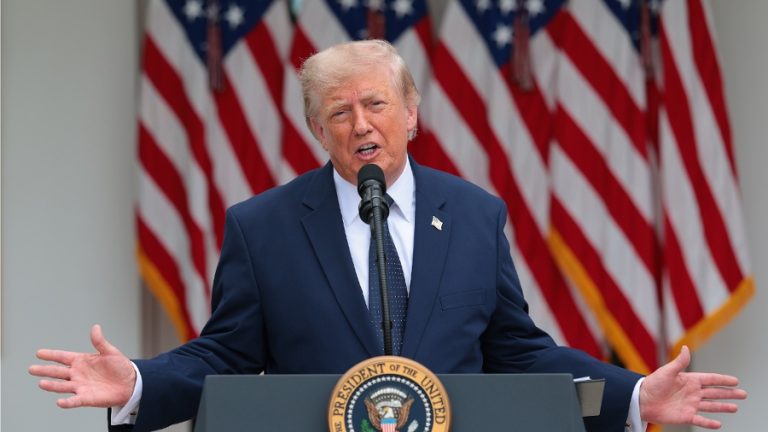
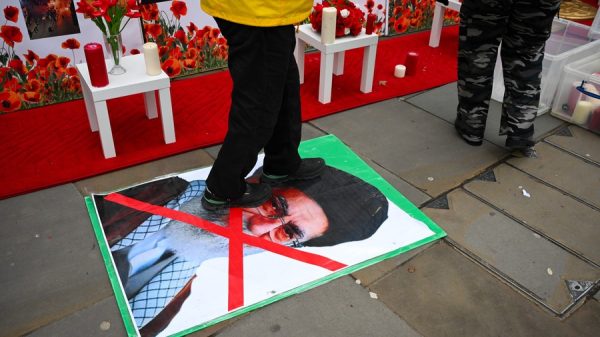
U.S. President Donald Trump announced on Feb. 28 that Iran’s Supreme Leader Ayatollah Ali Khamenei had been killed, crediting “highly sophisticated intelligence and tracking systems” and close coordination with Israel.
“He could not escape our highly sophisticated intelligence and tracking systems. Coupled with close cooperation with Israel, he and the other leaders who were killed alongside him had no way out,” Trump said.
The statement reverberated far beyond Tehran. In Beijing, state-run Xinhua News Agency on March 1 quoted Trump’s remarks, prominently highlighting his reference to America’s intelligence and tracking capabilities.
For China’s leadership, the message was unmistakable. The successful decapitation of Khamenei demonstrated not only military reach, but the operational depth of U.S. intelligence systems.
Xi Jinping has repeatedly stressed “bottom-line thinking” and warned Party officials about hidden dangers. In such a political climate, the possibility of foreign penetration is not abstract. It carries direct implications for internal trust, loyalty, and survival at the highest levels of power.
Success
You are now signed up for our newsletter
Success
Check your email to complete sign up
Within Zhongnanhai, the question is no longer theoretical. If Washington can locate and eliminate an adversary’s supreme leader, then the existence of insiders becomes a constant shadow. Suspicion tightens control. Control intensifies purges. Political survival becomes paramount.
Even without any move against Beijing, the psychological impact remains. The words “intelligence” and “tracking systems” now carry strategic weight.
Against this backdrop, Yu Maochun, Director of the China Center at the Hudson Institute and former U.S. State Department China policy adviser, renewed his call for a more direct approach toward the Chinese Communist Party.
On Feb. 28, Yu reposted an earlier essay on X urging Washington to “promote regime change” in Communist China.
“When the United States faces authoritarian regimes that threaten the very foundation of its nation, promoting regime change is not an act of caprice, but a strategic choice, a moral responsibility, and an act of self-protection,” Yu wrote.
He described the CCP as carrying out “comprehensive and sophisticated infiltration and coercion operations,” arguing that regime change serves both deterrence and defense.
“What Chinese leader Xi Jinping fears most is a U.S.-backed ‘color revolution’ or ‘peaceful evolution’ that leads people to demand freedom, human rights, and democracy,” Yu stated. “If the United States demonstrates a posture—making regime change a real possibility rather than a political taboo—that in itself is a powerful deterrent.”
Yu further asserted that Beijing is already engaged in what amounts to its own campaign to reshape the United States, citing political influence efforts, economic leverage, intellectual property theft, and fentanyl trafficking into American communities.

“The CCP is not content with domestic rule,” he wrote. “It is waging systematic institutional infiltration against the United States. If we do not attempt to change their regime, they will change ours.”
He framed regime change not as aggression, but as national defense at its highest level.
Yu also pointed to domestic resistance within China, from the 1989 Tiananmen protests to the 2022 White Paper Movement, arguing that calls for political transformation originate inside the country itself.
“Supporting regime change is not about imposing values, but about responding to the demand for freedom that already exists in people’s hearts,” he wrote. “We either stand with the oppressed, or we stand with the oppressors.”
From Venezuela in January to Iran in February, global events have moved quickly. Yu’s message is blunt: the next front, he suggests, is the Chinese Communist Party.
By Jian Yi