
By Cai Siyun, Vision Times
China’s leadership has set its 2026 economic growth target at between 4.5 percent and 5 percent, marking the lowest GDP goal in roughly 35 years as authorities confront mounting economic headwinds at home and increasing global uncertainty.
The target, which was announced during the opening of the Fourth Session of the 14th National People’s Congress (NPC) on March 5 in Beijing, falls below the “around 5 percent” growth goal maintained over the past three years. Chinese Premier Li Qiang delivered his third government work report since taking office and presented the draft outline for the 15th Five-Year Plan (2026–2030).
Slower growth targets
According to the draft plan, China aims to achieve 20 major development targets during the “15th Five-Year Plan” period. Beijing’s long-term objective remains to double China’s GDP by 2035 compared with 2020 levels, a milestone authorities say would move the country closer to the economic level of “moderately developed nations.”
Success
You are now signed up for our newsletter
Success
Check your email to complete sign up
Such countries typically have per-capita GDP between $20,000 and $30,000. To stay on track toward that long-term goal, the government set 2026’s growth target at 4.5–5 percent, slightly below recent targets.
Li said the adjustment reflects broader policy considerations. “This year marks the beginning of the 15th Five-Year Plan period,” he said, adding that the government must create room to adjust economic structures, control risks, and advance reforms. He also emphasized the need to align near-term economic policy with China’s 2035 development vision.
Growing fiscal deficit
Alongside the lower growth target, Beijing announced a higher fiscal deficit ratio of around 4 percent of GDP. The projected deficit totals 5.89 trillion yuan (approximately $820 billion), an increase of 230 billion yuan from the previous year. Government spending is also set to expand significantly.
The central government’s general public budget expenditures will reach roughly 30 trillion yuan, rising by about 1.27 trillion yuan compared with last year. To finance these measures, authorities plan to issue 1.3 trillion yuan in ultra-long-term special treasury bonds. An additional 300 billion yuan in special bonds will be used to recapitalize major state-owned commercial banks.
Meanwhile, local governments will issue approximately 4.4 trillion yuan in special-purpose bonds to fund infrastructure and development projects.
Measures to stimulate consumption
The government is also attempting to stimulate domestic demand. Li set the target urban surveyed unemployment rate at around 5.5 percent, roughly unchanged from last year. The consumer price index (CPI) growth target was set at around 2 percent, signaling Beijing’s intention to push inflation back into positive territory after periods of weak consumer demand.
Authorities hope that improving supply and demand conditions will help stabilize prices and revive consumer spending, thereby supporting broader economic growth.
To encourage consumption, Beijing plans to allocate 250 billion yuan from ultra-long-term special treasury bonds to expand programs encouraging consumers to trade in old household goods and vehicles for new products. Another 100 billion yuan fiscal-financial support fund will be created to stimulate domestic demand, including risk-compensation mechanisms designed to encourage lending and spending.
Structural pressures
Analysts say the new growth target reflects a growing recognition within Beijing that China’s economy is entering a period of structurally slower expansion. According to a report from Bloomberg, the decision to set the growth goal at its most modest level since 1991 suggests Chinese authorities are increasingly willing to tolerate slower growth in exchange for long-term sustainability.
The shift signals a move away from the traditional model of debt-driven growth powered by real estate and large infrastructure projects. External risks also remain a concern.
BBC China also reported that Yuan Yuwei, a fund manager at Taijie Investment Co., noted that the growth target and policy framework were largely designed in late 2025 and did not take into account recent geopolitical developments. “This is extremely unfavorable for China,” Yuan said. “The Strait of Hormuz is a crucial trade route for the country.”
Recent military tensions in the Middle East could potentially disrupt global energy markets and trade flows, posing additional challenges for China’s export-dependent economy.
Sputtering local economy
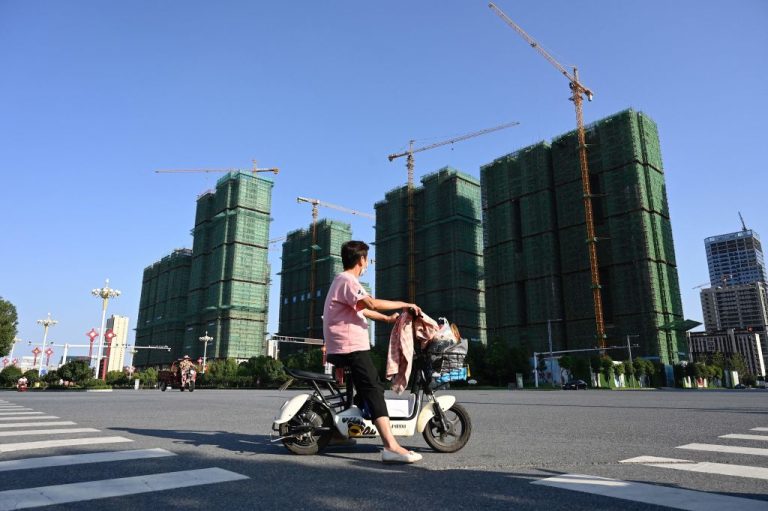
A separate analysis by the credit-rating agency Moody’s highlighted both domestic and external pressures facing China’s economy. At home, the prolonged downturn in the property market and persistently high youth unemployment have continued to undermine consumer confidence and spending.
Externally, the global economic environment remains uncertain as multilateralism and free trade face increasing geopolitical pressures, Moody’s said. According to the report, Beijing’s decision to set a more moderate growth target may provide policymakers with greater flexibility.
By allowing room for slower growth, the government may reduce pressure to launch large-scale stimulus programs and retain policy options to respond to external shocks or to guide the economy toward more consumption-driven growth.