By Yan Chunguo, Vision Times
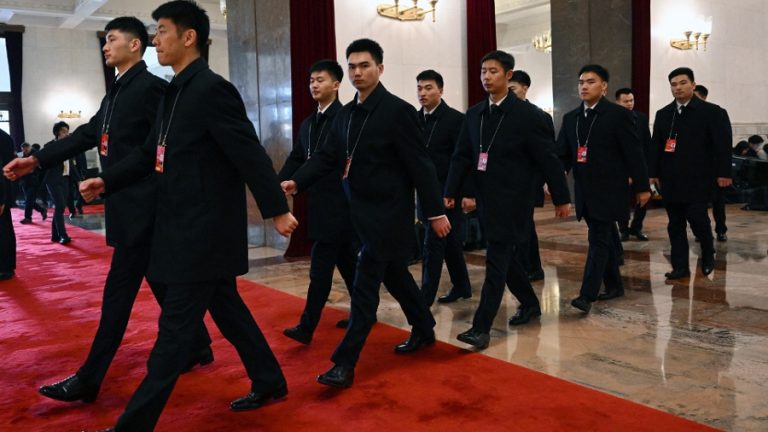
On May 21, China’s Ministry of Justice revealed that authorities had removed approximately 300,000 unqualified administrative law enforcement personnel and shut down more than 7,000 unauthorized enforcement entities over the past year as part of a “nationwide rectification campaign.”
While the official explanation focused on standardizing administrative enforcement, the scale of the effort has prompted renewed discussion about the relationship between China’s slowing economy, rising unemployment, and the government’s growing emphasis on maintaining social stability.
The individuals affected consisted largely of non-civil service personnel embedded within China’s vast grassroots enforcement system, including contract workers, labor dispatch employees, auxiliary police officers, and urban management assistants.
RELATED: Chinese Netizens Slam State Media for Glorifying Elderly Labor: ‘A Toxic Message’
Success
You are now signed up for our newsletter
Success
Check your email to complete sign up
With China’s 30 provincial-level jurisdictions averaging roughly 10,000 dismissals each, some observers noted that the reductions likely represent only a fraction of the country’s broader informal enforcement workforce, which unofficial estimates have placed in the millions.
‘Stability maintenance’ takes center stage
The campaign has fueled debate among Chinese commentators about Beijing’s priorities amid mounting domestic challenges. Over the past several years, “stability maintenance” has increasingly become a defining principle of governance. Measures ranging from tighter online censorship and expanded surveillance capabilities to restrictions on capital outflows and broader personnel reshuffles have often been interpreted through the lens of social control.
Supporters argue such policies are necessary safeguards during a period of economic uncertainty and geopolitical tension. Critics contend they reflect growing concern within the leadership over the possibility of social unrest.
China’s economy continues to grapple with multiple structural problems, including a prolonged property downturn, mounting local government debt, industrial overcapacity, and slowing consumer demand. Despite numerous policy interventions, many analysts believe these pressures remain unresolved.
At the same time, public confidence has weakened. As economic conditions deteriorate, households face shrinking incomes, declining opportunities, and increased financial burdens. Social frustrations often intensify during periods of prolonged economic hardship, increasing the challenge of maintaining stability.
Unemployment rising
Among the various economic challenges confronting China, unemployment has emerged as one of the most sensitive issues. Youth unemployment has attracted particular attention in recent years, while broader concerns persist about wage reductions, underemployment, and limited opportunities for workers displaced from struggling sectors.
Commentators critical of current policies argue that pressure on private businesses has compounded the problem. They point to tax enforcement campaigns and regulatory crackdowns as factors that have weakened confidence among entrepreneurs.
Because private enterprises have traditionally accounted for the majority of urban employment, they argue that a weakening private sector inevitably translates into fewer job opportunities.
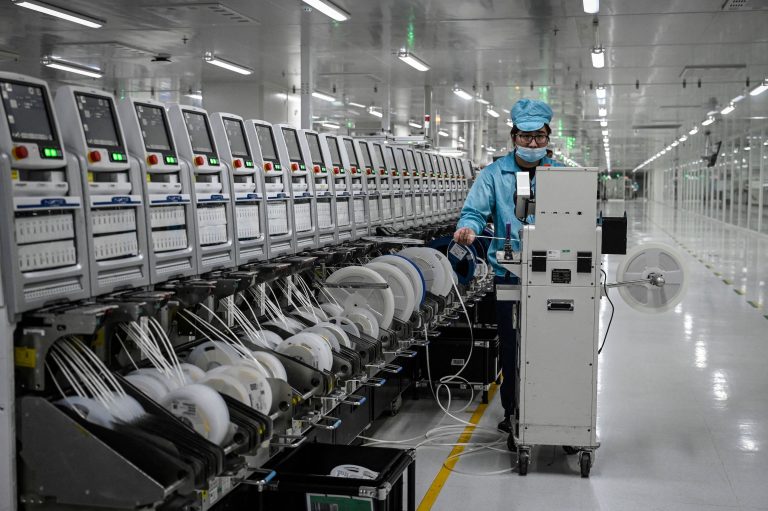
Meanwhile, Beijing has prioritized technological upgrading and advanced manufacturing as part of its push toward “high-quality productive forces.” While automation and robotics may improve productivity and competitiveness, some analysts warn that rapid adoption could displace large numbers of lower-skilled workers before alternative employment opportunities emerge.
For many unemployed workers, jobs in food delivery, ride-hailing services, and household assistance have become fallback options. Yet slower consumption growth has also reduced demand in those sectors, narrowing avenues for displaced workers.
A debate over China’s future
Hong Kong commentator Yan Chun-gou argues that economic strain and rising public dissatisfaction could ultimately prove more consequential than elite political struggles. He suggests that if fiscal pressures intensify and living standards continue to decline, grassroots tensions could gradually spread upward, undermining the state’s ability to maintain social order.
Such predictions remain speculative, and there is little consensus among scholars over whether China’s current economic difficulties could trigger broader instability. Beijing retains significant administrative capacity and policy tools, while many analysts note the government’s long record of adapting to periods of economic stress. Nevertheless, the relationship between public sentiment and social stability remains a critical variable.
Periods of sustained unemployment have historically tested governments around the world, particularly when accompanied by declining confidence in future prospects. For China, where economic performance has long underpinned political legitimacy, the challenge of restoring optimism may prove just as important as maintaining order.
Editorial note: Views expressed in this article are the opinions of the author and do not necessarily reflect the views of Vision Times.