In the early years of the War of Resistance Against Japan, Communist leaders including He Long, Lü Zhencao, and Song Renqiong moved from northern Shaanxi through Shanxi into Hebei Province. Using the Taihang Mountains as a base area, their forces operated across the central and southern plains of Hebei under the banner of the Nationalist government’s Eighth Route Army.
According to accounts from that period, these forces recruited soldiers locally and seized property from urban and rural industrialists, merchants, and relatively prosperous farming households. There were also reports that they cooperated with Japanese forces in attacks or ambushes against anti-Japanese troops and civilian organizations aligned with the Nationalist government in Hebei, including units and agencies led by Lu Zhonglin, Zhang Yinwu, and Ding Shuben.
As the situation deteriorated, the Hebei provincial government withdrew toward the outskirts of Luoyang. During this period, Xu Chongyuan, then director of the Hebei Provincial Department of Education, organized exile primary and secondary schools to receive displaced students and continue their education.
In the spring of 1941, I was one of the children admitted to an exile primary school.
One afternoon a postman delivered a letter to Teacher Cai Qingrong, a native of Guogong Street in Baoding who had graduated from Baoding Women’s Normal School. While reading it, she called over Teacher Ban Jingxian to look at the letter. It had been written by her husband, Liu, the county magistrate of Huaxian County in Henan Province.
Success
You are now signed up for our newsletter
Success
Check your email to complete sign up
Liu had gained a local reputation for organizing armed forces in the Huaxian area to support resistance against Japan. People often called him by the nickname “Liu Damazi.”
I stopped reading and listened quietly as the two teachers discussed the contents of the letter. They said that Zhao Ziyang, then a student at Kaifeng High School, had joined the Communist Party and persuaded several hundred young men from local militia groups in northern Henan to join the Communist Eighth Route Army.
The Henan Provincial Party Department ordered County Magistrate Liu to arrest Zhao Ziyang and send him to the provincial government in Luoyang. Instead, Liu secretly instructed a messenger to notify Zhao to leave home under the pretext of seeking medical treatment from his father, an elderly traditional Chinese doctor. In this way Zhao Ziyang avoided arrest.

Execution rally for Zhao Ziyang’s father: Section Chief Zhang pretended illness and did not attend
After graduating in 1954 from a six-year medical program, I was assigned by the Ministry of Health to work at Henan Medical College. By coincidence, an older cadre named Section Chief Zhang was also there. He had come south and was a fellow townsman from Baoding.
During the land reform campaign in Zhao Ziyang’s hometown, Zhang had served as leader of the local land reform work team.
Zhang later told me that the movement relied heavily on so-called activists from among the “poor and lower-middle peasants.” In reality, many of them were local idlers or rural hooligans—people in Baoding dialect called “shuai da wa,” individuals known for avoiding work and causing trouble.
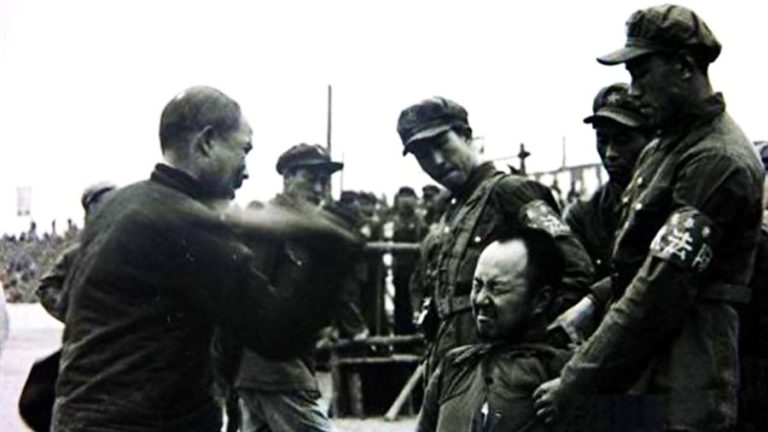
These activists carried out the violence of the campaign. According to Zhang, those labeled as landlords were arbitrarily beaten and tortured. Some were hung up, burned, or roasted. Zhang said he found the brutality difficult to endure and at one point refused to continue the work.
The county committee then sent another official to take charge of the team and demoted Zhang to deputy leader. Only after that did he reluctantly remain involved.
Zhang gave one example that left a deep impression on him.
Zhao Ziyang’s father, he said, was widely known as a humble and kind old man. He practiced traditional Chinese medicine and had spent many years teaching in a private school. Even in old age he worked diligently. Every morning he could be seen carrying a manure basket to collect fertilizer from the streets while reading from a book.
The work team repeatedly tried to mobilize villagers to denounce him, but there was almost no resentment against him in the village. Many people regarded him as a kind man who treated others well.
Despite this, the county committee insisted that “blood must be seen” in every village. According to Zhang’s recollection, the directive required that roughly one percent of the population be executed during the land reform campaign. Those who owned the most land were to be killed even if they had committed no crimes and aroused no public resentment.
The stated purpose, Zhang said, was to promote the revolution and create class hatred.
Documents circulated at the time even cited an example involving Party Central Committee member Chen Yu, who was said to have personally shot his own father, suggesting that Communist Party members should learn from this example.
When the execution rally for Zhao Ziyang’s father was held, Zhang pretended to suffer from stomach illness and did not attend.
Later he was asked to sign documents related to the execution. Zhang replied that the official team leader could sign alone. During the struggle sessions, he said, many people had already been beaten to death—yet no one had signed for those deaths.
After the violence of the land reform campaign, Zhang said his heart had completely “turned cold,” and he could never again feel enthusiasm for political movements.
Several months later, during the “Three-Anti Campaign,” Zhang himself became a target. Because he served as head of the General Affairs Section, he was accused of corruption. He was subjected to struggle sessions, beaten, and detained.
In the end investigators concluded that he had not committed corruption. He was released without charges.
Many years later
Many years later Zhang quietly spoke about those years to me, his fellow townsman from Baoding.
He said that fabricating conflicts where none existed, persecuting the innocent, and forcing people to accuse one another could never produce the communism described in books. Ordinary people, he said, could only remain silent, follow the majority, and try to live a few more years.
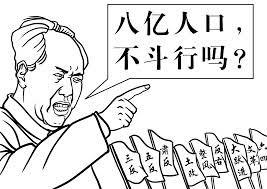
He also said that if Mao had still been alive, even lying on a bed unable to speak, there would always be people ready to interpret his breathing or lip movements as new instructions, turning them into political campaigns. In such circumstances, ordinary people would never have a peaceful life.
Looking across the history of the Chinese Communist Party, many senior figures who once stood at the center of power later fell from it. From early leaders such as Chen Duxiu and Qu Qiubai to later figures including Hu Yaobang and Zhao Ziyang, numerous prominent officials ultimately lost their positions or political standing.
Mao Zedong once said that a Cultural Revolution should occur every seven or eight years. If the disasters of the twentieth century are not clearly remembered and reflected upon, similar cycles of political struggle could return again.
By Zhang Yuming