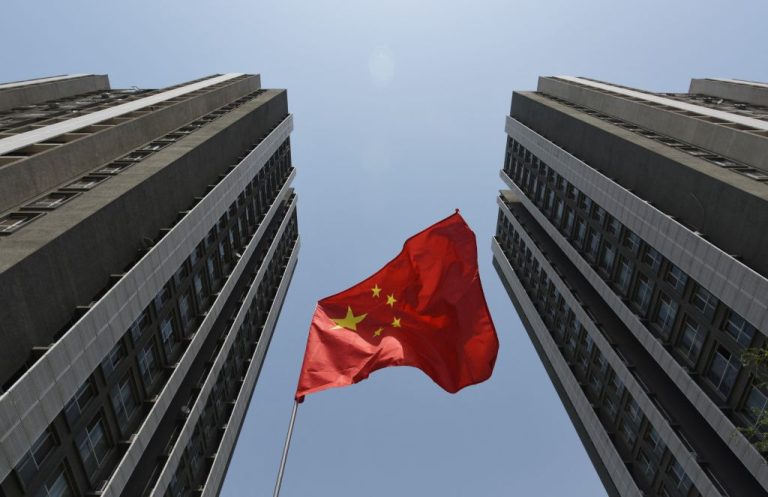
The People’s Republic of China (PRC) has set its lowest official economic growth target in decades, signaling that Beijing is preparing for a prolonged period of slower expansion as it grapples with structural problems in the world’s second-largest economy.
Premier Li Qiang delivered the government’s annual work report on March 5 at the opening of the National People’s Congress in Beijing during the annual “Two Sessions” meetings of the PRC government, outlining economic targets and policy priorities for 2026. The report set a GDP growth target of 4.5 percent to 5 percent, marking the lowest official target since 1991.
The target reflects mounting economic challenges, including a prolonged real estate downturn, heavy local government debt burdens and uncertain global demand.

According to the report, China’s economy grew 5 percent in 2025, reaching 140.19 trillion yuan ($19.4 trillion). Officials also said the country created 12.67 million urban jobs last year, with the average urban unemployment rate at 5.2 percent.
Despite these headline figures, policymakers are increasingly cautious about the sustainability of growth.
Success
You are now signed up for our newsletter
Success
Check your email to complete sign up
Li said the new target was designed to allow room for structural reforms and risk control rather than pushing for aggressive expansion. The government also aims to maintain roughly 12 million new urban jobs in 2026 and keep unemployment near 5.5 percent.
The report acknowledged the need to address several long-standing risks, including those tied to the real estate sector, local government debt and financial institutions.
Analysts say the lower target suggests Beijing recognizes that China’s old growth model — reliant on property investment, infrastructure spending and rapid credit expansion — has reached its limits.
SinoInsider, a New York-based consultancy specializing in Chinese elite politics, said the report signals “a fundamental adjustment in China’s growth paradigm.”
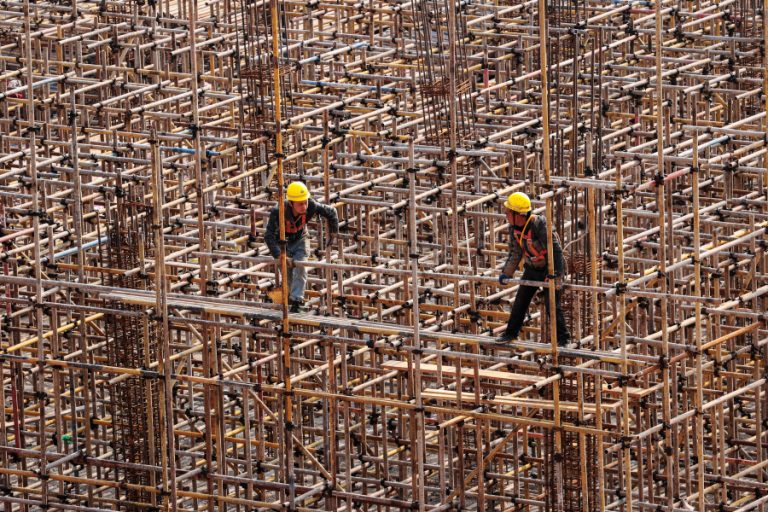
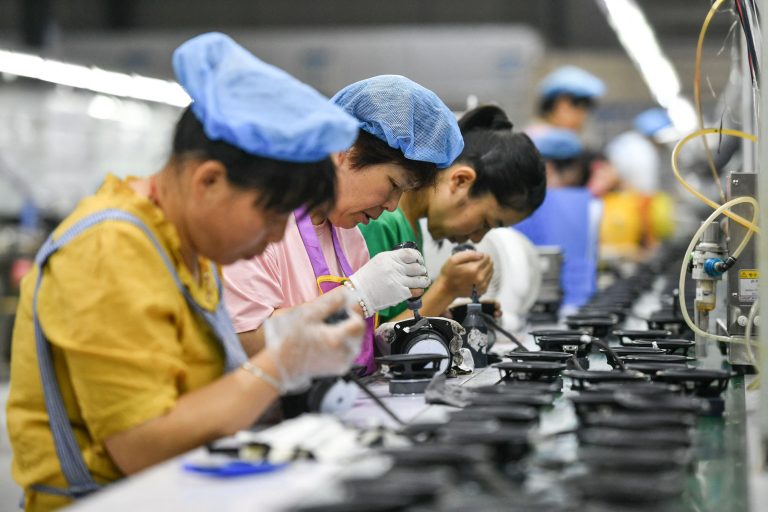
For decades, economic expansion was fueled by debt-driven construction and infrastructure projects. But Beijing is now attempting to transition toward a new model centered on technology innovation and advanced manufacturing.
That shift, however, comes with significant challenges.
China is still grappling with weak consumer demand and deflationary pressures. Producer prices have remained subdued, and consumer price growth has struggled to reach the government’s target.
If nominal economic growth remains weaker than real growth, economists warn that China’s already heavy debt burden could become harder to manage.
“The economy in 2026 remains under the shadow of deflation,” SinoInsider noted, warning that falling prices could increase the real burden of debt for companies and local governments.
External factors are also weighing on China’s outlook.
Trade tensions have intensified as Western countries raise concerns about industrial overcapacity in sectors such as electric vehicles and renewable energy equipment. These disputes could complicate Beijing’s efforts to rely on exports of high-tech goods as a new growth driver.
At the same time, demographic pressures are mounting as China’s population ages and the workforce shrinks.
The government’s long-term plan aims to double per capita GDP from 2020 levels by 2035, reach an average life expectancy of 80 years, and increase the share of digital industries in the economy.
But economists say achieving these goals will require deep structural reforms.
SinoInsider said Beijing’s policy mix shows signs of stabilizing the economy but has not yet addressed deeper problems such as weak consumer confidence and declining returns on investment. “Short-term stabilization has prevented the economy from deteriorating further,” the firm said, “but it remains unclear whether the current policies can generate a genuine recovery.”
The government’s cautious growth target suggests China’s leaders are increasingly focused on managing risks rather than pursuing rapid expansion.
Whether that approach can deliver stable growth in the years ahead remains one of the central questions facing the Chinese economy.