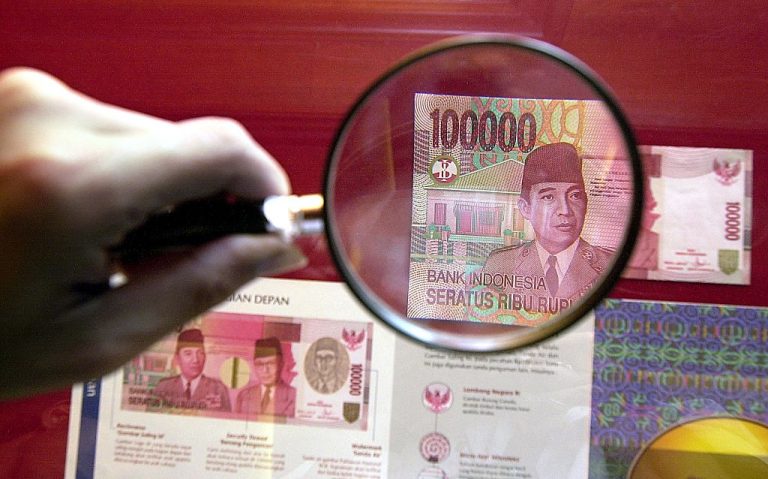
Local Currency Transactions (LCT) between Indonesia and the People’s Republic of China (PRC) reached the equivalent of US$13 billion during the first four months of 2026, a sharp increase from the US$18 billion recorded for all of 2025, Bank Indonesia (BI) Governor Perry Warjiyo said on June 25.
Indonesia and China signed a memorandum of understanding last year upgrading their Local Currency Settlement (LCS) framework to a broader Local Currency Transaction (LCT) scheme. The expanded arrangement extends the use of local currencies beyond trade and direct investment to cover a wider range of cross-border financial transactions, including capital and financial account activities, according to a May 2025 statement by the PRC government.
Following Bank Indonesia’s monthly board of governors meeting on Thursday, June 25, Warjiyo said the LCT scheme aligns with “China’s policy in internationalizing renminbi,” according to Asia News Network.
“Settling trade and investment transactions directly in rupiah and renminbi further reduces the need for the dollar,” he said.
The report noted that most LCT transactions have been related to trade rather than investment, reducing reliance on the U.S. dollar in bilateral imports and exports.
Success
You are now signed up for our newsletter
Success
Check your email to complete sign up
Permata Bank Chief Economist Josua Pardede told The Jakarta Post on June 23 (Tuesday) that the long-term objective is to reduce dependence on the U.S. dollar, “not removing the dollar’s role altogether.”
Increasing Sino-Indonesian financial cooperation
Earlier this month, Warjiyo met People’s Bank of China (PBOC) Governor Pan Gongsheng in Shanghai to discuss expanding the bilateral currency swap agreement (BCSA), according to a Bank Indonesia statement released after the June 11 meeting.
The currency swap agreement allows Bank Indonesia and the PBOC to exchange their respective currencies up to an agreed limit. It also supports the LCT framework by ensuring both countries have sufficient access to each other’s currencies for trade settlement and other cross-border transactions.
According to Asia News Network, the BCSA was first signed in 2009 for a five-year term and has been renewed repeatedly since then.
Bank Indonesia said the June 11 meeting reaffirmed both countries’ commitment to expanding the use of local currencies in bilateral transactions and strengthening cross-border payment connectivity through three key initiatives.
RECENT COVERAGE
- Argentina’s $10 Billion Paraná Waterway Bid Draws Scrutiny Over Chinese, US Influence
- US Targets Chinese Tech Giants, Adding BYD, Alibaba, Baidu to Pentagon List
- India’s Yuan Payment for Iranian Oil Highlights Pragmatism, BRICS Push for Dollar Alternatives, Experts Say (April 2026)
The first was the signing of a memorandum of understanding on Local Currency Transactions between Indonesia and Hong Kong by Warjiyo and Hong Kong Monetary Authority Chief Executive Eddie Yue.
The second was the launch of Indonesia-China cross-border QR code payments by Bank Indonesia and the PBOC.
The third designated Bank Mandiri, Indonesia’s largest commercial bank by assets, as a direct participant in China’s Cross-border Interbank Payment System (CIPS), a move intended to improve the efficiency and resilience of cross-border payment infrastructure.
Launched by the PBOC in 2015, CIPS is China’s international payment system for settling cross-border transactions in renminbi. For Indonesia-China trade, it enables Indonesian companies to settle payments directly in Chinese currency.
According to Asia News Network, Indonesia has signed similar local currency agreements this year with South Korea and Australia. The agreement with the Bank of Korea was signed in February, while the arrangement with the Reserve Bank of Australia was concluded in March.
Beyond facilitating trade and investment, the report said such agreements also carry geopolitical significance by strengthening financial resilience and reducing exposure to what some policymakers describe as the “weaponization of dollar” through economic sanctions.