Chinese police announced on March 21 that a long-sought suspect in a child trafficking case, known as “Mei Yi,” had been taken into custody after more than two decades on the run.
Two days earlier, one of the journalists who had helped bring the case to public attention died suddenly.
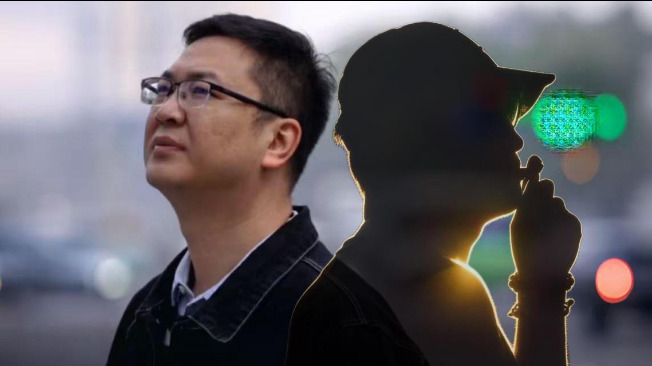
Wei Hua, an investigative reporter with more than 20 years of experience, died late on March 19. Authorities said the cause was a sudden heart condition. He was 45.
The timing quickly drew attention online. Wei had previously reported on cases involving abducted children, including the story of Shen Cong, whose father spent years searching for his missing son.
Shen Junliang, the boy’s father, confirmed Wei’s death in a post on social media. He wrote that a decade earlier, when he was struggling to keep his son’s case in the public eye, Wei’s reporting helped draw attention to families of missing children.
Success
You are now signed up for our newsletter
Success
Check your email to complete sign up
On March 20, Shen said he traveled to Henan province to attend Wei’s funeral. He described the journalist as someone who cared deeply about the people he covered and approached his work with determination.
Wei spent much of his career on investigative reporting, often working undercover. According to media reports, he took part in operations that helped rescue trafficked infants. In 2023, he and colleagues spent four months undercover in northern Myanmar, assisting in the rescue of six people from fraud compounds. Two years later, he was involved in an investigation into an alleged large-scale illegal surrogacy operation in northern China.
He rarely used his real name in published work. Instead, his reports appeared under “Urban Gentleman,” a shared byline used by investigative teams at Henan Television’s Urban Channel. His work included a series of high-profile investigations into fraud, illegal medical practices, and organized crime.
A journalist in Zhengzhou who had known Wei for more than a decade said he was persistent in his reporting and measured in his personal life.
“He didn’t talk much about himself,” the journalist said. “But once he committed to a story, he would follow it through to the end.”
A lawyer who had worked with Wei on previous reports said he was careful with legal details and often revisited questions until he was satisfied with the answers.
“When I heard the news, I couldn’t process it,” the lawyer said.
Wei’s wife told reporters the couple had been together since their student years. She described him as someone driven by a sense of purpose in journalism, and said she had tried to support him by taking on more responsibilities at home.
March 22 would have been his 45th birthday. The couple’s 20th wedding anniversary was one week away.
She recalled that on the day he died, Wei left work earlier than usual. She had asked if he wanted to buy groceries for dinner. In a voice message, he replied that he had no appetite. It was their last exchange.
Messages of condolence appeared on Chinese social media, where users described his death as a loss to the profession.
On overseas platform X, some users questioned the circumstances, citing his age and the nature of his work. Others compared the case to previous sudden deaths of public figures. No evidence has been presented to support those claims.
Authorities have not indicated any connection between Wei’s death and the trafficking case.
By Cai Siyun