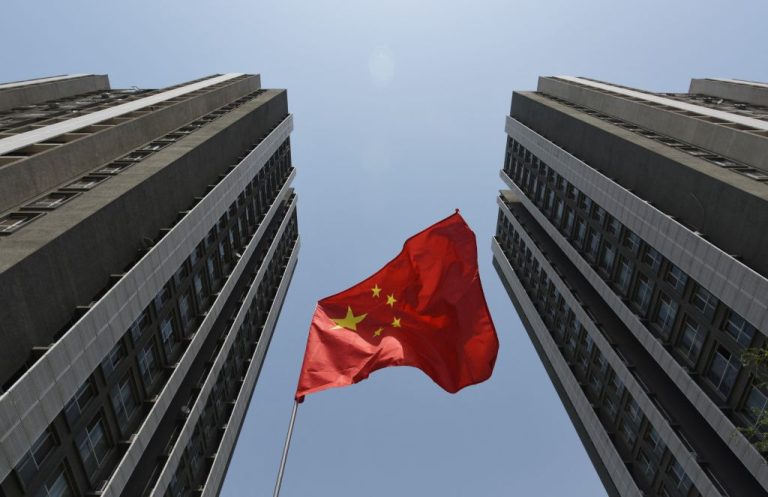
China has opened an investigation into Zhou Liang, a senior financial regulator and longtime aide to former vice president Wang Qishan, in a move that leaves no remaining senior figure from Wang’s inner circle untouched.
The Central Commission for Discipline Inspection announced on March 24 that Zhou, a Communist Party committee member and vice minister at the National Financial Regulatory Administration, is under investigation for “serious violations of discipline and law.”
Zhou, 54, spent much of his career working alongside Wang. Beginning in the late 1990s, he served as Wang’s secretary and followed him through postings in Guangdong, Hainan, Beijing, and later the Party’s top anti-corruption body, the CCDI. Their working relationship lasted roughly two decades.
During Wang’s tenure as head of the CCDI under China’s top leader Xi Jinping, Zhou rose through the ranks of the powerful disciplinary system. He was appointed deputy secretary-general in 2013, then promoted in 2015 to lead the Organization Department, overseeing personnel during a period when the anti-corruption campaign reshaped the Party’s leadership structure.
Zhou later moved into financial regulation, serving as vice chairman of the banking regulator and then the combined banking and insurance watchdog. In 2023, he became vice minister at the newly formed National Financial Regulatory Administration. His last public appearance was in February 2026, when he presided over an internal commendation event.
Success
You are now signed up for our newsletter
Success
Check your email to complete sign up
His fall follows a series of high-profile cases involving other figures long associated with Wang.
Dong Hong, a former senior inspection official who had worked as Wang’s secretary, received a suspended death sentence in 2022 after being convicted of accepting more than 463 million yuan, about 64 million US dollars, in bribes.
Tian Huiyu, former president of China Merchants Bank and another former aide to Wang during his time at China Construction Bank, was given a similar sentence in 2024.
Fan Yifei, a former deputy governor of the People’s Bank of China who had worked under Wang in the banking system, was also sentenced to death with reprieve later that year.
READ MORE:
- Xi Jinping Takes Down Wang Qishan’s Last Loyal Aide
- Xi Jinping Purges Wang Qishan’s Last Ally in China’s Financial System
With Zhou now under investigation, all four senior figures widely regarded as part of Wang Qishan’s core circle have been removed or prosecuted.
Zhou’s career placed him at the center of personnel control within the Party’s disciplinary apparatus, a role that gave him influence over appointments during a critical phase of Xi’s anti-corruption campaign. His removal effectively eliminates the last senior official with direct ties to Wang still active in the system.
Posts circulating on social media platform X described Zhou as Wang’s most trusted personnel aide and portrayed his fall as the final step in dismantling Wang’s remaining political foothold.
U.S.-based commentator Cai Shenkun wrote that Zhou had long been regarded by Wang as a protégé and said efforts had been made after Wang’s retirement to secure Zhou’s position. Cai also claimed that Zhou’s detention reflects growing sensitivity around contacts between retired senior figures and their former associates.
These claims have not been confirmed by Chinese authorities.
Online reactions to the case reflected unease about the risks faced by officials within China’s political system. Some users described advancement as dependent on patronage, while survival depends on shifting alignments within the Party’s leadership.
The official announcement did not disclose further details about the allegations against Zhou or the scope of the investigation.
Editor’s Note: This article is based on official Chinese government statements, publicly available records, and commentary from overseas analysts and social media sources. Certain interpretations and claims regarding internal political dynamics have not been independently verified.