The Legislative Yuan’s joint review committee on foreign affairs, national defense, and finance recently completed the preliminary review of all versions of the National Defense Special Act proposed by both ruling and opposition parties. Only two provisions reached consensus; the remaining articles were retained for further negotiation.
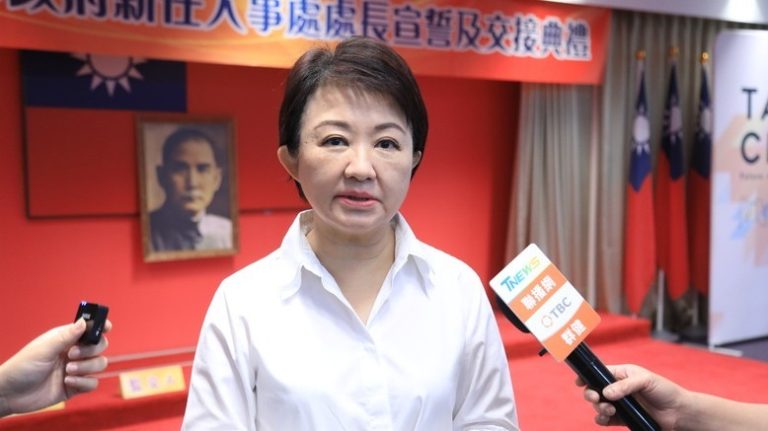
An American Senate Foreign Relations Committee delegation arrived in Taiwan early on March 30, sparking speculation that the visit aims to urge the Legislative Yuan to quickly approve the arms procurement plan. In addition, Taichung Mayor Lu Shiow-yen made a sudden statement on March 30 saying that “arms procurement should be between NT$800 billion and NT$1 trillion,” drawing significant attention.
Lu Shiow-yen: ‘Arms procurement should be between NT$800 billion and NT$1 trillion’
The Executive Yuan’s arms procurement budget is NT$1.25 trillion; the People First Party version is NT$400 billion, while the KMT central committee version, led by Cheng Li-wen, proposes NT$380 billion + N. Within the KMT, opinions on the procurement amount differ. Former KMT chairman’s protégé and Taoyuan city councilor Ling Tao said that NT$900 billion is a “pragmatic” amount, while KMT legislator Hsu Chiao-hsin proposed NT$870 billion in the Special Arms Procurement Act. Taichung Mayor Lu Shiow-yen expressed support for NT$800 billion to NT$1 trillion.
Lu, who recently visited the U.S. and discussed arms procurement there, had previously remained tight-lipped about the amount she would support. On March 30, in an exclusive interview with the Liberty Times, she suddenly proposed “arms procurement should be between NT$800 billion and NT$1 trillion,” sparking high attention within her party and nationally.
According to Liberty Times, Lu stated that her personal view is that a “reasonable arms procurement amount should be between NT$800 billion and NT$1 trillion,” but noted that her version is not significantly different from the Executive Yuan or KMT versions. In particular, she said the KMT’s “NT$380 billion + N” has “much room for interpretation,” and the exact increase depends on communication between the Executive Yuan and the Legislative Yuan.
Success
You are now signed up for our newsletter
Success
Check your email to complete sign up
Lu emphasized that her proposal differs slightly from the Executive Yuan and KMT versions: the central submarine program plans for eight submarines, and there are only 200,000 drones. She advocates slightly fewer submarines and more drones.
Regarding the Executive Yuan’s NT$1.25 trillion arms procurement plan, Lu broke it into three parts. First, US$11 billion, already authorized by the Legislative Yuan; second, US$14 billion (about NT$400 billion), which she says should not be an issue as it involves arms both governments have studied and are necessary for Taiwan’s self-defense and U.S. support. Some legislators argue a U.S. price quote is needed, but Lu believes that given the global scramble for weapons, Taiwan should secure the arms now.
The third part, about US$15 billion (NT$400 billion), is more contested. Some local legislators and public opinion question purchases through commercial or domestic channels, since it’s not standard military procurement and raises oversight concerns. Lu said if it is clearly military (e.g., military drones, C5ISR), it can pass under government procurement laws. Non-military parts supporting industry can fall under the annual budget.
Addressing concerns that the U.S. has not yet sent price quotes, Lu said the opposite view is correct: the Legislative Yuan should approve the US$14 billion arms procurement immediately to signal commitment to the U.S., otherwise Washington could delay or redirect weapons elsewhere.
According to Newtalk, a KMT legislator admitted that Cheng Li-wen is very firm on arms procurement but cannot represent everyone; public opinion matters. Polls show 77 percent of Taiwanese support engagement with the U.S., and 61 percent supported strengthening arms procurement from the U.S. before Lu’s visit.
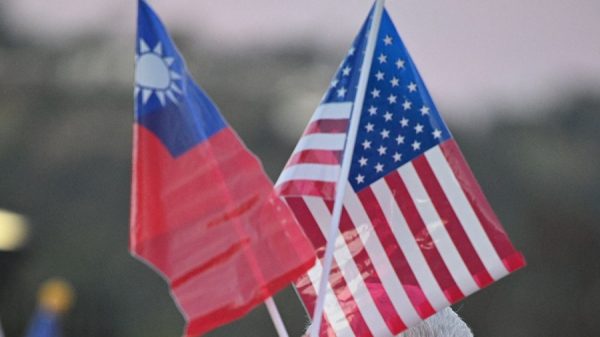
US senators visit Taiwan
Meanwhile, a bipartisan U.S. Senate delegation visited Taiwan on March 30, raising speculation that they aim to push the Legislative Yuan to approve the arms procurement plan.
President Lai Ching-te received the delegation at the Presidential Office. The group was led by Jeanne Shaheen (D) and John Curtis (R), with members including Thom Tillis and Jacky Rosen.
According to the Central News Agency, Lai said the senators have long supported Indo-Pacific security and Taiwan, sponsoring numerous pro-Taiwan bills, and thanked the U.S. executive and legislative branches for continuing arms sales under the Taiwan Relations Act and the Six Assurances.
Defense Minister Gu Li-hsiung thanked Lu for supporting the budget. Regarding the U.S. delegation, he emphasized that the NT$1.25 trillion special budget is based on scientific calculations of threat and operational needs; all seven capability areas are essential. He hopes both sides of the Legislative Yuan will support the plan, regardless of procurement type, as each contributes to complete combat readiness.
DPP Secretary-General Hsu Kuo-yung questioned whether KMT Chair Cheng or Lu speaks for the party, emphasizing that NT$1.25 trillion reflects Taiwan’s needs and discussions with the U.S., and should not be influenced by market-style bargaining.
Political commentary: KMT ‘winks at China, scrambles to reassure the U.S.’
Political commentator Wu Jing-yi said Lu’s “NT$800 billion–1 trillion” proposal shows the KMT is running “two scripts: winking at China while scrambling to reassure the U.S.”
Wu noted that although Lu claims “individual opinions do not represent the whole,” her interview, contrasted with the KMT’s recent central strategy, reveals internal cracks. The KMT proposes NT$380 billion initially, leaving the rest for later discussion, while Lu publicly supports NT$800 billion–1 trillion, even suggesting part of the procurement should proceed “without waiting for U.S. price quotes.”
Wu criticized the KMT’s approach: advocating for peace with Beijing while assuring Washington, weakening Taiwan’s defense signals, and potentially undermining the arms procurement process. She warned that continued obstruction could result in Taiwan being unable to secure weapons, with domestic consequences for major cities like Kaohsiung and Taichung.
Li Jingyao