The Guardian reported on April 4 that amid escalating U.S.-Iran tensions, a tense search-and-rescue operation for the crew of a downed F-15E fighter jet has entered its second day. The latest reports indicate that the crew members have been successfully rescued.
A U.S. Air Force F-15E “Strike Eagle” fighter jet crashed inside Iran, marking the first U.S. aircraft shot down in the ongoing five-week conflict. Of the two crew members onboard, one pilot was successfully rescued on Friday, while the other, a Weapons Systems Officer (WSO), was initially missing.
According to retired U.S. Air Force Brig. Gen. Houston Cantwell, cited by the Associated Press, this is the first time a U.S. plane has been downed by enemy fire since the 2003 Iraq War, carrying significant symbolic weight.
Iran quickly released photos of suspected wreckage, including the F-15’s distinctive vertical tail and ejection seats, and through official media and commercial channels offered rewards, encouraging civilians to help capture the missing crew member.
US launches large-scale rescue operation
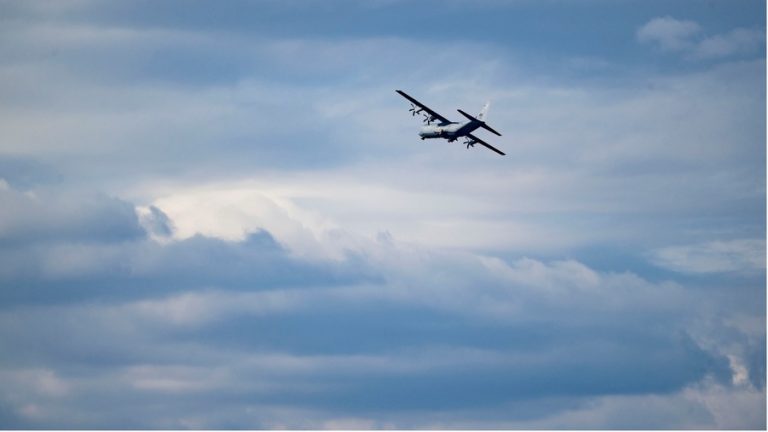
The U.S. military immediately launched an intensive search-and-rescue mission, deploying Pave Hawk helicopters and C-130 Hercules transport planes for coordinated searches. Pilots involved in the operation suggested the missing crew member likely employed evasion tactics, hiding while trying to send location signals to pre-set secret coordinates for a special forces air rescue.
Success
You are now signed up for our newsletter
Success
Check your email to complete sign up
During the operation, a Pave Hawk helicopter came under ground fire but ultimately escaped safely. Meanwhile, an A-10 “Warthog” also crashed near the Strait of Hormuz. Iran claimed to have shot it down, but the pilot was successfully rescued.
Newsweek reported that both U.S. and Iranian forces were effectively searching for the missing crew member, with Iran publicly offering a reward, turning the rescue into a competitive race.

Airstrikes intensify and nuclear facility risks
As the rescue continued, U.S.-Israeli airstrikes on Iran escalated. Petrochemical facilities in Mahshahr, Khuzestan province, were hit, and a building near the Bushehr nuclear power plant was struck, killing at least one guard.
The International Atomic Energy Agency (IAEA) confirmed that these incidents did not raise radiation levels. However, this marked the fourth attack near nuclear facilities in recent weeks, fueling ongoing concerns about nuclear safety.
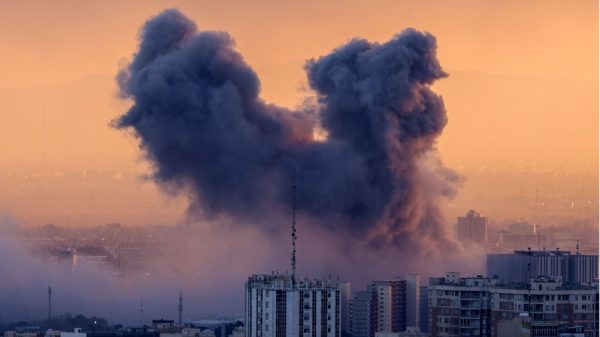
Israel reported conducting a new round of nighttime strikes on Tehran, targeting air defense systems, ballistic missile storage, and weapons research sites. Local residents described the explosions as “extremely shocking,” and the city’s atmosphere remained tense.
Iran denies negotiation withdrawal; Trump issues tough warning
Iranian Foreign Minister Abbas Araghchi denied reports that Iran had withdrawn from peace talks, calling them “false” and emphasizing Tehran has not rejected traveling to Islamabad, Pakistan, for negotiations, provided “truly lasting ceasefire conditions” are met.
U.S. President Trump continued pressuring Iran to reopen shipping in the Strait of Hormuz, issuing a harsher warning on social media: Iran “has only 48 hours” before facing a larger-scale strike. Previously, Trump had repeatedly threatened to bomb Iranian power infrastructure while extending negotiation deadlines.
Despite ongoing U.S.-Israeli airstrikes, the F-15 and A-10 incidents show Iran’s air defenses still pose a real threat to U.S. forces, adding uncertainty to both military operations and political negotiations.
Second crew member successfully rescued
Military journalist Jack Murphy, a former U.S. special forces member, disclosed on X that the missing F-15 WSO was successfully found and survived, evading capture behind enemy lines while engaging in heavy firefights. This report has not yet been officially confirmed.
The U.S. Air Force Special Operations recruitment account posted on Instagram: “Breaking: The F-15E Weapons Systems Officer (WSO) downed in Iran yesterday was successfully rescued by U.S. Special Operations Forces, including affiliated Air Force Special Tactics units operating within enemy territory.
“Special operators risked their lives to rescue a comrade, engaging in intense, large-scale firefights at the extraction point, fighting with everything they had ‘so that others could live.’
“This is a victory for the United States, and a victory for the WSO who has trained in Survival, Evasion, Resistance, and Escape (SERE).”