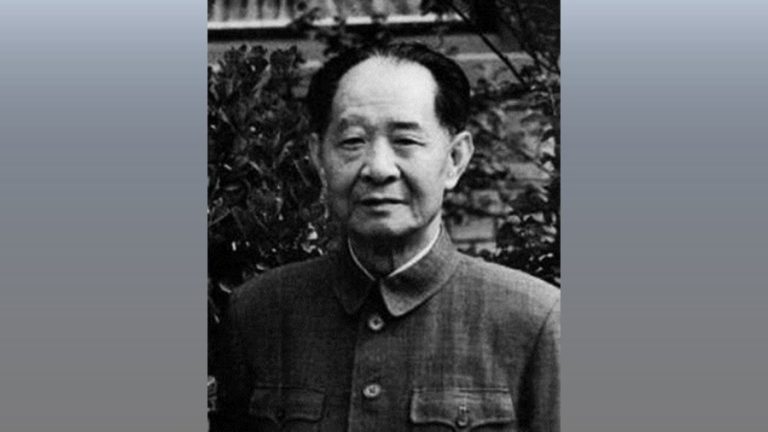
In the 1980s, the CCP’s senior leadership in the Zhongnanhai compound attempted a political experiment called the “Third Echelon,” aimed at preventing a repeat of the Cultural Revolution’s personality-cult dictatorship. The program was championed by Hu Yaobang, the CCP’s reform-minded general secretary, and managed by Li Rui, then a deputy minister at the Party’s Organization Department, the CCP body responsible for personnel appointments and promotions throughout the entire Party hierarchy. The selection was supposed to guard against a leftward lurch back toward Maoism. Instead, it became one of modern Chinese political history’s cruelest ironies: the list built to keep autocrats out of power placed one directly on the path to the top.
Cultural Revolution record was the decisive test
In 1983, Hu Yaobang formally proposed the “Third Echelon” concept and put Li Rui in charge of execution. The Organization Department selected over 1,100 provincial and ministerial-level reserve cadres under what amounted to a rigorous “political physical exam.” Candidates had to hold at least a university degree, which in an era when the Party was still dominated by uneducated revolutionary veterans was itself a small revolution. They had to be under 50 and hold at least a prefectural or bureau-level rank. A strict veto applied to the so-called “three types of people”: anyone who had risen through loyalty to the Lin Biao or Jiang Qing counter-revolutionary cliques during the Cultural Revolution, anyone with serious radical factional sympathies, and anyone involved in violent “smash and grab” campaigns. The program gave priority to intellectuals and young cadres who had either resisted the Cultural Revolution or stayed on the sidelines as “free riders.” The most critical screening criterion was how the candidate had behaved during the Cultural Revolution.
Hu Yaobang emphasized merit and competence. But under heavy pressure from revolutionary-era military elders and Party patriarchs, many “red second generation” princelings, the sons and daughters of founding-era CCP leaders, were also placed on the list. Among them: Xi Jinping, then the Party secretary of Zhengding County in Hebei province, and Bo Xilai, then serving in Dalian.
Why Xi Jinping made the list and Bo Xilai was cut
In 1982, Xi Jinping voluntarily left his position at the Central Military Commission’s General Office to “go down to the grassroots” in rural Zhengding County. According to Li Rui’s later recollections, Xi presented himself as obedient and composed, unlike other princelings who were brash and entitled. In Hu Yaobang’s eyes, this was a sign of reliability: someone who would govern steadily and not cause upheaval. Xi fit Hu’s stated goal of selecting cadres who “wouldn’t make waves.”
Bo Xilai was the opposite: arrogant and aggressive. The Organization Department cut him in the first round. His personality alone would have been sufficient grounds, but according to internal Party accounts, Chen Yun, one of the CCP’s most powerful revolutionary elders, had personally crossed Bo’s name off the list. The reason was Bo’s conduct during the Cultural Revolution.
Success
You are now signed up for our newsletter
Success
Check your email to complete sign up
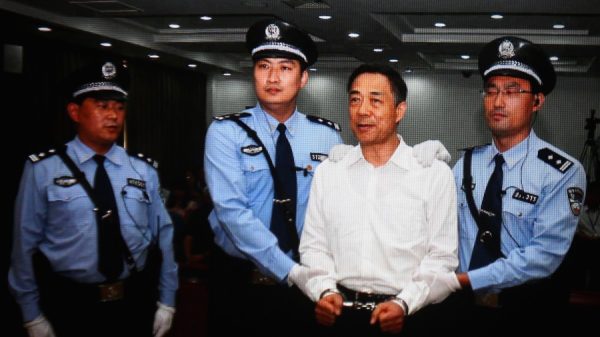
According to Apple Daily and overseas Chinese media, Bo Xilai publicly denounced his own father, Bo Yibo, a senior CCP veteran, during the Cultural Revolution to demonstrate political loyalty. He beat his father so severely that he broke three of the elder Bo’s ribs. Chen Yun’s assessment was blunt: Bo was “morally corrupt and would turn on anyone,” and would destabilize the Party if he ever gained power.
Japan’s Asahi Shimbun also reported that Bo Xilai stole a car and ran over a donkey during the Cultural Revolution, and shoplifted an expensive dictionary from a bookstore to resell. In the screening conducted by Li Rui and Hu Yaobang, these were disqualifying offenses.
The reformers selected the man who reversed their reforms
Hu Yaobang was forced from power in 1987 and died in 1989. His death triggered the Tiananmen Square protests, which the CCP crushed with military force. In his final years, Hu expressed deep regret that the “normal state system” he had tried to build had been crushed by the old guard’s grip on power. The “Third Echelon” he had poured his energy into was being captured by elite political families. The list that was supposed to produce reformers became the blueprint for the later power-sharing arrangement between the Communist Youth League faction, a network of officials who rose through the CCP’s youth organization, and the “princelings,” the children of the Party’s revolutionary founders.
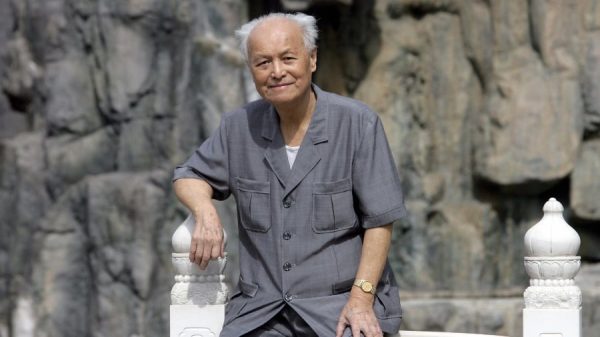
Li Rui, who had overseen the “Third Echelon” selection, died in 2019. In his later years, he repeatedly expressed disappointment in Xi Jinping, both publicly and in private. In interviews with overseas Chinese media and in private conversations, he said bluntly: “I never expected his education level to be this low,” and “I misjudged him.” Li Rui regretted that he had valued Xi’s apparent docility without recognizing the Maoist dogmatism and authoritarian instincts underneath.

The party’s filter only retains those who protect it
Ming Juzheng, an emeritus professor of political science at National Taiwan University, put it directly: “The CCP’s system works like a filter. Hu Yaobang wanted to filter for reformers, but the system will only ever retain those who protect the Party.” Ming argued that Xi Jinping’s selection and Bo Xilai’s rejection were both expressions of the same logic: the Party was looking for a “safe” successor. The CCP’s DNA ensures that anyone who wants to survive and rise within the system must eventually move leftward.
Ming pointed to a pattern of “reverse selection” built into the CCP’s personnel system. Xi Jinping was chosen precisely because he appeared mediocre and harmless. But once the system felt its survival was threatened, the person it had selected would inevitably fall back on Marxist-Leninist-Maoist authoritarianism to protect the regime. Hu Yaobang’s tragedy was that he believed selecting the right people could change the Party. He failed to see that the Party’s nature would assimilate everyone it absorbed.
Cheng Xiaonong, a political economist, was more direct: “The so-called Third Echelon was a hereditary security plan for the red aristocracy.” The list ensured that power would keep circulating among the “red second generation” princelings. Xi Jinping and Bo Xilai had different fates in the 1980s, but their underlying orientation was identical: consolidate power, protect Party assets. The reforms of the 1980s were about saving the CCP, not transforming it. Both Xi and Bo were princelings. When economic reform began to threaten the regime’s grip on power, leaders from the “Third Echelon” would inevitably choose to “turn left,” because that was their only politically safe ground.
Miles Yu, formerly the principal China policy advisor in the U.S. Secretary of State’s Office of Policy Planning, argued that this was not about any individual leader. It was the CCP regime’s inevitable “defensive left turn” in the face of global democratic movements. Hu Yaobang and Li Rui tried to fix a broken system by putting good people into it, and the system consumed them. “Hu Yaobang’s idealism was no match for the instincts of a Leninist regime.” Bo Xilai was sidelined by Hu Yaobang and Chen Yun for his Cultural Revolution brutality, but in a bitter irony, the policies Xi Jinping has pursued since taking power, an intensified version of the “sing red, strike black” political campaigns, are what Bo Xilai was already doing as CCP chief of Chongqing, a major municipality in southwestern China.
The third echelon shaped decades of CCP rule, then failed
Hu Yaobang’s “Third Echelon” selection produced a large cohort of CCP officials with engineering backgrounds, including Hu Jintao, who later became CCP general secretary, and Wen Jiabao, who became prime minister. This laid the foundation for the era of “technocratic governance” that defined the CCP’s transition from a revolutionary party to a managerial one. The vast majority of members of the Politburo Standing Committee, the CCP’s supreme decision-making body, during the 17th and 18th Party Congresses came from that original “Third Echelon” list. But even though Hu Yaobang intended the program as a reform measure, under the CCP’s one-party dictatorship, the selection remained an internal appointment process. Without genuine democratic elections, the people on the list ultimately owed their loyalty to the CCP’s power center, not to the Chinese people. And so, once the list passed through the hands of Party elders and elite families, it produced the man who would take China back toward a second Cultural Revolution: Xi Jinping.
This unprecedented reshuffling of CCP cadres allowed the Party to avoid a Soviet-style collapse caused by collective leadership aging. But because it lacked structural political reform, the process produced the current reality: factional power-sharing that gave way to Xi Jinping’s one-man rule. Experts point out that under an authoritarian system, those who suffered during the Cultural Revolution, once they obtain absolute power, often end up imitating the very system that once persecuted them. Hu Yaobang and Li Rui’s ideals were, in the end, ground to dust beneath the Party they tried to reform.