When a suspect linked to a bomb threat continues to send follow-up emails that appear to mock a G7 nation’s government and law enforcement, the situation extends beyond a routine public safety matter. It raises broader concerns about the integrity of public institutions, the enforcement of the rule of law, and the potential implications for national security.
On April 10, the Falun Dafa Association of Canada released a statement revealing that the individual behind a bomb threat targeting Shen Yun performances in Toronto sent two additional provocative emails on April 3 to the company’s ticketing office.
Written in Chinese, the emails were overtly taunting. The sender claimed that using a “fake bomb” to halt performances had achieved “huge success,” openly ridiculed the Canadian government and local law enforcement, and threatened to continue such actions. The suspect also strongly implied direct ties to the Chinese Communist Party (CCP).
RELATED: Shen Yun Disruptions Highlight Foreign Interference Risks in Canada
From threat to cancellation
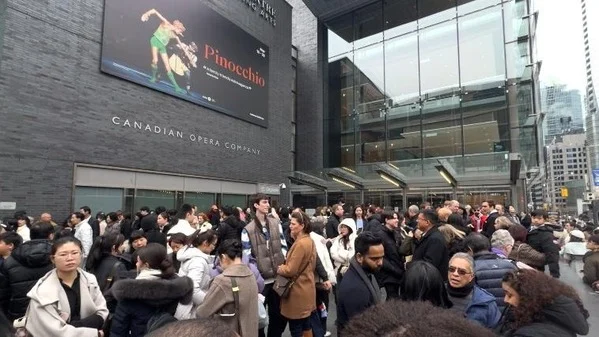
The incident traces back to March 29, when the Four Seasons Centre received a threatening email, which was written in Swedish, about an hour before a scheduled Shen Yun performance. The message claimed explosive devices had been planted in the theater and near Parliament Hill.
Success
You are now signed up for our newsletter
Success
Check your email to complete sign up
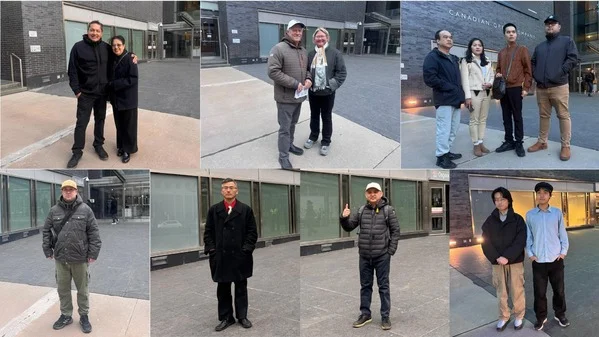
Toronto Police Service responded swiftly, deploying bomb squads and K9 units. After a thorough search, authorities confirmed the threat was unfounded and declared the venue safe. Yet in a move that surprised many, theater management canceled the performance despite the all-clear.
The following day, citing additional threats, the venue canceled the remaining five shows — again, despite police confirming that the threats were fabricated and there was no real threat to the venue.
The decision affected thousands of ticket holders and marked a troubling precedent. In nearly two decades of global touring, Shen Yun has faced more than 150 anonymous threats, including tire slashings and other unhinged threats of violence. However, this was the first instance in which a theater canceled performances solely due to unverified threats.
A dangerous signal
The aftermath appears to have emboldened the suspect. Why would an individual feel confident enough to openly mock Canadian authorities? According to analysts, the answer may lie in perceived vulnerabilities within democratic systems. Even when law enforcement determines a threat is false, institutions may still act out of an abundance of caution, particularly when public safety is involved.
The suspect’s mockery, therefore, was not merely directed at police efforts, but at what he perceived as systemic weakness: that a single anonymous email could disrupt a major cultural event without consequence.
Such actions, critics argue, risk undermining public confidence—not only in venue operators but in the broader ability of democratic societies to withstand coercion.
A pattern of interference
Officials say this case is not isolated. The same sender is believed to be linked to a series of recent threats targeting theaters in multiple countries, including the United States, the United Kingdom, France, South Korea, and Wales.
RELATED: Communist China Ramps Up Efforts to Intimidate Shen Yun With Sabotage, Unhinged Threats of Violence
Shen Yun’s mission, to revive traditional Chinese culture and present a glimpse of “China before communism,” has made it a frequent target of interference efforts attributed to the CCP. Unable to curb the company’s global reach domestically, critics say, hostile actors have increasingly turned to intimidation tactics abroad, leveraging the openness of democratic societies to disrupt performances.
The incident comes as Canada continues public hearings and investigations into foreign interference. Allegations of CCP influence in politics, media, and community organizations have drawn national attention.
Within this broader context, the Shen Yun bomb threat, and the suspect’s subsequent taunts, are being viewed by some as a stark example of transnational repression, in which authoritarian regimes or their proxies attempt to silence or intimidate targets beyond their borders.
A test for democratic institutions
The response to this case may carry implications beyond a single production. If individuals linked to foreign influence operations can issue threats, disrupt public events, and then openly mock authorities without consequence, it risks sending a troubling message that democratic systems can be easily manipulated.
At the same time, the incident raises difficult questions for cultural institutions: how to balance public safety with the responsibility to uphold artistic freedom. History suggests that yielding to intimidation rarely resolves such challenges. Instead, it may encourage further escalation.
Observers say the path forward requires clarity and resolve. Law enforcement must investigate and, if possible, hold perpetrators accountable. Cultural institutions, meanwhile, face the challenge of resisting coercion while safeguarding audiences.
Ultimately, the issue extends beyond any single performance. It touches on the core principles of open societies: Freedom of expression, cultural exchange, and the rule of law. When these are tested, the response, or lack thereof, can shape how future challenges unfold.
Editorial note: Views expressed in this article are the opinions of the author and do not necessarily reflect the views of Vision Times.