
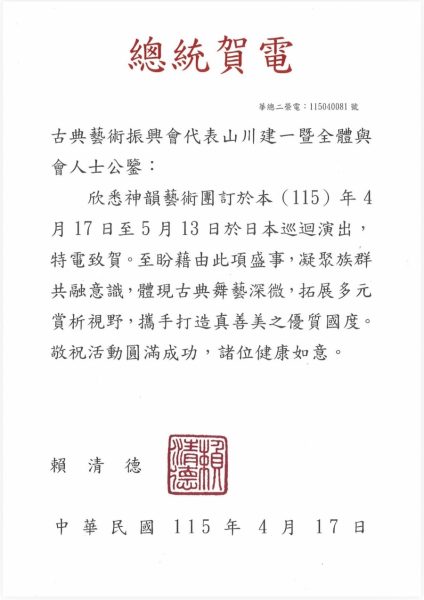
On April 17, 2026, President of the Republic of China Lai Ching-te issued a formal congratulatory message for the touring performance of the U.S.-based Shen Yun Performing Arts Company in Japan (from April 17 to May 13, Year 115 of the Republic of China calendar). The message stated: “It is hoped that through this major event, awareness of ethnic integration will be strengthened, the profound essence of classical dance artistry will be demonstrated, a more diverse aesthetic perspective will be expanded, and we will work together to build a high-quality nation of truth, goodness, and beauty.”
This year, the first stop of Shen Yun’s Asia tour is Taiwan. President Lai issued an enthusiastic congratulatory message and extended his recognition of top-tier art to neighboring Japan. This is not merely a simple cross-border cultural greeting, but also a deep recognition by a democratic leader of “authentic traditional culture,” and an expression of longing and anticipation for “China before the Communist Party.”
A decade of connection: from artistic awe to spiritual understanding
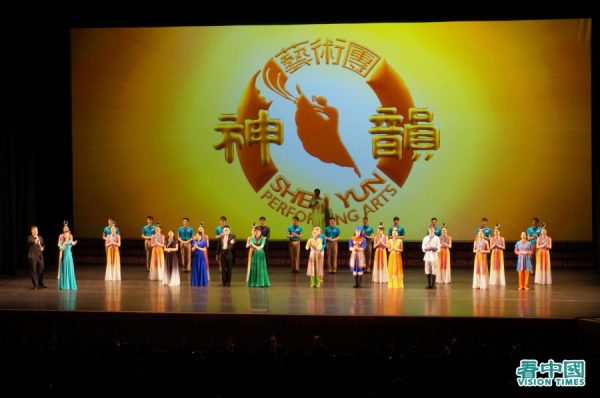
President Lai’s connection with Shen Yun spans more than a decade. As early as March 2012, when he was Mayor of Tainan, Lai attended a Shen Yun New York Company performance in the historic city of Tainan. At the time, he was deeply moved by Shen Yun’s profound cultural heritage and superb artistry, praising the performance as “refreshing and astonishing.” He was particularly impressed by the “Qiang ethnic dance,” admiring its delicacy and grace, which perfectly expressed the pure character of ethnic minorities.
If 2012 represented amazement at the artistic surface, then by 2019, when Lai—then Premier of the Executive Yuan—again watched Shen Yun in Tainan, his perspective had elevated to an understanding of cultural essence and spiritual belief.
He insightfully noted that the reason Shen Yun can present such outstanding performances is that “each artist practices Falun Gong, elevating their artistic level to a higher dimension.” This pure goodness and beauty emanating from within is the core reason Shen Yun has touched countless political and business elites around the world, transcending racial and linguistic barriers.
Success
You are now signed up for our newsletter
Success
Check your email to complete sign up
Exposing the CCP narrative: the inability to perform in China is a loss for the people
As is widely known, Shen Yun’s mission is to “revive 5,000 years of divinely inspired culture,” and its performances depict “China before the Communist Party took power.” This directly touches on what the Chinese Communist Party (CCP) fears most: a China free from party ideology, one that reveres the divine and embodies a brilliant civilization.
In response to the CCP’s interference and suppression of Shen Yun overseas, Lai once remarked: “I believe the Chinese government does not need to suppress Shen Yun. If they were to watch it, they too would feel refreshed and admire its artistic level.” He further stated: “The fact that Shen Yun cannot perform in China is a loss for the Chinese people.”
These words strike at the core issue. In today’s mainland China, under decades of atheist indoctrination and the destruction of the Cultural Revolution, traditional culture has been largely uprooted and replaced by a “party culture” filled with struggle and violence. Today, Shen Yun—representing the most authentic Chinese traditional culture—sells out in top theaters across Europe, America, and Asia, earning praise such as “magnificent, the pride of the Chinese people” from Taiwanese business elites like Lai Su-feng and Chen Rui-fa. Yet this cultural “return to roots” is barred from entering China. This is not only a tragedy for the Chinese people but also a reflection of the anti-human and anti-traditional nature of the CCP regime.
From Taiwan to Japan: promoting universal values of ‘truth, goodness, and beauty’
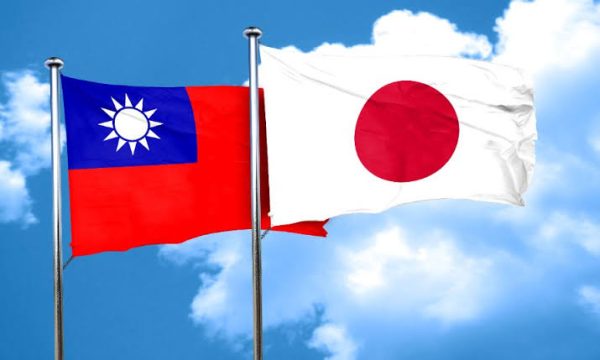
Now, as President, Lai has recommended Shen Yun to Japanese society. Japan, a country that has preserved much of the aesthetic heritage of the Tang and Song dynasties, has a natural affinity and appreciation for traditional culture.
Lai’s congratulatory message serves as a cultural bridge. It sends a clear message to Japanese society: Taiwan, as one of the most complete preservers of Chinese traditional culture, aligns closely with Shen Yun’s spiritual message of “truth, compassion, and tolerance”; and this cultural treasure from a “China without the Communist Party” is also worthy of appreciation and embrace by the Japanese people, who value tradition.
The power of culture can penetrate authoritarian barriers, and the purity of art can awaken dormant conscience. As many audience members have remarked upon leaving Shen Yun performances: Shen Yun is not only a feast for the eyes and ears, but also a performance that touches the deepest questions of the human soul.
In this turbulent era, the brilliance and light embodied by Shen Yun represent the miracle long awaited in the depths of human existence. Whether in Taiwan, Japan, or anywhere in the world, this performance revealing the true essence of civilization should not be missed.
(This article reflects only the author’s personal views and opinions and does not necessarily reflect the views of Vision Times.)