The U.S. has announced plans to build a fuel depot in the southern Philippines amidst tensions with China in the South China Sea.
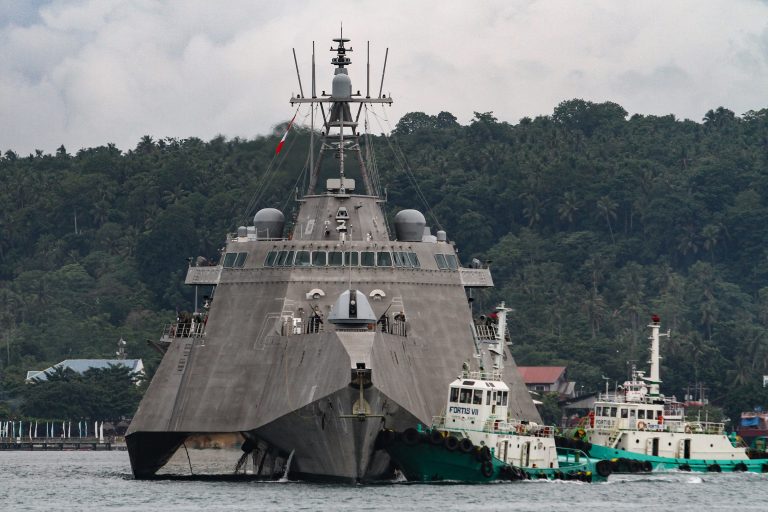
According to Radio Free Asia (RFA), Washington could be preparing the depot for “humanitarian and maritime security missions” in support of Manila. Philippine Rear Admiral Roy Vincete Trinidad called the facility “a deterrence” to Beijing’s influence, which bolsters defensive ties between the two countries.
Trinidad also said the plan is protected by the Enhanced Defense Cooperation Agreement and the Visiting Forces Agreement (VFA), allowing the U.S. to deploy troops and equipment in the Philippines.
“They are designed to support our response capability for HADR (humanitarian assistance and disaster response), maritime security and support and sustain our forces deployed, not only the West Philippine Sea, but even the southern border,” Trinidad said, assuring that the facilities would remain under Manila’s control.
The Philippines names the part of the South China Sea within its exclusive economic zone as the West Philippines Sea.
Success
You are now signed up for our newsletter
Success
Check your email to complete sign up
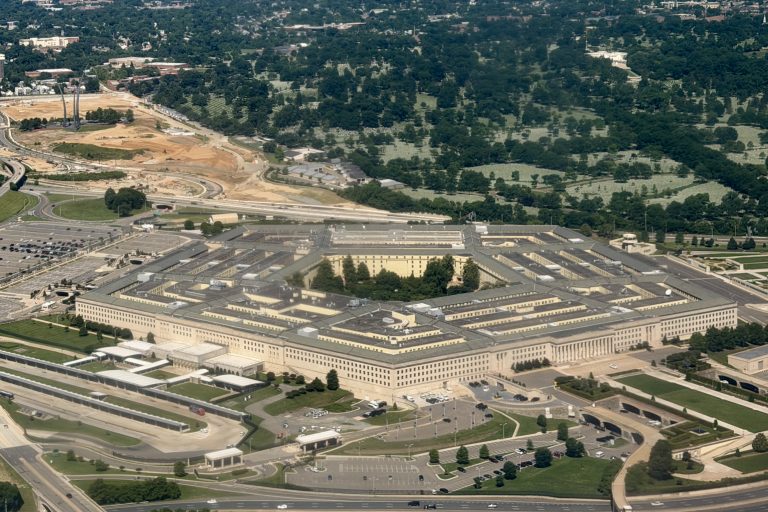
In addition to the depot, the Pentagon is also planning to form a Defense Fuel Support Point (DFSP) in the southern Davao region by 2028, housing “over 40 million gallons of fuel and lubricants.”
“The American refuelling depot to be located in the Southern Philippines can provide a critical alternative to existing ports in Manila and Subic,” Professor Chester Cabalza, founder of Manila-based think tank International Development and Security Cooperation, told RFA. “The projected hub opens a broader strategy of maritime deterrence and logistical resilience.”
The new depot in Davao is said to serve a dual purpose; streamlining regional operations while providing better protection against Chinese attacks than other areas, the South China Morning Post (SCMP) reported.
Despite the depot’s role in protecting Philippine interests in the South China Sea against China’s increasing aggression, Trinidad warned that “the greater risk to our security is the lack of a credible deterrence.”
“These facilities will help allow the [Armed Forces of the Philippines] to perform and to sustain these operations,” he said. “Hence, they serve at a very strong deterrent posture.”
Details on the facility are currently scarce until the depot’s plans are finalized, Trinidad added.
With the Middle East in turmoil, further examinations on fuel and energy supplies have been carried out across the South China Sea and the Pacific.
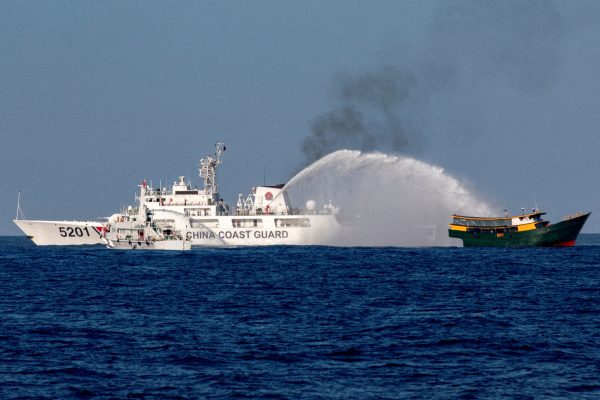
Beijing’s ‘bullying’ tactics
In recent months, the China Coast Guard (CCG) has deployed military vessels to stalk and provoke Philippine government ships and aircraft over fishing disputes.
The Philippine Coast Guard (PCG) denounced the CCG on April 9 for a “clear and deliberate act of bullying” after Chinese vessels fired flares at a Philippine aircraft patrolling Panganiban and Zamora reefs. These incidents included radio transmissions from China claiming “indisputable sovereignty” over the area.
On April 13, Manila accused Chinese fishermen of dumping cyanide around the Spratly Islands, calling it an act of “sabotage” to kill fish populations as a primary food source for Philippine troops at Second Thomas Shoal.
The PCG maintains that these actions are clear violations of international law and a direct result of Beijing’s ongoing expansionist agenda in the South China Sea.
Philippine Armed Forces chief General Romeo Brawner Jr. warned that “dialogue, mutual respect and consensus” are needed in a growing geopolitical environment.
“They are the very conditions that have allowed our region to grow, to connect and to prosper. And these are the principles that we must continue to uphold,” Brawner said.
China’s Foreign Ministry spokesperson Guo Jiakun said that the depot’s construction has raised the “risk of regional military confrontation and has triggered high alert among regional countries,” Anadolu Agency wrote.
“We urge the relevant countries to earnestly respect the common aspiration in the region for peace, development, and stability, and do more things conducive to regional peace and stability, rather than undermining them,” Guo added.
The Philippine fishers’ group Pamalakaya warned on April 11 that the depot would endanger the country’s security.
“We have seen how countries in the Middle East that side with America and shelter its military bases have become vulnerable to Iran’s retaliatory attacks,” the group’s national chair Fernando Hicap said in a statement.
“It is not in the interest of Filipinos to build any U.S. military base in the country. It will certainly put the public at risk because of the provocative and warmongering nature of the U.S.,” he added.