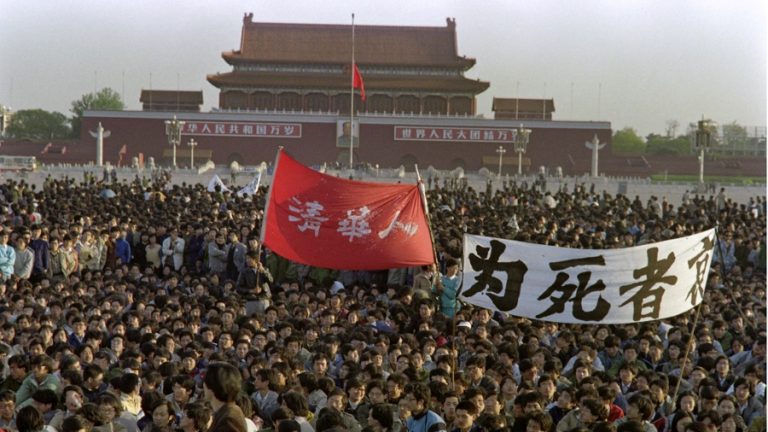
A firsthand witness to the 1989 Tiananmen Square massacre reflects on imprisonment, generational silence, and why he compares Western engagement with Beijing to pre-war appeasement of Nazi Germany.
Thirty-seven years after Chinese Communist Party troops opened fire on unarmed students gathered in Beijing’s Tiananmen Square, most young people in China have no access to any account of what happened. The Party has spent three decades erasing the event from textbooks, search engines, and family conversation. Li Hengqing, a chemistry student at Tsinghua University, China’s most prestigious science institution, was in the square that night. He has fasted for 24 hours on every June 4 since, including the year he spent in Qincheng Prison, the facility outside Beijing reserved for high-profile political detainees. In an exclusive interview with Kan Zhongguo on the anniversary, he described what he witnessed, what imprisonment taught him, and why he is convinced the Party’s end is already written into its own history.
The massacre ended a generation’s belief in Communist Party reform
The spark for the 1989 pro-democracy movement was the death, on April 15 of that year, of Hu Yaobang, a relatively liberal former general secretary of the Chinese Communist Party who had been forced out by hardliners in 1987 after student protests. University students across China mourned him publicly and then kept marching, demanding an end to corruption and the beginning of genuine political reform.
Li recalls the mood on campus as intoxicating. “Students were very naive, and very full of spirit,” he said. They chanted that the country belonged to the people, and that if they didn’t stand up, no one would. Almost no one contemplated overthrowing the government. The goal was to push it to reform itself.
Even after martial law was declared and roughly 300,000 soldiers encircled Beijing, students told themselves the worst-case scenario was a dispersal by police or factory militia, as had happened during the April Fifth Movement of 1976, when crowds mourning Prime Minister Zhou Enlai were cleared from Tiananmen Square without mass bloodshed. A full military massacre seemed unthinkable.
Success
You are now signed up for our newsletter
Success
Check your email to complete sign up
The night of June 3 into June 4 ended that assumption. Soldiers opened fire on unarmed students and civilians. Tanks drove into the square at speed. “I never imagined a tank could move that fast,” Li said. The problem was the dictatorship itself: the Party would never reform voluntarily.

Doctors on foot, a blood-soaked taxi, and a student who could not be saved
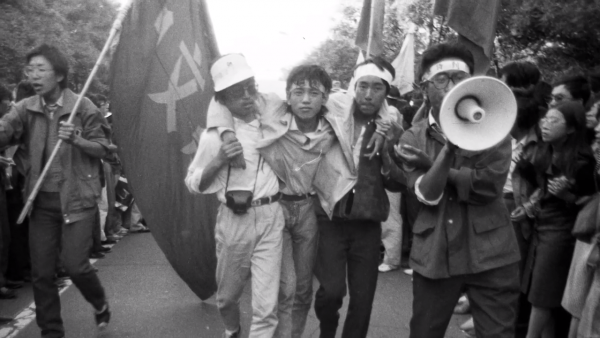
Li was among the students who remained in Tiananmen Square through the night of the crackdown. The military cordon blocked ambulances from entering, so doctors and nurses arrived on foot and set up a makeshift aid station at the square’s northeast corner. Wounded civilians came in on flatbed tricycles pushed by Beijing residents.
A single aging Lada taxi ferried the most critical cases to hospital. Its seats, roof, and engine hood were covered in blood. A student ran to the station carrying a classmate who had been shot; the doctors examined the wounded man and told the student there was nothing to be done, that the limited supplies had to go to those who could still be saved. The student knelt on the ground and wept. Li has not forgotten it.
“There were gunshots, fire, and blood everywhere,” he said. “If I had had a gun, I would have fired back.”
A high school classmate of Li’s nearly died near Fuxingmen, a major intersection west of the square, when military vehicles opened fire into a crowd. The classmate crawled into a hospital covered in blood and survived. Furious civilians tried to strangle wounded soldiers in the street.
“That chapter of our lives turned over that night,” Li said. He moved permanently from believing in gradual reform to opposing the Party’s rule outright.
Nearly a year in China’s political prison, including three months in solitary
After the crackdown, Li briefly fled Beijing, then returned to Tsinghua. In August 1990, more than a year after the massacre, he was arrested and held in Qincheng Prison for close to a year.
About three months of that sentence were spent in solitary confinement in a small isolation cell. The silence was so total that his voice changed pitch from disuse. To keep his vocal cords functional, he recited Tang dynasty poetry aloud every day.
“It was unbearably lonely,” he said. He would sometimes deliberately bait the guards with insults, hoping they would shout back. When they did, he felt, briefly, less alone.
Li says that many of the Beijing police officers who handled his case privately understood what had happened on June 4 and sympathized with the students. He was not subjected to serious physical violence. He used the prison time to read extensively, working through Paul Samuelson’s Economics, a textbook that shaped his later career as an economic analyst.
After his release, he went into exile and has remained active in overseas Chinese dissident circles ever since. Every June 4, without exception, including the year he spent in prison, he fasts for 24 hours. “It is a reminder to myself that I must never forget,” he said. “This has to be seen through. Our generation has a mission to complete.”
Three decades of Party suppression have erased June 4 from younger Chinese memory
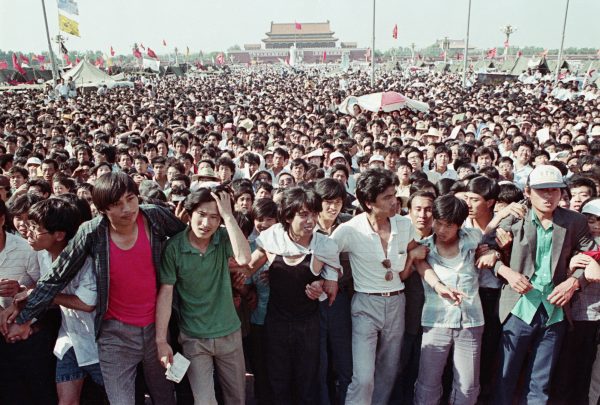
Li argues that the near-total ignorance of the massacre among young people in China today is the direct result of systematic suppression, and that the silence starts inside families. A reporter from Voice of America once asked him why so many Chinese parents never speak to their children about June 4.
“Parents love their children,” he said. “They don’t want their children to go through what they went through, so they say nothing.” Fear, accumulated across a generation of political repression, expresses itself as domestic silence. Young Chinese who know that something significant happened in 1989, if they know anything at all, have no access to the details.
Li believes the information blackout will eventually fail. Overseas activists and dissidents keep broadcasting, “like planting seeds,” he said. “Sooner or later they will germinate.” He is convinced that a substantial part of China’s educated elite already understands the truth of what happened and is simply waiting for the political conditions to change.
China’s economic decline since 2008 signals the Party’s eventual collapse
Li measures the Party’s trajectory by its economy. China’s economic peak came around the time of the 2008 Beijing Olympics, he argues. Since then, the trend has been downward, with each year visibly worse than the last. The structural contradictions of a system built on lies and coercion are compounding.
He draws an explicit parallel with the Soviet Union. Authoritarian regimes look permanent until they don’t, and then they collapse quickly. The Chinese Communist Party is a phase of Chinese history, in his view, not its end point. Democracy and freedom are basic human needs, he says, and no government can suppress them permanently.
Western governments that court Beijing are repeating pre-war appeasement of Nazi Germany
Li addressed the approach taken by Western governments toward the Party, singling out Canadian Prime Minister Mark Carney as an example of a democratic leader who prioritizes trade and economic ties while minimizing the ideological and security risks of engagement with Beijing.
He compared this approach to Western appeasement of Nazi Germany before the Second World War. Democracies that accommodate regimes that refuse to follow rules will eventually pay a price that dwarfs any short-term economic gain. “A regime that refuses to play by the rules should not be allowed to enjoy the benefits of the free market without limits,” he said.
“The CCP’s fall is inevitable,” Li said. “We stay on the right path. We will never forget.”