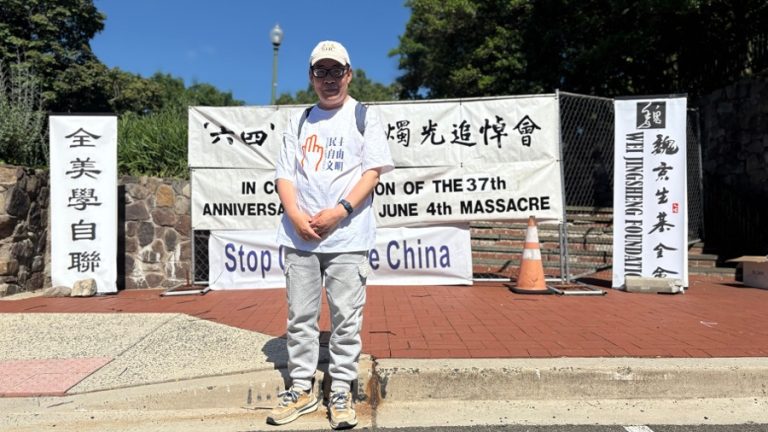
June 4, 2026, marked the 37th anniversary of the 1989 Tiananmen Square Incident. Around this anniversary, Vision Times interviewed Li Shuangde, a June Fourth eyewitness and human rights lawyer.
Thirty-seven years after the events, Li—then a first-year student at Chengdu Radio and Television University—recounted his experiences in a calm and measured voice. He described bullets flying overhead in Beijing, the moment a grenade fragment struck his thigh, the kindness of Beijing residents who risked their safety to shelter him, and the long struggle that followed as he navigated life under the Chinese Communist Party’s rule.
From Chengdu to Beijing in support of the movement
In the spring of 1989, the democracy movement spread across China. At the time, Li was a freshman majoring in political history (teacher-training track) at what was then known as Chengdu Radio and Television University.
He recalled that by May 1, students in Chengdu had already begun organizing marches and sit-ins at People’s South Road Square—today’s Tianfu Square—to show support for the student movement in Beijing.
“At that time, a student from Peking University came to our school to establish contact with us. Our school began holding marches and demonstrations on May 1 at Chengdu’s People’s South Road Square… and we were supporting the students in Beijing,” Li Shuangde recalled.
Success
You are now signed up for our newsletter
Success
Check your email to complete sign up
The interview then continues with Li’s account of how he became involved in the nationwide democracy movement and eventually traveled from Chengdu to Beijing during the historic events of 1989.
By May 25, Li Shuangde and four or five students from different universities departed from Chengdu and traveled north by train to Beijing.
He recalled that it was a unique scene characteristic of that era: students heading to Beijing in support of the movement did not need to buy train tickets. Travel was provided free of charge, and the train cars were filled with wave after wave of young people eager to join the demonstrations.
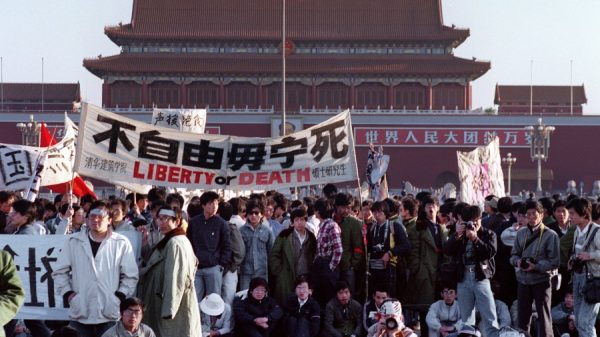
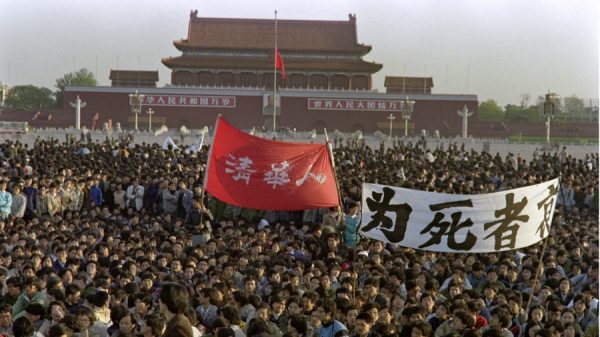
After arriving in Beijing, Li and his companions established contact with the Federation of Autonomous Student Unions of Universities Outside Beijing (Waigaolian) and were assigned living quarters in Tiananmen Square. Their daily necessities—including drinking water and food—were distributed through the student organizations coordinating the protest movement.
“Every day, meals, bread, and water were distributed to us by the Waigaolian.”
The final night in the square
After May 31, the situation deteriorated rapidly. Reports arrived one after another that martial-law troops had been ordered to advance toward Beijing.
For Li, the most harrowing memories are from the night of June 3, 1989.
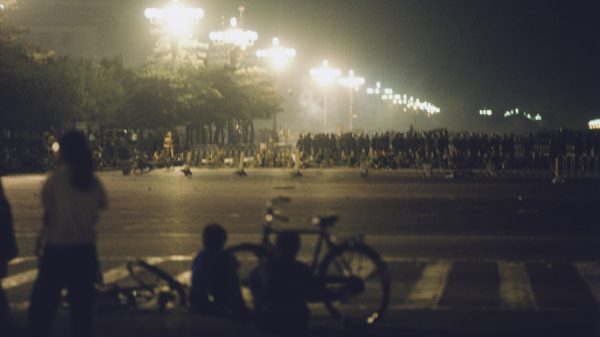
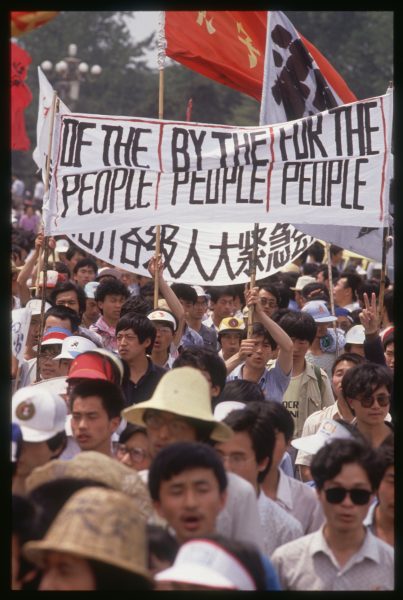
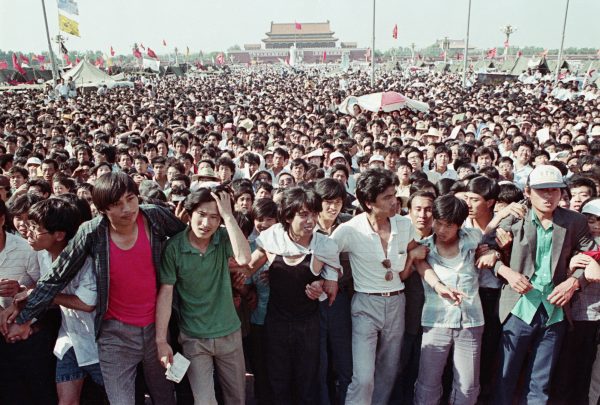
He recalled that by late that evening, martial-law troops had effectively surrounded Tiananmen Square. The square contained not only students but also tanks and armored vehicles. Meanwhile, large numbers of Beijing residents took to the streets in an attempt to block the military’s advance. According to Li, some civilians managed to seize weapons from soldiers and brought them to Tiananmen Square to display them publicly.
“I saw Beijing residents begin resisting the military, and then citizens took guns from soldiers and brought them into Tiananmen Square.”
At the same time, students inside the square were deeply divided over whether to remain and continue the protest or withdraw. Heated debates took place within the protest leadership.
It was amid this tense atmosphere that Liu Xiaobo and Hou Dejian appeared in the square. According to Li’s recollection, discussions over the protesters’ next course of action intensified as military pressure mounted and the situation approached its climax.
“Liu Xiaobo and Hou Dejian came to the square. They suggested that we leave and return to our schools to continue the struggle on campus… Liu Xiaobo and Hou Dejian then voluntarily went to negotiate with the martial-law troops, asking them to open a passage so that we could leave.”
According to Li Shuangde, the negotiators returned with an agreement: the martial-law troops would leave an exit route for the students.
The square’s command headquarters then used loudspeakers to call for a vote. Those who wanted to leave were told to shout “Go” (走), while those who wanted to remain were told to shout “Stay” (留).
“From where I stood, it seemed that the shouts for ‘Stay’ were louder. But the headquarters concluded that the calls for ‘Go’ were louder and instructed each school to form up and withdraw peacefully.”
At that crucial moment, a bullet struck the loudspeaker system used by the command headquarters.
“The bullet flew right over my head and destroyed the loudspeaker. After that, the headquarters could no longer issue any instructions.”
Li said he was standing directly beneath the speaker when the shot was fired. The bullet narrowly missed him before smashing the broadcasting equipment into pieces.
In the end, the students made their way out through narrow gaps between tanks, armored personnel carriers, and military vehicles.
“We walked out through the spaces between the armored vehicles, military trucks, and tanks.”
Wounded by a stray bullet, rescued by Beijing residents
After leaving Tiananmen Square, students from outside Beijing headed toward railway stations to return to their home cities. Li also boarded a train.
Before the train departed, however, several student organizers from the Beijing Students’ Autonomous Federation boarded and went from carriage to carriage looking for representatives of the visiting student groups. They invited them to travel to Peking University to discuss the next phase of activism, including a proposed “empty campus movement” that would encourage students to leave their campuses and organize workers and farmers for broader protests.
Li agreed to join them and got off the train.
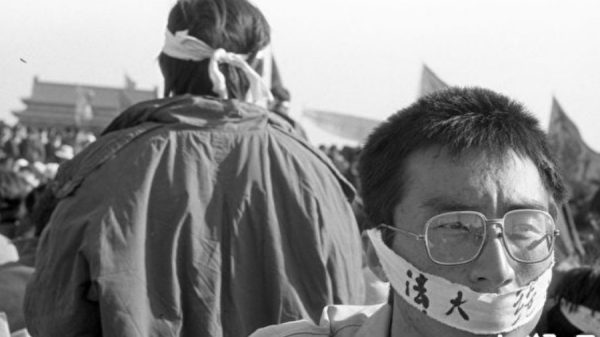
The group, consisting of roughly twenty to thirty people, decided to travel through side streets and alleyways to avoid direct encounters with troops. However, they lost their way and inadvertently entered an area of Beijing where violent clashes were underway.
“There was gunfire everywhere, and soldiers were running everywhere. Beijing residents were using their private cars to block the troops… It was under those circumstances that I was struck by a stray bullet.”
Li’s account describes the confusion and danger that confronted many protesters and residents in Beijing during the final hours of the military operation, when armed troops, civilians, and retreating students were moving through different parts of the city amid widespread unrest and gunfire.
Wounded by a stray bullet and sheltered by a Beijing worker
The stray bullet struck Li Shuangde in the thigh. As he collapsed, a stranger—a Beijing factory worker—came to his aid.
The worker carried Li to a hospital, where doctors examined the wound and determined that the bullet had grazed through the surface tissue rather than remaining lodged in his leg. However, they informed him that he could not be admitted.
According to Li, martial-law troops were searching hospitals for people with gunshot wounds.
“The martial-law troops were going to hospitals to arrest those who had been shot. Under those circumstances, I didn’t want to put him at risk.”
After receiving basic treatment, Li was carried back to the worker’s home, where he hid and recovered. He remained sheltered in the home of the worker’s family for nine days, leaving only on June 13.
“I didn’t leave until June 13, because by then the authorities had already begun large-scale arrests throughout Beijing and many students had been detained.”
Returning to Chengdu
When it came time to leave Beijing, Li avoided the city’s main railway station. Based on information he had gathered, he believed it was heavily monitored by plainclothes security personnel.
Instead, he traveled on a company transport vehicle connected to the worker’s workplace, first reaching Shijiazhuang. From there, he purchased a train ticket and eventually made his way back to Chengdu.
Withdrawal from university, factory work, and a second chance
Upon returning to Chengdu, Li encountered a different kind of hardship.
“When I returned to school, the school’s solution was to persuade me to withdraw voluntarily.”
School officials reportedly told him that expulsion would permanently bar him from taking China’s university entrance examination again, whereas a voluntary withdrawal would leave open the possibility of reapplying in the future.
Li chose voluntary withdrawal. On the paperwork, the stated reason was:
“Poor health, making it impossible to complete my studies.”
Subsequently, the Chengdu education and labor authorities arranged employment placements for students who had been expelled or had withdrawn. Li and more than thirty other students—from colleges, universities, and graduate programs across Chengdu—were assigned to work at the Sichuan Provincial Internal Combustion Engine Parts Factory.
Regardless of their previous academic status, all were reclassified as factory workers.
Li spent more than two years working at the factory, which was affiliated with the provincial agricultural machinery administration. In 1992, he sat for the national university entrance examination again and was admitted to the law program at the Sichuan Institute of Political Science and Law Administration.
After three years of legal studies, he graduated and went on to begin a career as a human rights lawyer, a profession he would practice for more than two decades.
More than twenty years as a human rights lawyer
During his legal career, Li Shuangde focused on politically sensitive cases, including those involving practitioners of Falun Gong, political dissidents, members of house churches, and various rights-defense activists.
Because many of his clients belonged to groups viewed by the authorities as politically sensitive, Li said his legal work was accompanied by significant personal and professional risks.
He explained that Chinese authorities have long identified certain categories of people as priority targets for monitoring and suppression. In his account, these groups include human rights lawyers, political dissidents, petitioners, house-church Christians, and Falun Gong practitioners.
“Human rights lawyers are regarded in China as one of the new ‘black categories.'”
Li argued that the central problem within China’s legal system is the absence of an independent judiciary.
According to him, politically sensitive cases are ultimately influenced by the Political and Legal Affairs Commission, a Party body that coordinates law enforcement, courts, prosecutors, and judicial administration. He said that major cases often receive policy guidance through this system before being handled by the relevant institutions.
“In China, major cases, politically sensitive cases, Falun Gong cases, and even house-church cases are all viewed through a political lens… Everything is ultimately geared toward maintaining the Communist Party’s hold on power.”
Because he did not charge fees to many of his clients, Li said that much of his livelihood came from support provided by rights-advocacy organizations. He also participated on multiple occasions in civil-society delegations that attended sessions of the United Nations Human Rights Council to discuss China’s human rights situation.
In October 2023, Li left China and settled in the United States.
Thirty-seven years of monitoring and restrictions
According to Li, the decades following June Fourth were marked by continual surveillance and restrictions on his personal freedom.
He said that every year around the anniversary of June 4, public-security authorities paid special attention to people known to have participated in the 1989 movement. On the anniversary itself, he said he was typically prevented from moving freely and was required either to remain under police observation or be taken away from urban areas, sometimes to rural locations, to prevent gatherings of former participants.
“Anyone with a June Fourth background would be controlled under the guise of being ‘accompanied’ on the anniversary.”
Li’s account portrays a system of long-term monitoring that, in his view, extended far beyond the events of 1989 and continued to affect the lives of many former participants for decades afterward.
Decades of surveillance
Li recalled that the restrictions continued uninterrupted until he left China in 2023.
As an example, he said that shortly before the June Fourth anniversary in 2023, he was traveling in Nanjing when police officers from his home district in Chengdu contacted him. According to Li, they asked whether he intended to return to Chengdu voluntarily and indicated that, if necessary, they would coordinate with local authorities in Nanjing.
The message, he said, was clear: on June 4 he was expected to remain within the authorities’ field of observation.
According to Li, this pattern repeated every year and continued without interruption until his departure from China.
The source of the authorities’ fear
Li believes the Chinese government’s continuing sensitivity toward June Fourth stems from the nature of the crackdown itself.
“The June Fourth Movement of 1989 was a peaceful demonstration, but its outcome was the deployment of regular military forces to carry out a violent suppression.”
He argued that because the authorities have never released an official death toll, the events remain one of the most politically sensitive subjects in China.
Li said he is convinced that deaths occurred in and around Tiananmen Square. While living in Chengdu, he said he repeatedly took part in memorial activities for two students from Renmin University of China—Wu Guofeng and Xiao Jie—who he said were killed during the events.
According to Li, each commemorative gathering prompted a police response, with participants being taken to police stations for questioning and review.
“June Fourth is a forbidden subject in China. No one is allowed to commemorate it, because they did something wrong: they suppressed peaceful petitioning students, many people died, and they want to conceal the numbers.”
A generation unaware of 1989
Li argued that, as a result of information controls, many younger Chinese know little about what happened on June 4, 1989.
In his view, the authorities have pursued what he describes as a policy of enforced forgetting through censorship, internet controls, and prohibitions on public commemoration.
He noted that for many years, Hong Kong served as the most prominent place in the Chinese-speaking world where June Fourth could be publicly commemorated. Annual candlelight vigils in Victoria Park often attracted tens of thousands of participants.
Li said that after the 2020 anti-extradition protests and the implementation of the Hong Kong National Security Law, such commemorations effectively came to an end.
“Today, legal commemorations of June Fourth can only take place outside the sphere of Communist Party control.”
Since moving to the United States, he said, he has participated in annual June Fourth memorial events.
“This history cannot be forgotten.”
Accountability and historical reckoning
Looking to the future, Li stated that he does not believe the issue can be resolved merely through an official “rehabilitation” or reassessment of June Fourth by the Chinese Communist Party.
The interview concludes with Li’s argument that any genuine resolution would require a fuller accounting of the events, including historical truth, public acknowledgment, and responsibility for decisions made during the crackdown.
Accountability rather than rehabilitation
Li stated that he does not support simply asking the Chinese Communist Party to officially “rehabilitate” or reverse its verdict on June Fourth.
“The Communist Party neither has the ability nor the legitimacy to rehabilitate June Fourth. What we seek is accountability through a new state.”
In his view, responsibility for the decisions made in 1989 should not be assigned to a single individual but rather to the collective leadership that participated in the decision-making process.
He argued that Deng Xiaoping, as chairman of the Central Military Commission, played a central role because military deployment into Beijing required his authorization. He also cited Li Peng and other senior leaders who were involved in drafting and promoting the martial-law decision.
“Those who ultimately bear responsibility include Li Peng and Deng Xiaoping… everyone who participated in the decision-making process should be held accountable.”
Li further noted that thirty-seven years have passed since 1989 and argued that responsibility for the events remains an unresolved historical issue that should eventually be addressed under a different political framework.
A fundamental change in his view of the Communist Party
Li acknowledged that before June Fourth, he—like many students of his generation—still held some hope that political reform could emerge from within the Communist Party under more liberal-minded leaders.
He said those hopes ended after the military crackdown.
“By using force to suppress peaceful petitioners, the true nature of the Communist Party was revealed.”
According to Li, the events of 1989 fundamentally altered his understanding of the political system and convinced him that meaningful democratic change could not depend solely on reform-minded leaders within the existing structure.
He also reflected on what he sees as a recurring tendency among Chinese people to place their hopes in powerful individuals rather than institutions.
As examples, he cited the hopes many once placed in Deng Xiaoping as a reformer, later in other senior leaders, and, during the early years of his tenure, in Xi Jinping. Li argued that such expectations faded as political developments unfolded.
“Chinese people often seek to attach themselves to a powerful leader, hoping that person will bring democracy and constitutional government. In reality, that is not how it works. Democracy and constitutionalism require collective effort, not faith in a strongman.”
The responsibility of overseas Chinese communities
When asked about the role of Chinese communities abroad, Li said their first responsibility is to preserve the memory of June Fourth and ensure that the history is not forgotten.
According to Li, maintaining public awareness of the events of 1989 is essential because, in his view, remembrance is a prerequisite for historical understanding, accountability, and any future discussion of China’s political development.
‘Commemorating June fourth is about preserving memory’
Li argued that the primary purpose of commemorating June Fourth is not to seek official rehabilitation from the Chinese Communist Party, but to preserve historical memory.
“Commemorating June Fourth is about preserving memory. The Communist Party has pursued a policy of forgetting, which means many people do not know the truth about what happened. We are not asking for rehabilitation; we are preserving memory.”
He contended that public remembrance is necessary because, in his view, official censorship and restrictions on discussion have prevented many people from learning about the events of 1989.
Views on China’s future
Li also discussed his views on China’s political future. He believes that different ethnic groups within China may have different political aspirations. He characterized the aspirations of many Han Chinese as centered on democracy and constitutional government, while describing some activists among Tibetans, Uyghurs, Mongolians, and other minority groups as advocating various forms of self-determination or political independence.
Li argued that these differing objectives share a common prerequisite: fundamental political change in China.
Discussing cross-strait relations, he expressed the opinion that the current period is marked by heightened tensions over Taiwan. He further speculated that a failed attempt to achieve unification by force could have profound consequences for the future of the Chinese Communist Party and for the political structure of mainland China.
These remarks reflect Li’s personal political views and predictions rather than established facts.
A witness thirty-seven years later
Thirty-seven years have passed since the events of 1989.
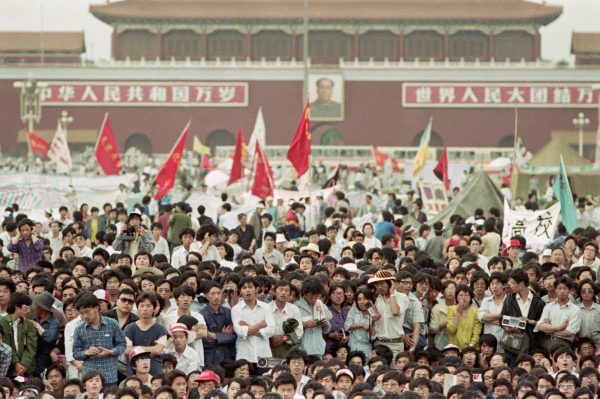
The freshman student who once stood near the Monument to the People’s Heroes in Tiananmen Square and heard bullets pass overhead later became a lawyer defending political dissidents and, eventually, an exile living abroad.
According to his account, he still carries both physical and emotional reminders of the wound he suffered during the events of June 1989, when shrapnel from an explosive projectile struck his thigh.
Looking back, Li said he hopes to see those he considers responsible held accountable one day.
“We must preserve the memory and tell future generations—those who were not there—what happened on June 4, 1989, in Beijing, in Tiananmen.”
The interview presents Li Shuangde’s personal recollections, interpretations, and political views regarding the events of 1989 and their legacy.