I. The intent to kill: Mourning Hu
Tomorrow marks June Fourth. A nation that has experienced a massacre has still not fully come to terms with it. In fact, failing to understand such a massacre is far more serious than failing to understand the Cultural Revolution—and even in another fifty years, it may still remain unresolved. If this event remains unexamined, then both Deng Xiaoping and Mao Zedong remain, in a symbolic sense, “alive,” and the nation remains stuck in a pre-modern condition—regardless of its technological modernization.
Bao Tong has stated: “I believe the intent to use force emerged at that time, and the decision was made then. The subsequent developments were merely Deng Xiaoping continuing to observe the situation, or stabilizing Zhao Ziyang’s position. In essence, that is how things unfolded.”
When exactly did this occur? April 22, 1989.
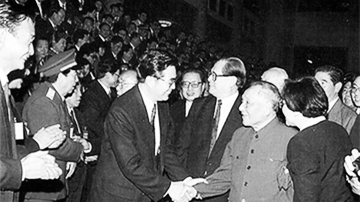
That day was the memorial service for Hu Yaobang. In order to show respect to Hu Yaobang and respond to public sentiment, Zhao Ziyang arranged for a solemn state funeral, approved the designation of Hu as a “Marxist,” and allowed spontaneous public mourning. These decisions reportedly angered Deng Xiaoping.
From that day onward, Deng Xiaoping’s trust in Zhao Ziyang was effectively lost. This marked the beginning of a rupture between Deng and Zhao, which some analysts regard as a key trigger for the June Fourth events. This detail—rarely systematically examined in the past—highlights how, under a model of “new authoritarianism,” the personal will, preferences, and perceptions of a single top leader can shape historical outcomes.
Success
You are now signed up for our newsletter
Success
Check your email to complete sign up
Why was Deng angered? According to this interpretation, there were two reasons.
First, Hu Yaobang had been removed under Deng Xiaoping’s own directive. Therefore, honoring Hu was perceived as indirectly challenging Deng’s authority—something he could not accept. Deng reportedly believed both Zhao Ziyang and the student movement were attempting to “rehabilitate” Hu Yaobang.
Second, from Deng Xiaoping’s perspective, the student movement’s calls for political reform and democracy challenged the Communist Party’s absolute leadership in China. Zhao Ziyang’s perceived ambiguity—and even sympathy toward the students’ demands—was also unacceptable to him. This, too, is presented as a key illustration of “new authoritarianism.”

II. Deploying troops: removing Zhao
Under the strongman political structure of 1980s China, power dynamics within the Communist leadership can be reduced, in this view, to the interaction between Deng Xiaoping and Zhao Ziyang—Deng as the “behind-the-scenes ruler,” and Zhao as the executive in charge of day-to-day governance. Other figures played secondary roles. When this dyadic balance collapsed, the outcome, according to this interpretation, was massacre.
From this perspective, the deployment of troops was not simply aimed at suppressing the student movement, but at removing Zhao Ziyang, who was seen as engaging in an illegitimate political challenge within the Party system. This interpretation differs from the more common framing of the events as purely a response to social unrest. It emphasizes instead a power-struggle lens: if Zhao Ziyang had successfully defused the movement through dialogue, he might have gained both “party support and popular legitimacy,” thereby indirectly undermining Deng’s authority.
According to this argument, Deng’s response escalated from managing protests to consolidating internal Party control over Zhao Ziyang. Key developments are cited as follows:
- On the day the April 26 editorial was published, Deng allegedly ordered the military into combat readiness.
- In early May, all military leave was reportedly suspended.
- On May 8, Deng met with commanders of major military regions; multiple field armies were moved toward Beijing under the guise of rotations and exercises.
- By the evening of May 17, when Deng convened a meeting to discuss martial law, troops were already positioned near Beijing.
- On May 20, martial law was declared and Zhao Ziyang was removed from his post as General Secretary in a meeting reportedly not attended by Zhao or Hu Qili. Zhao later recalled being informed only indirectly and having communication channels cut off.
- On May 21, Deng allegedly stated that formal political procedures would wait until troops had fully entered Beijing, ensuring control over the situation.
- On June 2, he issued an order described as “firm suppression, no fear of bloodshed.”
- In the early hours of June 3, he instructed the use of “all necessary means to restore order.”
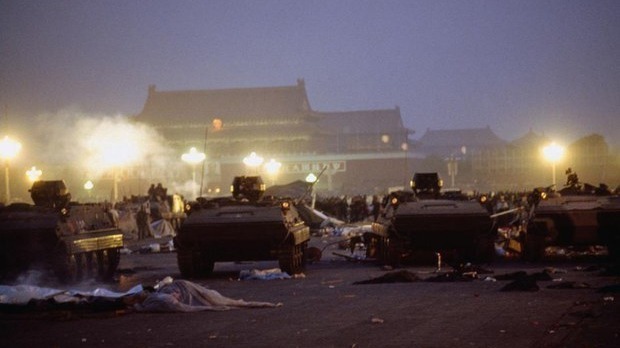
- On June 4, military forces entered Beijing and cleared Tiananmen Square.
- On June 9, Deng delivered a speech to senior military commanders declaring victory.
The text then poses a rhetorical question: is this not, in essence, a military coup?
From this perspective, Deng Xiaoping believed that removing Zhao Ziyang through Party procedures such as expanded Politburo meetings or Central Committee plenums carried too much uncertainty. Only by bringing in the military and establishing full control on the ground could outcomes be guaranteed. The entire process, therefore, is interpreted as a consolidation of power achieved through extraordinary, militarized means under conditions of secrecy and coercion.
Deng Xiaoping, in order to preserve his personal authority, was willing to eliminate a political rival—even at the risk of triggering a civil conflict. Such a conflict, in this interpretation, would inevitably have expanded beyond Beijing to Nanjing, Tianjin, Shanghai, Wuhan, and even nationwide. It would have turned the entire student movement and the broader population into casualties, effectively derailing the reform process and producing a national catastrophe, with potential global repercussions.
III. Aftermath: Strategic restraint
Before Xi Jinping’s narrative of “great power resurgence,” there was another guiding concept in Chinese foreign policy known as “taoguang yanghui” (hide one’s capabilities and bide one’s time). The phrase implies concealing strength, presenting oneself as weak, and waiting for the right moment to assert power. In this interpretation, Xi Jinping’s current approach to “great power rise” is seen as the logical endpoint of that strategy.
The June Fourth crackdown, followed closely by the collapse of the Soviet Union and Eastern Europe, may have been coincidental, but it posed an unprecedented legitimacy crisis for Beijing. Deng Xiaoping quickly articulated two strategic guidelines: “taoguang yanghui” and “never take the lead.” The first was intended to manage Western sanctions; the second to respond to the collapse of the socialist bloc. Deng’s position was summarized as: “We will not carry the banner; whoever wants to carry it can do so.”
Both strategies emphasized avoiding confrontation and staying out of the spotlight in order to buy time for recovery. Those familiar with Chinese history may associate this approach with analogies such as King Goujian’s “sleeping on brushwood and tasting gall” or Han Xin’s “humiliation under the crotch,” and even Lin Biao’s earlier strategic restraint under Mao. Yet, in this view, Western political science has paid insufficient attention to this long-standing Chinese strategic tradition.
IV. The ‘miracle:’ corruption
China’s so-called “miracle” over the past three decades is not, in this interpretation, economic growth or authoritarian consolidation, but something else entirely: the “miracle of corruption.”
Author Sha Yexin once described Chinese corruption as astonishing in its scale and structure, identifying patterns such as group-based corruption, departmental corruption, marketized corruption, and mafia-like networks. Corruption, in this account, has become a behavioral norm, a way of life, and a component of the political system itself—one that erodes moral life and reshapes national character.
Over thirty years, different political phases produced different guiding slogans:
- Under Jiang Zemin: “keep a low profile and get rich quietly.”
- Within the military: factional networks formed along regional and kinship lines, including so-called “Shandong cliques” and “Henan cliques.”
- Economic inequality became entrenched and irreversible. Those controlling monetary power, in this view, ultimately focus less on wealth accumulation than on regime security and personal longevity.
Some critics further claim that ruling elites have pursued extreme biomedical or technological means of life extension, including experimental uses of biological materials or advanced regenerative technologies. These claims remain highly controversial and are widely disputed.
In this framing, a rhetorical question is raised: is this the “retribution” of the June Fourth massacre?
V. Consequences: the ‘princelings’
The generational structure of the Chinese Communist Party is broadly divided into revolutionary cohorts: the Red Army generation, the Eighth Route Army generation, and the Liberation Army generation—those who “won the country.” The post-1949 cadre class is often treated as a separate category, reflecting a military-style organizational lineage.
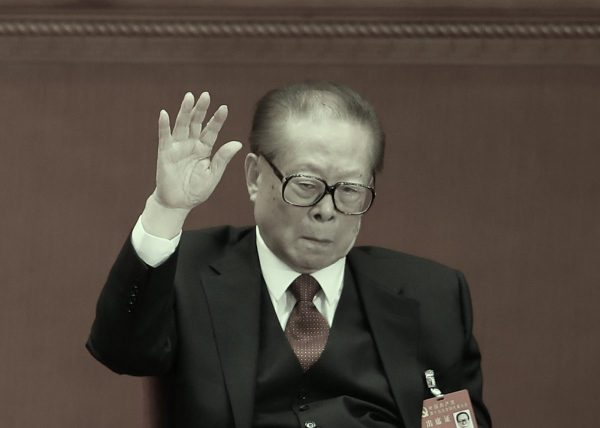
Deng Xiaoping is said to have designated two generations of successors. After the shock of June Fourth, and out of fear of systemic collapse, the Party selected Jiang Zemin and Hu Jintao as successive leaders. Jiang Zemin expanded foreign investment and dismantled elements of the planned economy, transforming China into a global manufacturing hub and rebuilding regime legitimacy through economic growth. Hu Jintao, in contrast, is described as having taken a more restrained or conservative approach, while critics among “princelings” accused the system of being mismanaged by technocrats and bureaucrats, calling for a re-consolidation of political authority.
After the June Fourth crackdown, Chen Yun reportedly argued that “it is safer for our own descendants to succeed us,” reinforcing the legitimacy of so-called “princeling rule.” Xi Jinping is thus framed as both a product of this system and a question: is he the intended continuation of the Party’s original project, or a historical accident?
A further claim in recent Chinese discourse is that there exists a broad cognitive dissonance within society—including among intellectuals and the middle class—toward Xi Jinping and his system. Some interpret this as a widespread, largely unspoken collective contempt, though this remains an analytical assertion rather than a verifiable consensus.
From a political science perspective, one argument holds that Xi Jinping is not an accidental choice but the optimal fit for the current system. Moreover, it is often argued that the system itself currently lacks a viable replacement, meaning that even if leadership is considered flawed, it continues by necessity rather than choice.
(This article represents the personal views and opinions of the author only and does not necessarily reflect the views or position of Vision Times.)