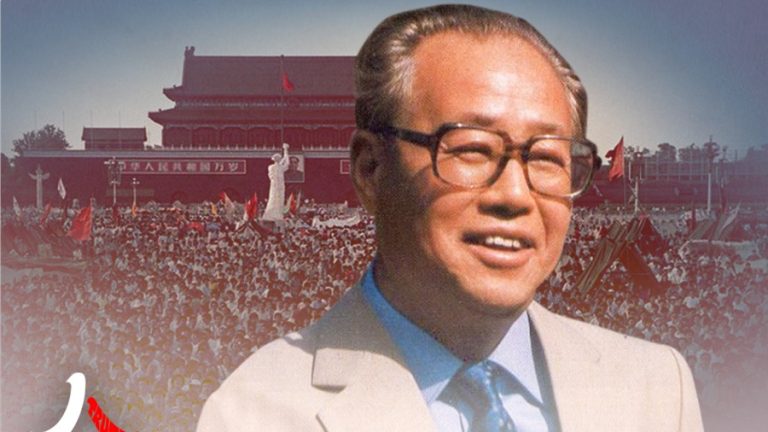
Zhao Ziyang refused to back the Tiananmen crackdown and died under house arrest
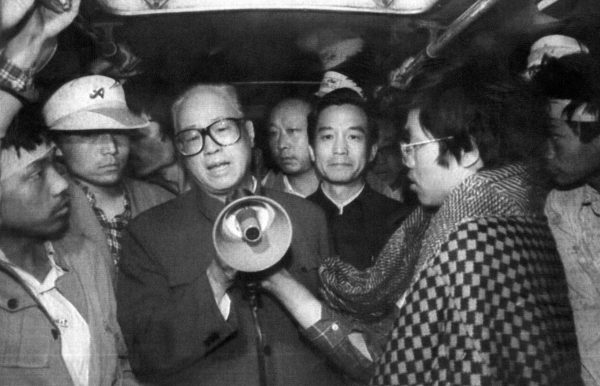
Zhao Ziyang, who served as general secretary of the Chinese Communist Party until his removal in 1989, is remembered for standing with the student protesters at Tiananmen Square and refusing to endorse the military crackdown that followed. He spent the remaining 15 years of his life under house arrest rather than recant.
Some have wondered whether a different choice might have preserved his position and allowed China’s economic reforms to continue on a better path. The answer, based on what I observed directly, is almost certainly no. By 1988, a full year before the tanks, Zhao’s authority had already been systematically undermined. His reform agenda was being blocked, and he was being set up to absorb political damage for a policy failure that was not his.
Zhao spent five hours arguing for reforms he could not force through
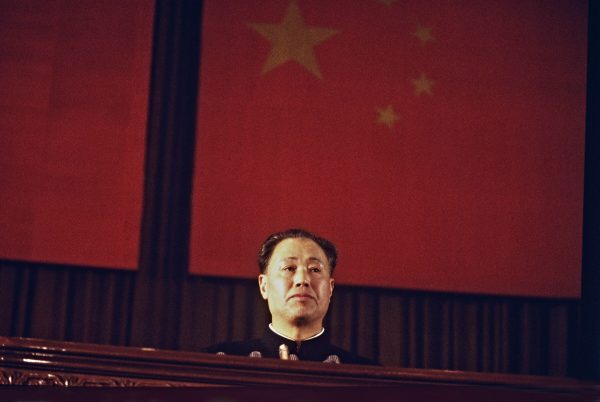
The last time I saw Zhao Ziyang was July 1, 1988. That day, part of Zhongnanhai, the leadership compound in central Beijing that serves as the seat of the Party’s top leadership, was open to visitors. In a small conference room in the Qinzhengdian hall, away from the foot traffic of tourists outside, Zhao gathered a small group to discuss the direction of economic reform. Outside the windows, sightseers passed in a steady stream. Inside, the room was almost completely silent except for Zhao himself, who spoke without interruption for five hours, from two in the afternoon until seven in the evening.
Those present included Zhao’s secretary, Bao Tong; Zhou Xiaochuan and Lou Jiwei, who would later serve as governor and deputy governor of the People’s Bank of China, China’s central bank; and myself alongside my colleague Zhang Shaojie, both of us then working at the Chinese Economic System Reform Institute, a government think tank attached to the State Commission for Restructuring the Economic System. We barely spoke. Zhao carried the entire conversation himself.
Under pressure from Deng Xiaoping, the Politburo Standing Committee, the seven-member apex body of the Chinese Communist Party that holds supreme collective authority over Party decisions, had just agreed to accelerate price reform. Zhao’s own position on that decision was deeply uncomfortable. Zhou Xiaochuan and Lou Jiwei were supporters of Deng’s approach. They had long argued that mathematical modeling could identify the correct prices for industrial and agricultural goods, along with the right tax rates, and that a single comprehensive reform could be executed at once. The prominent economist Wu Jinglian had expressed similar views.
Success
You are now signed up for our newsletter
Success
Check your email to complete sign up
Zhao knew this was wrong, and so did I. My colleagues and I at the Reform Institute had concluded that this approach amounted to what we privately called “computer utopianism” in the Soviet mold: the fantasy that the prices of thousands of constantly shifting goods could be fixed as stable economic parameters and managed by administrative fiat. That was planning-economy thinking dressed in the language of reform. What Zhao hoped to accomplish that afternoon was to persuade Zhou and Lou of his position, in the hope that they would carry his views to others in the senior leadership. He still had the meeting notes from that day. His recurring formulation, delivered in his characteristically consultative tone, was: “If one could do such-and-such, then it might be possible to achieve such-and-such.” There was no sense of command in any of it. He was a man arguing for ideas he could not impose.
The Reform Institute stood alone in opposing Deng’s price liberalization plan
Several weeks before that July meeting, in late May 1988, the State Commission for Restructuring the Economic System had convened a major symposium at the Jingxi Hotel in western Beijing on medium- and long-term reform planning. I had drafted the Reform Institute’s submission to that conference, and our paper explicitly opposed what was then being called “price breakthrough” reform: the idea that price controls could and should be abolished in one rapid, decisive campaign. After the conference, I also sent an internal memorandum directly to Zhao Ziyang laying out our objections.
Nine organizations submitted papers to the conference. The State Council’s Development Research Center, Peking University, the Central Party School, the Shanghai Municipal Economic Research Center, the Secretariat’s Rural Policy Research Office, Renmin University, and the State Commission itself all contributed papers included in the subsequent published volume of conference proceedings. The Reform Institute’s paper was excluded.
Zhao understood our arguments and found them persuasive. He did not believe the blunt-force “price breakthrough” could succeed. But as the director of the Party’s central finance and economics leading group, and as the principal figure nominally leading economic reform, he could not publicly oppose a policy that Deng himself had decreed. He managed the contradiction by speaking repeatedly, in various forums, about the importance of combining price reform with enterprise reform. The implicit meaning, which he never stated aloud, was that pushing price reform without simultaneously restructuring the enterprise sector would doom the effort. His audience did not pick up on it. Ordinary citizens feared large price increases. Reformers were often persuaded by the simple slogan “better a short, sharp pain than a long, drawn-out one.” Those who had never supported reform saw no reason to listen to Zhao in any case.
Deng’s one direct intervention in economic policy produced a nationwide panic
The official historical mythology promoted by the Party’s court scholars credits Deng Xiaoping as the “chief architect” of China’s economic reforms, while minimizing or erasing Zhao Ziyang’s actual contributions. Between 1980 and 1988, the substance of economic reform, the policy designs and implementation strategies, was developed primarily by Zhao and the teams he assembled. Deng intervened in specific economic decisions rarely. When he did intervene directly in a single concrete policy, the result was the 1988 price reform disaster.
In the early summer of 1988, during a series of meetings with foreign visitors, Deng announced publicly that China would implement “price breakthrough” reform. He understood neither the technical economics of what he was proposing nor the macro-level consequences that would follow. The announcement immediately triggered alarm among ordinary Chinese, who had lived through shortages and inflation and understood in their bones what rapid price liberalization meant. Panic buying spread nationwide. Economic stability collapsed.
When the damage became undeniable, Deng quietly walked away. He did not stop Chen Yun, the senior Party elder who led the conservative planning-economy faction within the leadership, and Chen’s close ally Yao Yilin, who served as executive vice premier, from exploiting the crisis to attack economic reform more broadly. He accepted no public responsibility for a decision that had been his own. Instead, he forced Zhao Ziyang to stand before the Party’s central work conference in September 1988, an internal high-level gathering of senior officials convened to set economic policy, and admit, on behalf of the Party’s Central Committee, that the “price breakthrough” decision had been poorly considered.
After that autumn, Zhao was effectively shut out of economic policymaking. The planning-economy faction under Chen Yun and Yao Yilin reclaimed control of economic decisions and launched what they called “consolidation and rectification,” a program dressed in neutral bureaucratic language but designed in practice to reassert administrative control over the economy and roll back market-oriented reform. The economic reform momentum that Zhao had built through the 1980s stopped, and it did not resume until Deng’s Southern Tour in 1992 and the subsequent elevation of Zhu Rongji to handle economic affairs in Beijing.

Pro-reform officials pushed a price shock strategy that Eastern Europe had already proved disastrous
China’s urban economic reforms had by 1988 exhausted the easy gains of the early reform era. The initial rounds of expanding enterprise autonomy, the factory director responsibility system, and the two-track price system, under which goods could be sold at both state-fixed and market prices simultaneously, had generated real growth. But their positive effects were wearing off. Inflation was beginning to stir.
Within the senior leadership, the conservative planning faction led by Chen Yun seized on signs of inflation to argue for rolling back market-oriented reform and restoring comprehensive administrative control over the economy. In response, a faction within the pro-reform camp developed its own case for acceleration. Its most visible advocate was Li Tiying, who had served as head of the State Commission for Restructuring the Economic System. This faction argued that the structural inflation of the era, the kind generated by the coexistence of plan and market, could be eliminated by simply abolishing the two-track system at a stroke. Get it over with fast, they argued; administer the pain in one concentrated dose rather than letting it drag on. I heard Li Tiying make exactly this argument in person in March 1988.
Hungary and other Eastern European countries that had undertaken similar price liberalizations without simultaneously reforming their enterprise structures and macroeconomic management systems had found that prices rebounded to distorted levels after the initial shock, generating new rounds of inflation rather than a stable reformed system. “Short, sharp pain” reliably became long, grinding pain. A delegation of Hungarian economists had visited China in 1987, and a Reform Institute team had traveled to Hungary, with both exchanges producing exactly this finding. Zhao, drawing on his own considerable instincts about macroeconomic management, accepted the judgment.
Deng did not. Economists like Li Tiying, trained as engineers and bureaucrats rather than social scientists, could not follow the analytical reasoning that led to that conclusion. Military-sounding language, “breakthrough,” “assault,” “decisive campaign,” fell more naturally on their ears. And Deng, who had no formal economic education and no grounding in macroeconomic theory, was most easily moved by exactly those kinds of formulations. The structural problem was that Deng, operating as chairman of the Party’s Central Military Commission, the body that holds supreme command over China’s armed forces and whose chairmanship has historically conferred authority across the Party leadership, held direct power to intervene in specific economic policy decisions even while claiming to stand above day-to-day government administration. Zhao understood that “price breakthrough” was a fantasy. He could not make Deng understand why.
Li Peng, who had become prime minister in March 1988 and simultaneously took on the chairmanship of the State Commission for Restructuring the Economic System, made things worse. Li grasped only the basics of economic administration and was genuinely unqualified to lead complex reform policy. He left others in the dark while remaining in the dark himself.
The planning faction sabotaged Deng’s price policy while pinning the failure on Zhao
In early May 1988, Deng abruptly decided to intervene directly. He instructed the Politburo Standing Committee to examine whether price reform could be completed within three to five years. The Standing Committee met and produced eight points of guidance. I have the transmission record of that meeting. The eight points differed markedly from what Deng had been pushing: where Deng emphasized boldness and a decisive all-at-once campaign, the Standing Committee’s formulation stressed caution, attention to public tolerance, and coordinating wage reform alongside price reform to protect living standards. Point two called for drafting a five-year price-and-wages reform plan. Zhao chaired the meeting that produced these eight points. They were not circulated within the Party or announced publicly, which meant they carried no potential for social disruption on their own.
The real sabotage came from Yao Yilin, the executive vice premier and Chen Yun’s principal operative within the State Council, China’s cabinet. Because Li Peng lacked the competence to draft a workable “price breakthrough” plan, the task fell to Yao by default. Yao was a veteran of Party bureaucratic maneuvering who detested market reform and understood precisely how to subvert a policy without appearing to challenge the leader who had ordered it.
On the surface, Yao played the role of energetic implementer. He organized high-profile consultations with the leaders of China’s non-Communist satellite parties, staging a conference at the Guoyi Hotel in early September 1988 to solicit their views on the price-and-wages reform plan. The public theater created the impression that a sweeping price liberalization was imminent, which amplified the popular panic already spreading. Inside that same process, Yao quietly gutted the plan’s substance: the actual draft he circulated at the Guoyi Hotel conference, and then collected back from attendees before they left, was a modest proposal to raise the administered prices of coal and a handful of other commodities. Deng’s grand campaign had been bureaucratically dissolved into a minor price adjustment, invisible to anyone who was not in that room.
Chen Yun had privately opposed Deng’s “price breakthrough” idea from the beginning and was confident it would fail. He said nothing publicly, offered no criticism, and let the disaster develop. Behind the scenes, he had already instructed Yao Yilin to begin preparing the framework for “consolidation and rectification” before Deng’s failure had even become official. Only in the late summer of 1988, when the outcome was beyond doubt, did Chen step forward publicly to declare that “price breakthrough” had to stop and the consolidation program had to begin. Deng, confronted with the wreckage of his own initiative, agreed.
Three months after Deng had announced “price breakthrough” to the world, the policy had produced nothing except economic turmoil and eroded public confidence. Deng said nothing about his own role. He said nothing about the pressure he had applied to the Politburo Standing Committee. He asked no questions about Yao Yilin’s bureaucratic sabotage. He let Zhao Ziyang walk to the microphone at the September 1988 central work conference and perform the public contrition that the situation required.
Zhao’s political standing never recovered. His removal from real economic authority was complete by the end of that autumn. The planning faction held power from then until Deng’s 1992 Southern Tour broke their grip. The decade of economic reform that Zhao had built through the 1980s ended in the autumn of 1988, nine months before Tiananmen.
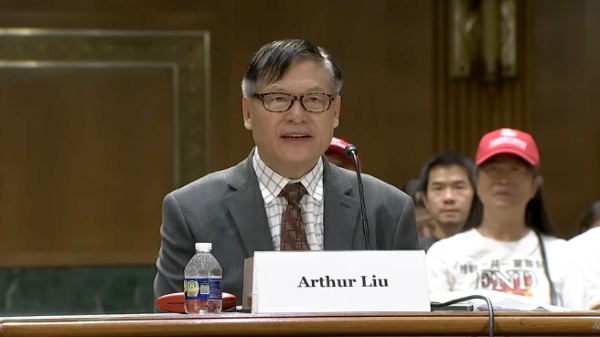
The author, Cheng Xiaonong, served as director of the Comprehensive Research Division of the Chinese Economic System Reform Institute under the State Commission for Restructuring the Economic System. He attended the July 1, 1988 meeting at Zhongnanhai described in this article and participated in multiple State Council and State Commission policy discussions on economic reform and macroeconomic policy during 1988. He has written previously in English on the “price breakthrough” decision.