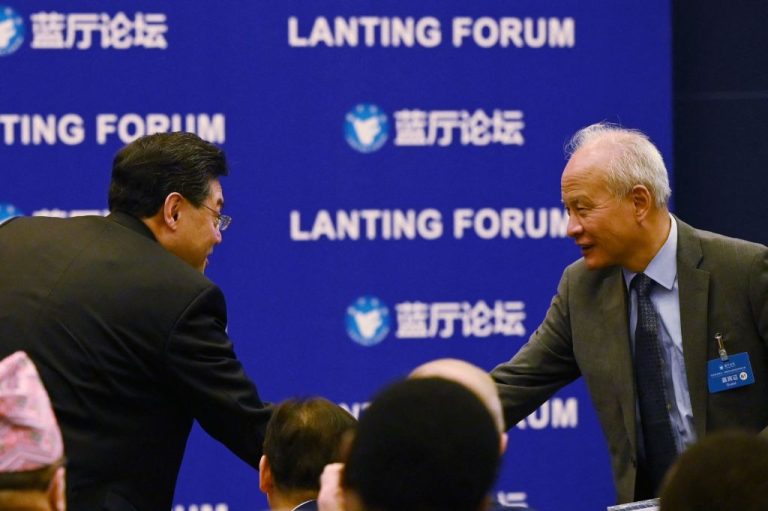
As preparations unfold for a potential second summit between U.S. President Donald Trump and Chinese leader Xi Jinping, former Chinese Ambassador to the United States Cui Tiankai and former Deputy Permanent Representative to the United Nations (UN) Geng Shuang quietly traveled to the U.S. last month for a series of private meetings aimed at gauging the Trump administration’s priorities.
According to Bloomberg, citing people familiar with the discussions, the two veteran diplomats met with China policy specialists from across the U.S. political spectrum, including several former Trump administration officials. The meetings were described as an “informal” diplomatic effort intended to prepare the ground for higher-level talks expected before another Trump-Xi meeting takes place.
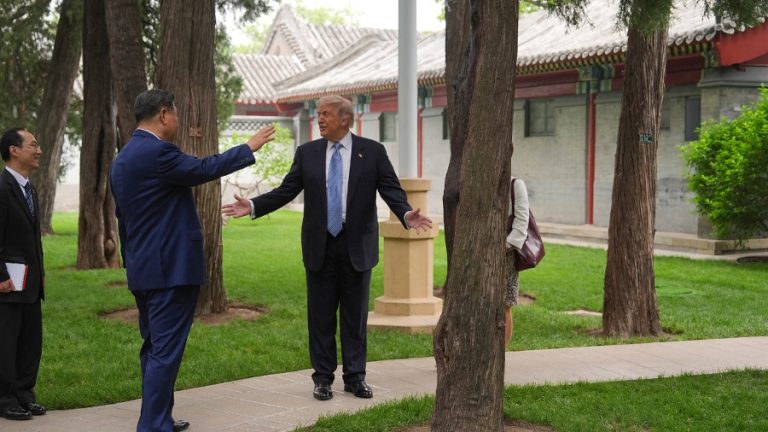
Following Trump’s visit to Beijing in May, the White House announced plans for Xi to make a reciprocal visit to the United States in September, as both governments seek to keep diplomatic channels open despite continuing disputes over trade and security.
RELATED: Who Gained the Upper Hand at the Trump-Xi Summit? Analysts Weigh In
Seeking insight
Bloomberg reported that Cui and Geng had two primary objectives during their visit: Assessing whether the fragile U.S.-China trade truce reached earlier this year can be sustained and evaluating how November’s U.S. midterm elections could reshape Washington’s China policy.
Success
You are now signed up for our newsletter
Success
Check your email to complete sign up
Though neither diplomat currently serves in an official diplomatic post; Cui stepped down as ambassador in 2021, while Geng was transferred from China’s UN mission to the Chinese People’s Institute of Foreign Affairs earlier this year, both remain influential voices in China’s foreign policy establishment and continue to serve as unofficial channels of communication with Washington.
The reported outreach comes ahead of what could be a second Trump-Xi summit following their May meeting in Beijing, where the two leaders agreed to reduce tariffs on selected goods and announced a framework intended to stabilize bilateral economic ties.
Bloomberg also reported that American China experts recently traveled to Beijing, where they met with current and former Chinese officials from government agencies and policy think tanks. According to one participant quoted anonymously by the publication, Chinese officials were particularly interested in the upcoming U.S. midterm elections as well as the 2028 presidential race, suggesting Beijing is closely monitoring how future political changes could affect bilateral relations between the two world powers.
Another participant said some attendees expressed cautious optimism that the current trade truce could remain in place through the remainder of Trump’s term, although no formal agreements beyond existing commitments were reported.
Trade truce masking ambiguity
Despite signs of diplomatic engagement, both governments have continued introducing new measures targeting each other’s strategic industries. On June 30, a procurement restriction under Section 851 of the U.S. National Defense Authorization Act took effect, prohibiting the Pentagon from contracting with firms that also lobby on behalf of companies appearing on the Department of Defense’s “1260H” list of Chinese military-linked enterprises.
Earlier in June, the Pentagon also expanded that list to 188 companies operating in sectors including artificial intelligence, batteries, robotics, semiconductors, and biotechnology. The updated list includes major Chinese firms such as Alibaba, Baidu, BYD, NIO, and WuXi AppTec.
China responded later that month by adding 10 American companies, including USA Rare Earth, to its export control list for dual-use goods. As a clapback, Beijing also announced procurement restrictions affecting products manufactured by dozens of leading U.S. defense contractors, including Lockheed Martin and Raytheon.
A White House official told Voice of America (VOA) that the Pentagon’s procurement restrictions are intended to protect “secure and reliable supply chains” for the U.S. military, adding that Beijing’s retaliatory measures “only confirm that assessment.”
New security concerns
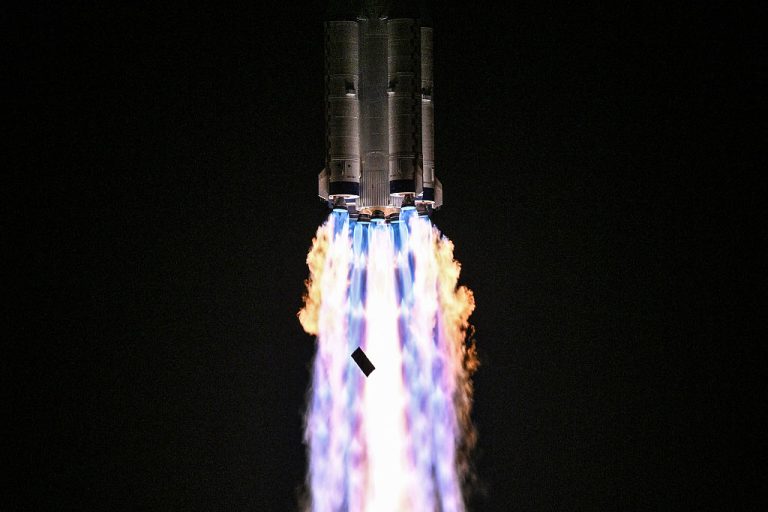
Military tensions also resurfaced after China’s navy conducted a launch of a submarine-launched ballistic missile into the Pacific Ocean earlier this month. According to Reuters, a U.S. State Department official criticized the launch, saying Beijing provided only a few hours’ notice before the test and failed to supply sufficient details through established diplomatic notification channels.
The official described the launch as “irresponsible,” adding that China’s notification “fell far short of the standards followed by the five permanent members of the United Nations Security Council” recognized under the Nuclear Non-Proliferation Treaty.
Dan Kritenbrink, former U.S. Assistant Secretary of State for East Asian and Pacific Affairs and now a partner at The Asia Group, told Bloomberg that Beijing may be displaying excessive confidence in its approach toward the Trump administration. “If China misjudges how to deal with President Trump,” Kritenbrink said, adding, “and pushes too far, it could ultimately provoke an even stronger response from Washington.”
While diplomatic contacts between the two countries appear to have resumed following the May summit, recent economic restrictions and security disputes underscore that strategic competition remains a defining feature of the U.S.-China relationship despite efforts to stabilize ties.