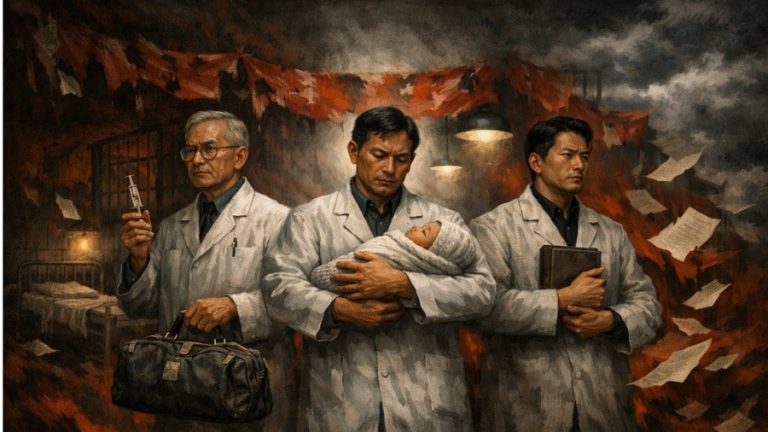
Three doctors treated Mao Zedong and his inner circle through war, the Long March, and the first decade of Communist rule. When the Party’s campaigns turned inward, their service brought no protection. One died in a maximum-security prison, one spent decades under suspicion of poisoning a Party rival, and the third lived to publish what he had seen, in a memoir banned in China.
In the Party’s early years, “red doctor” was a title of honor. These physicians carried Western medical training into the heart of the revolution, treating the wounded, delivering the leaders’ children, and keeping the Party’s military and political elite alive. That service counted for nothing once loyalty mattered more than competence. The careers of Fu Lianzhang and Jin Maoyue trace the same hard logic: each had saved the lives of powerful men, and neither could save his own when a campaign came for him.
The Party’s first ‘red doctor,’ dead in a maximum-security prison
Mao Zedong called Fu Lianzhang the Party’s first “red doctor,” and at other times its “red Hua Tuo,” after the legendary physician of ancient China. Fu was born in Fujian province in 1894, joined a Christian church as a young man, trained in Western medicine, and moved toward the Communists as left-wing ideas took hold. After the Communist uprising in Nanchang in 1927, he began treating wounded Red Army soldiers. When Mao Zedong and Zhu De led their forces into the town of Tingzhou in 1929, Fu vaccinated thousands of troops against smallpox and threw himself into the Party’s medical work.
In the years before the Communists took power, Fu treated Mao Zedong, Zhou Enlai, and the senior leader Wang Jiaxiang more than once, and he kept the general Chen Geng from losing a wounded leg. On Mao’s suggestion in 1933, he moved his mission hospital to Ruijin, founded the Central Red Hospital there, and donated years of his own savings to the effort, earning the Party’s label as the base area’s “number one model.” He kept treating leaders and soldiers through the Long March, the year-long retreat that carried the Communists to Yan’an, a remote town in China’s northwest that became their wartime base. There he was ordered to set up a central hospital for the base, and in 1938, on Mao’s recommendation, he formally joined the Party.
After the Communist victory, Fu rose through the new state’s medical hierarchy, serving as a deputy minister of health and as first deputy chief of the health administration under the Central Military Commission, the Party body that controls the armed forces. In 1955 he was given the rank of lieutenant general. The Cultural Revolution, the decade of upheaval Mao launched in 1966, turned all of it against him. Fu was branded the health ministry’s “number one capitalist roader,” the Maoist term for an official accused of steering China back toward capitalism, along with a “three-anti element” and a “Catholic Church spy.” Red Guards, the student militias Mao turned loose on his enemies, beat and denounced him. In September 1966 he wrote to Mao asking for help, reminding the chairman that he had once saved his life in Changting and Ruijin. There is no evidence that Mao intervened.
Success
You are now signed up for our newsletter
Success
Check your email to complete sign up
In March 1968, security officers seized Fu and his wife and locked them in Qincheng Prison, the facility outside Beijing reserved for high-ranking political prisoners, where he was interrogated and abused. He died there on March 29, 1968. By later accounts, he was still in heavy handcuffs when he died, the skin worn off his wrists and elbows, and his body was cremated the same day, the cremation form carrying no name, only a prisoner’s number, 6847. Not until 1975 did Mao write that Fu “should be exonerated,” and only then was his name restored. The man who had helped build the Party’s entire medical system and kept Mao alive more than once was saved by none of it.
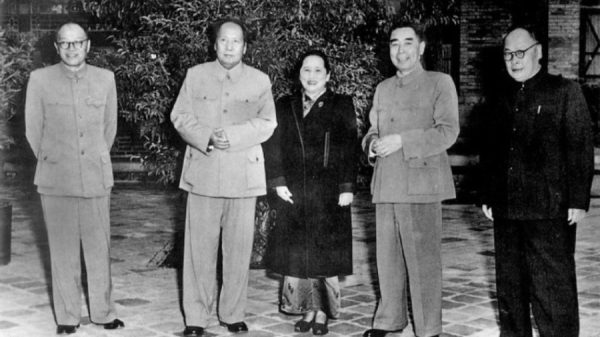
He delivered 3,000 babies for the Party elite, then a poisoning charge shadowed him
Jin Maoyue reached the revolution the same way Fu had, through medical skill the Party needed. Born in 1906 in Tai’an, Shandong province, a Hui Muslim from a family of traditional medicine sellers, Jin studied Western medicine at Cheeloo University and specialized in obstetrics and gynecology. After Japan’s full invasion of China began in 1937, he joined a Red Cross medical team, reached Xi’an, and then traveled on to Yan’an through arrangements made by the Communist official Lin Boqu and others.
Conditions in Yan’an were severe, with shortages of medicine, instruments, electricity, and sterilization equipment, and doctors had to improvise tools and compound their own drugs while treating patients and delivering babies. Assigned to the obstetrics and gynecology department of the Central Hospital, Jin delivered more than three thousand children over eight years, among them Li Na, the daughter of Mao Zedong and Jiang Qing; Lin Doudou, the daughter of the military commander Lin Biao; He Pengfei, the son of the marshal He Long; and Chen Weili, the daughter of the senior leader Chen Yun. Jin also treated Mao for a frozen shoulder. He joined the Party in 1942, sponsored by Chen Yun, and his standing rose further.
Wang Ming led a Soviet-trained faction that Mao set out to crush during the Yan’an Rectification Movement, a campaign to enforce ideological conformity and break rival power bases. When Wang Ming was hospitalized at the Central Hospital, Jin took part in his treatment. With supplies short, Jin used calomel, a mercury compound, as a purgative. A handoff between nursing shifts went wrong, the drug was given for too long, and Wang Ming showed signs of mercury poisoning. Wang Ming and his wife suspected the episode was deliberate, an attempt to harm him through Jin’s hands, and Jin went from attending physician to suspect, arrested, held, and pressured to confess, according to a later interview with his family.
Around 1971, from exile in the Soviet Union, Wang Ming published essays claiming that Jin had admitted to his face to poisoning him on someone’s orders, because Wang Ming had opposed Mao. The charge tied a medical mishap directly to the Party’s power struggle, and the timing gave it force: the Rectification was precisely when Mao was consolidating his grip and purging rivals. Jin denied the accusation for the rest of his life, insisting he had been negligent with the drug but had never poisoned anyone or acted on anyone’s orders. Archival material generally treats the episode as a medical accident caused by primitive conditions and an error in dosing and shift handoff. The distinction made no difference at the time. In the climate of the Rectification and the “rescue campaign,” a purge that hunted suspected spies and traitors, Jin was investigated and abused anyway, and only after the matter was quietly dropped did he return to medical work.
After the Communists took power, Jin followed the leadership to Beijing and held posts at Beijing Hospital and Ping’an Hospital. In 1952 he became director of a central government hospital and of Beijing Ping’an Hospital, and in April 1958 he was transferred to the Ningxia Hui Autonomous Region as a deputy director of the provincial health department and deputy head of the Ningxia Medical College. On the surface he remained inside the system with rank and position, yet the political shadow never fully lifted. Around 1960 he was investigated and criticized again, the Wang Ming case and his personal history dragged back into view. When the Cultural Revolution came, Jin was denounced, detained, and broken down in body and mind. His family suffered with him. His daughter Jin Xing, though a university graduate, was blocked for years from a normal job assignment because of her father, the guilt by association that was the common fate of intellectuals and so-called problem cadres in those years. Jin had delivered the children of the Party’s leaders and won the gratitude of Mao, Zhou Enlai, and Zhu De, and against a political campaign all of it proved fragile.
Jin retired in 1983 and died in Beijing on July 17, 1987, at the age of 81. He did not die in a Cultural Revolution prison, as Fu Lianzhang had, yet his life ran for decades under investigation and the weight of one campaign after another. He had gone from celebrated Yan’an physician to suspected poisoner, and from delivering the leadership’s children to public humiliation in the Cultural Revolution.
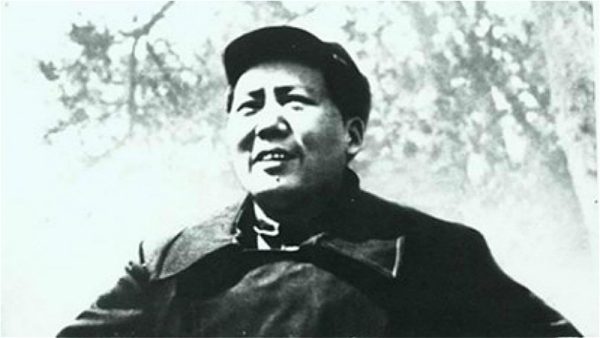
Mao’s own physician could only testify through a memoir banned in China
Li Zhisui served for more than two decades as Mao Zedong’s personal physician, watching power operate inside Zhongnanhai, the walled leadership compound in Beijing, and Mao’s body and mind decline at close range. After emigrating abroad late in life, he published The Private Life of Chairman Mao in 1994, an account of his twenty-two years at Mao’s side. The memoir became one of the best-known insider portraits of Mao’s final decades, and it caused a sensation overseas and was banned in mainland China. Western historians have corroborated some of its details against other memoirs while disputing others, and Li himself kept no medical records to support his account. Frederick Teiwes, a leading scholar of Communist Party elite politics, judged the book suspect in places yet still valuable, and showed that Li overstated how close his access to Mao had been. He escaped the prisons and the struggle sessions, the mass rallies where the accused were denounced and beaten, yet the physician who had stood nearest the center of power could leave his testimony only from outside China.
In the Party’s calculus, personal merit has never outweighed political need, and a doctor’s life-saving service can be wiped out the moment a campaign arrives. Behind the honor of the “red doctor” title lay a permanent insecurity, and a tragedy that repeated itself.