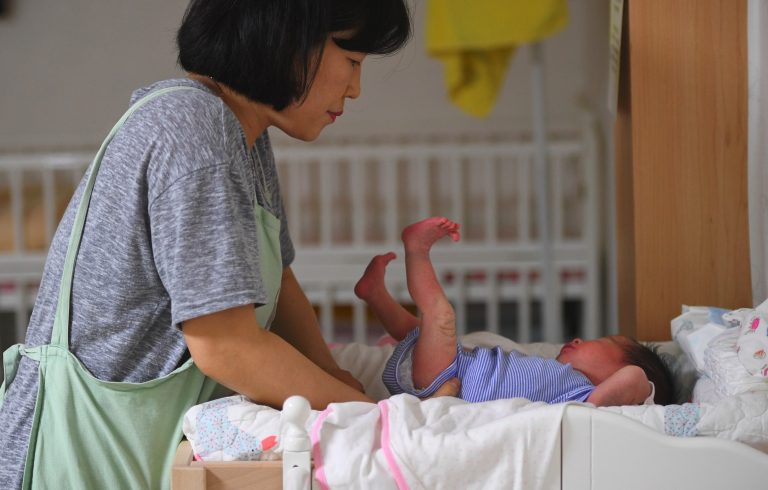
Losing a child in a kidnapping case can be every parent’s worst nightmare. That was especially the case for Korean mother Han Tae-soon, whose daughter was kidnapped and adopted before being sent to the U.S. in 1976. Over four decades later, the two have found each other again through the power of DNA testing.
Now, in 2024, Han, 70, is seeking justice against the South Korean government and the orphanage behind the adoption.
Even after reuniting with her daughter — named Laurie Bender upon her adoption — Han laments that she is distraught that she would not be able to properly speak with her daughter.
“For 44 years, I wandered and searched for my child, but the joy of meeting her was only momentary and now I am in so much pain because we can’t communicate in the same language,” Han cried.
Speaking to reporters at the Seoul Central District Court, she decried the government’s failure to stop Bender’s adoption and departure to the U.S.
Success
You are now signed up for our newsletter
Success
Check your email to complete sign up
Han also struck out against Holt Children’s Services, the country’s largest adoption agency, for performing the adoption without consultation, with the Chechon Children’s Home orphanage not doing anything to help the girl find her parents after police placed her there in May 1975, lawyers said.
“It turns out they didn’t make an effort to find her clearly existing parents and instead disguised her as an orphan for adoption abroad. I want the government and Holt to explain to us how this happened,” she added.
The lawsuit by Han was featured in a story by the Associated Press (AP) about the shady child-gathering methods and falsified records that marred South Korea’s adoption program. This suit could reignite discussion about the flaws of the program, which sent thousands of children to Western countries during the 1970’s and 1980’s.
Bender’s disappearance was the first recorded case of a Korean biological parent launching a damage suit against the government and an adoption organization for the “wrongful adoption of their child,” Kim Soo-jung, a lawyer representing Han, said.
Kim also pinned the blame on the government for the lingering child search, claiming that Bender could have easily been located if info of her disappearance had been better shared between authorities, or if the police themselves had searched orphanages.
“While the state bears the large responsibility for not fulfilling its duty to help find missing children and reunite them with their families, we also believe that the [orphanage] and adoption agency cannot be spared from responsibility as well,” Kim said.
“We suspect that these child protection institutions failed to carry out their ethical obligation to help find the child’s parents, even when the child was saying [she] had a family and had parents.”
Another lawyer, Jeon Min Kyeong, said Han is demanding approximately 600 million won ($445,000) in compensation. The lawsuit includes Han, her husband, and two younger children as plaintiffs, but not Bender.
From Shin Gyeong-ha to Laurie Bender
Laurie Bender, whose birth name is Shin Gyeong-ha, was only four when she was separated from her mother. Speaking to the AP, Bender recalled that she was in her home in the city of Cheongju when an unknown woman came to her, saying that her mother did not want her anymore because she had another baby. A saddened Bender then followed the woman, but was left in the city of Chechon, 50 miles from Cheongju.
Afterwards, she was placed in the Chechon Children’s Home a day after Han reported her as missing. Her adoption papers listed her as an abandoned orphan, her parents unknown. With a new Korean name, Baik Kyong Hwa, she was sent to the U.S. in February 1976.
After reporting the matter to the police, Han visited police stations, government offices and adoption agencies, even putting up pictures of her daughter all around.
Four decades passed and Han had yet to find her daughter. It was then she had registered her DNA with 325 Kamra, a nonprofit group that helps Korean adoptees find their long lost families through genetic testing.
Meanwhile, in the U.S., Bender’s own daughter was curious about her family’s heritage, so 325 Kamra reached out to Bender where she also took a DNA test. Weeks after confirmation, Bender and her daughter flew to South Korea. At long last, in dire tears and hugs, Bender and Han were together once again.
“It’s like a hole in your heart has been healed, you finally feel like a complete person,” she said. “It’s like you’ve been living a fake life and everything you know is not true.”
READ MORE:
- Inauguration of Korean-Chinese Service Center Marks a New Era for Immigrant Support
- Shaping the Future: The Role of Nannies in Upholding Moral Standards and Social Etiquette
- Recognizing Anxiety in Children and How to Help Them
Lost and found, the search continues
Unfortunately, Bender is among the lucky few, as it is feared that South Korea’s adoption cases continue to mount.
AP launched an investigation that showed how Seoul had worked with Western nations and adoption agencies to relocate 200,000 Korean children abroad. However, evidence is still growing that the children were being gathered through “dubious or dishonest means;” a problem that Western nations are neglecting to address, and are even encouraging South Korea to keep bringing them in.
Fellow adoptee Adam Crapser was the first to sue the government and an adoption agency in 2019 for damages from his adoption to the U.S at the age of three. He was said to have been abused by two different adoptive families before he was deported back to Korea following troubles with the law. Since then, he has been suffering severe depression in the country of his own birth.
The Seoul Central District Court eventually ordered Holt, the same agency behind Bender’s adoption, to pay Crapser 100 million Korean won ($74,000) in damages for their failure to facilitate his American citizenship. However, they did dismiss Crapser’s claims over “alleged monitoring and due diligence failures.”