MIDDLETOWN, New York — Middletown, located in Orange County, has long been shaped by cycles of rise, decline, and renewal. Once a regional center of commerce, finance, and transportation, the city experienced stagnation in mid-to-late 20th century, as industries changed, suburban development expanded, and consumer habits shifted.
Fortunately, in the 21st century, this trend has reversed! The clear indicators of economic growth are now visible across the city. Through New York State’s Downtown Revitalization Initiative, known as DRI, public infrastructure has improved, vacant buildings have found new uses, and private investment has gradually returned to the downtown area.
But for New York-based attorney, cultural strategist, and founder of The Bank Art Foundation JunHwan Chang, physical redevelopment alone is not enough. “The city needs identity.” Chang told Vision Times. “Because unless the city has identity, people do not really visit the town again and again. Maybe they can visit once, but that’s it. Then it doesn’t really give incentive to revisit the town.”
That question — what gives a city its identity? — sits at the center of Chang’s vision for Middletown. In the Hudson Valley, Beacon and Hudson are often cited as examples of how culture can reshape a city’s future. Beacon is a museum-centered model, it became widely recognized through Dia Beacon. While Hudson is a gallery and lifestyle-commerce model, it developed a cultural lifestyle identity through galleries, design shops, restaurants, and cafés. But Chang believes Middletown should not simply imitate either model, it has to move to the next stage.
Chang is a private wealth attorney based in Manhattan, with experience in foreign investment, global asset management, real estate development, and capital structuring. He travels between Korea and the United States several times a year, advising high-net-worth individuals and entrepreneurs on investment, asset movement, and business expansion. He also serves as an Adjunct Professor in the Department of Computer Engineering at ChungBuk National University in Korea, where he teaches Future Planning.
Success
You are now signed up for our newsletter
Success
Check your email to complete sign up
Chang also operates Gallery Chang, located on 55th Street in Manhattan and in Gangnam, Seoul. The gallery functions as a cultural platform connecting New York and Seoul, bringing together artists, collectors, institutions, and cultural conversations across national and regional boundaries. Through these roles as attorney, investor, educator, gallery operator, and foundation founder, Chang views cities as ecosystems where law, capital, culture, and technology intersect.
Around 2020, Chang first became interested in Middletown after being introduced to the city through a longtime acquaintance. As he began investing in downtown properties, he saw a city with underused buildings, public investment through DRI, and the possibility of stronger collaboration between public and private sectors. In 2021, Chang acquired the former Chase Bank building at 135 North Street. Once a symbol of regional finance, the large bank branch had become less necessary in an era of digital banking and post-pandemic shifts in consumer behavior.
For Chang, the empty bank building raised a larger question: what should replace a financial institution when it leaves the center of a city?
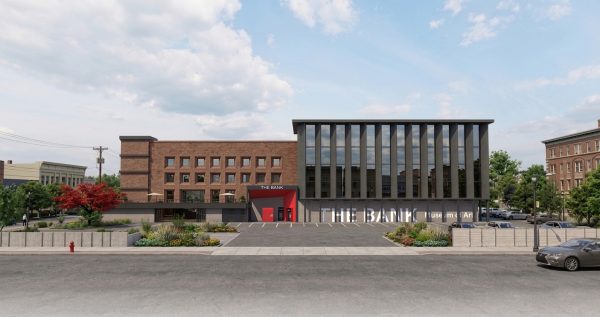
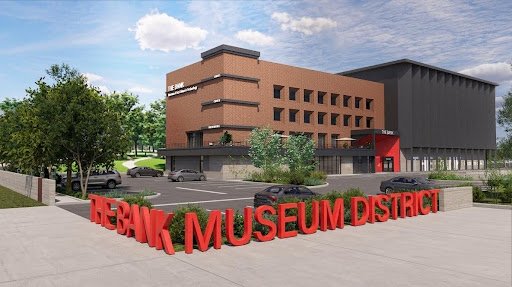
His answer was The Bank Museum District, a long-term cultural redevelopment project led by The Bank Art Foundation, the nonprofit organization he founded. The project is being developed with a target opening in 2029, but Chang emphasizes that it should not be understood as a single building that will suddenly appear several years from now. The cultural experiment has already begun.
At First House, located at 16 Grove Street, a new artist participates each month in a House Residency program, living and working in a residential setting while engaging with the local community. Another space, Works, located at 29-33 Center Street, is expected to begin full programming this summer with exhibitions, talk concerts, artist conversations, and experimental cultural events. If First House is a space for residency and creation, Works will serve as a public platform where those ideas meet the community.
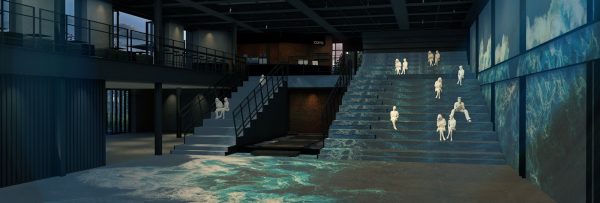
Together, these spaces form the early structure of The Bank Museum District before the main museum opens. For Chang, this is essential. The project is not about placing one cultural building inside Middletown. It is about transforming parts of the city into a connected cultural campus where residency, exhibition, performance, education, technology, and local commerce can operate together. In his view, the city itself must become an experience. “What I’m trying to do with the Bank Museum District is to be a cultural destination.” Chang said, “Like when people, for the weekend they say, ‘Hey, let’s go to Middletown!’ Because they have a unique culture. That is, that is what I mean by cultural destination. Not just a museum. When we go there, we can enjoy different cultures.”
The symbolism of North Street is central to that vision. In the past, Chase Bank stood at one end of the street and TD Bank at the other. Both represented the financial and commercial life of the area. Today, the former TD Bank has been transformed into Equilibrium Brewery, one of Middletown’s recognizable destinations. A financial space has become a lifestyle space where people gather and spend time. Now, at the opposite end, the former Chase Bank is being prepared as the central cultural anchor of The Bank Museum District.
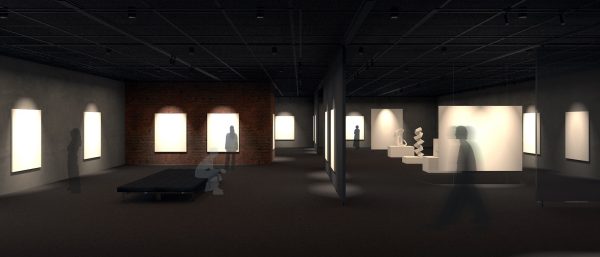
If galleries, performances, food and beverage, entertainment, housing, and commercial spaces continue to develop between these two anchors, Chang believes North Street can become more than a road. It can become Middletown’s cultural economy axis, a district where multiple experiences support one another and gradually change how the city is perceived.
Chang is careful not to claim that Middletown has already become the next great cultural destination. Instead, he sees value in the fact that the city is still forming its identity. Completed cities are difficult to reinvent, but cities that are still searching for their identity can become laboratories for the future.
The challenges are real. Beacon and Hudson built their identities over many years. Middletown will need long-term programming, stable operations, collaboration with local government and businesses, and participation from residents. A cultural space alone cannot transform an entire city. But a well-designed cultural anchor, connected to a broader urban structure, can change the direction of a city.
From Chang’s point of view, the next phase of Middletown’s development is not simply about construction, renovation, or investment. It is about narrative. As former financial buildings become cultural spaces, Middletown’s story is shifting! What once represented money and banking may soon represent art, technology, community, and imagination. For Chang, that is the meaning of “Beyond Beacon.” Middletown does not need to become a copy of another city. It needs to become itself.