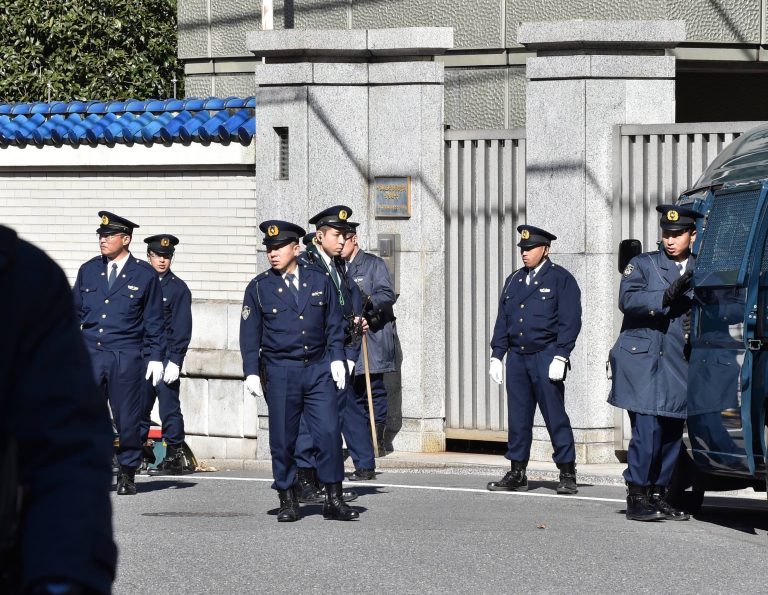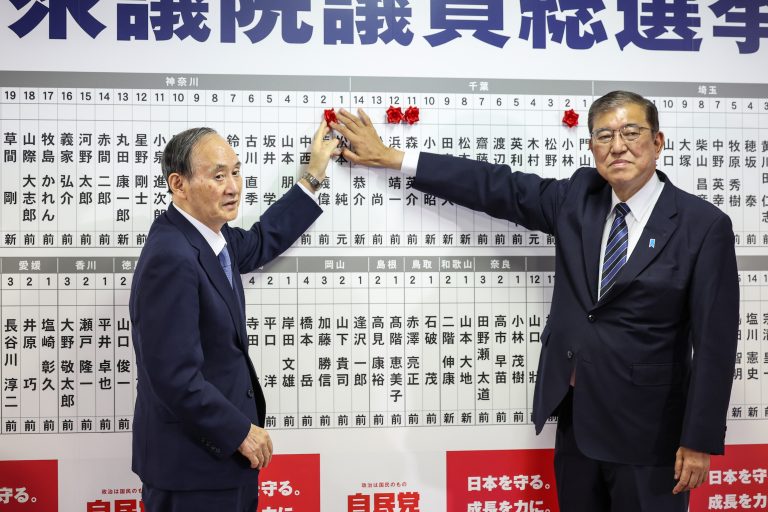
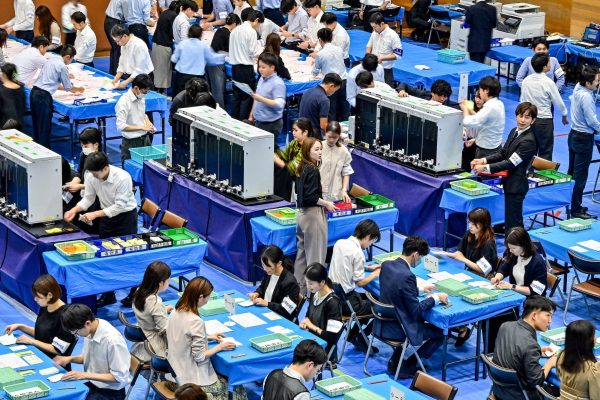
The Japanese Liberal Democratic Party (LDP), which has dominated governance of the country since 1955 with few breaks in between, was dealt a serious blow in lower-house parliamentary elections held throughout Japan on Oct. 27 (Sunday).
By early Monday, it was clear that the LDP and its coalition partner Komeito would not secure enough seats for a majority government.
The up-and-coming Constitutional Democratic Party of Japan (CDPJ) won over three-quarters the amount of seats as the LDP, while other opposition parties also made significant gains.
It’s the first time since 2009 that the LDP has not enjoyed a majority government, and active negotiations between the parties are in progress.
Part of the reason for the LDP’s striking setback was a slush-fund scandal implicating much of the party leadership, including the faction of powerful former prime minister Shinzo Abe, who was assassinated in 2022.
Success
You are now signed up for our newsletter
Success
Check your email to complete sign up
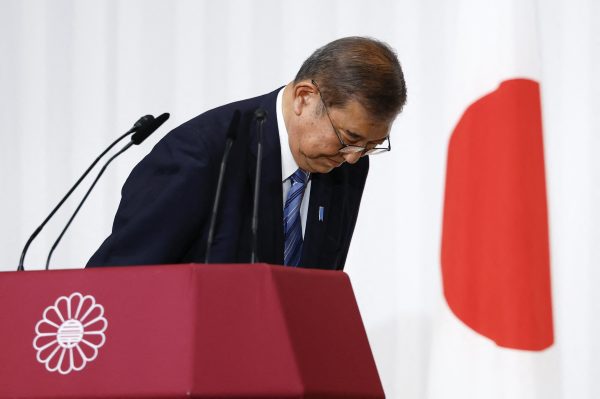
The scandal had driven sitting Prime Minister Fumio Kishida of the LDP to resign; replacing him was liberal populist Shigeru Ishiba, who assumed office on Sept. 27.
- South Korea’s President Yoon and Ruling Party Suffer Legislative Election Loss in Setback for Anti-Communist Politics (April 2024)
- ‘Liberal Populist’ Ishiba Takes Reins as Japan’s New Prime Minister
General election and platforms
Ishiba ordered the dissolution of the Japanese House of Representatives, leading to a general election in all constituencies. The House is the lower chamber of Japan’s parliament — the National Diet — and has 465 seats.
The LDP, which is traditionally conservative (but owing to its size is host to a number of political factions within its leadership), campaigned on a platform of regaining public trust in the wake of the slush funds scandal by investigating the offenses and establishing a new “Political Reform Headquarters” to rehaul the system going forward.
Otherwise, the LDP espoused a largely centrist agenda in its 2024 election manifesto, calling for continued subsidization of high-tech research, achieving carbon neutrality by 2050 including through the utilization of nuclear power, and strengthening the U.S.-Japan military alliance.
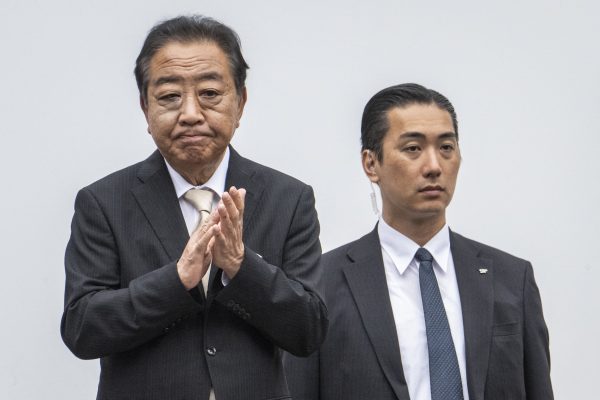
By contrast, the CDPJ, which represents a center-left agenda, vowed to “take the lead in drafting specific measures to drive serious political reform that the LDP cannot achieve,” as stated in an unofficial translation of its party manifesto.
The CDPJ manifesto also contained language supporting higher minimum wages, worker rights, decarbonization, and progressive causes such as “diversity and inclusiveness,” same-sex marriage, gender equality, and making Japan a more “multicultural society.”
While some in the LDP have called for expanding Japan’s military capabilities, the Constitutional Democrats have taken a more dovish stance, arguing for a “strictly defensive military policy.”
The CDJP manifesto, unlike the LDP, did not mention relations with Taiwan, the democratically governed island that is claimed by Communist China. Taiwan is near the Japanese southern islands of Okinawa and oversees a crucial sea lane that Japan uses for trade.
The LDP lost a shocking 60 seats in the election, bringing its total including coalition seats down to 215, short of the 233 needed for a majority government.
Opposition parties rise
Results of the election represented a broad victory for Japan’s left-wing parties, while other minor parties saw boosts.
Concurrently, on Oct. 30 the Tokyo High Court, following courts in Sapporo and Nagoya, ruled that bans on same-sex marriage are unconstitutional. However, the Japanese Supreme Court has yet to rule on the matter.
The CDJP won 148 seats, a massive gain of 50. However, three years of efforts by the party to forge an alliance with the Japanese Communist Party (JCP) at the expense of engaging other opposition parties have been seen by some observers as a strategic error.
“If the CDP[J] spent all that time and resources on the DPFP and Ishin instead, we would probably have gotten a CDP-led government by now,” a Japanese netizen posting on X wrote on Oct. 29.
The JCP, which rejects authoritarian Marxism-Leninism, espouses a left-wing platform closer to the social democratic parties in the West. However, it won just 8 seats, down from 10 in the previous election.
Coming in third place is the libertarian Ishin, or Japan Innovation Party, which won 38 seats. The Ishin, which has begun fragmenting into left and right wing camps, advocates greater decentralization, including schemes for a federalization of the country in order to reduce the influence of Tokyo, the capital.
Ishin, which won 38 seats and is popularly regarded as the party of Japan’s second-biggest city Osaka, also advocates large tax cuts, legalization of same-sex marriage, and — in contrast with the left-wing parties — stricter immigration controls. In foreign policy, it advocates greater military cooperation with the U.S. while making Japan a “self-reliant nation” with greater agency “on the international stage.”
Fourth place was the DPFP or Democratic Party for the People, which ran on a pro-social welfare and economic reform platform, and won 28 seats.
The left-wing, anti-establishment Reiwa Shinsengumi (“newly-elected Group of the Reiwa Imperial Era), which advocates progressive social policies and a reassessment of Japan’s relationship with the U.S., won 9 seats.
Sanseito (Political Participation Party), a far-right party, won three seats, while the more moderate Conservative Party won its first-ever parliamentary seat.