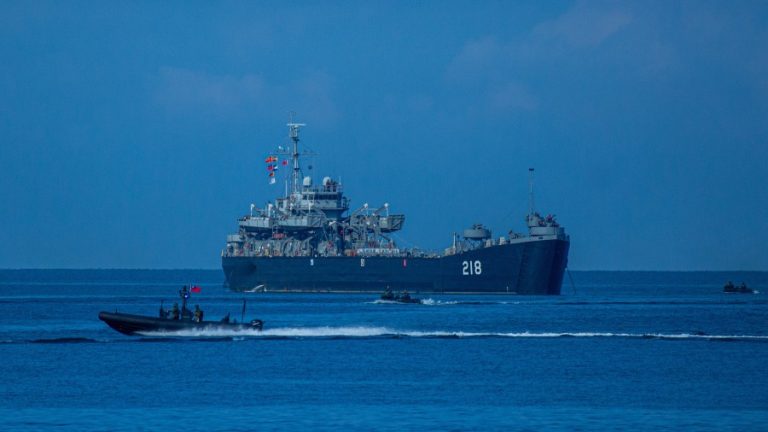
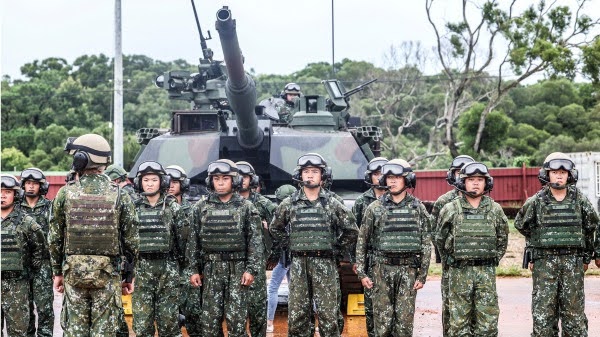
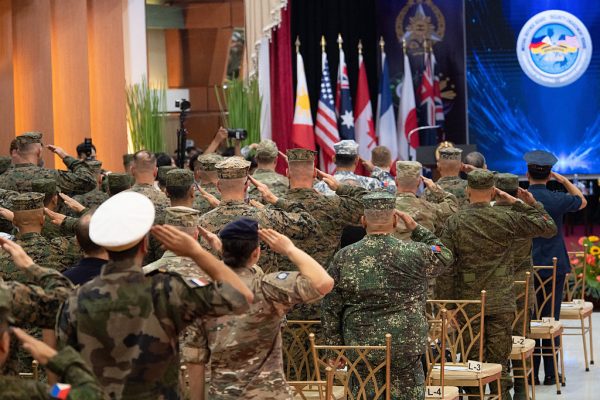
The 19-day Balikatan multinational military exercises, which concluded in the Philippine archipelago and the South China Sea on May 8 (Friday), reflected the growing emphasis on multi-domain coordinated deterrence in the Indo-Pacific region, according to military and geopolitical analysts.
Balikatan 2026 marked a significant expansion from previous editions. In addition to the long-running joint exercises between the United States and the Philippines under the 1951 U.S.-Philippines Mutual Defense Treaty, this year’s drills involved 17,000 personnel from seven nations, along with observers from several other countries.
The exercises included coordinated operations across multiple military domains, including cyber defense, space operations, maritime security, missile systems, and joint aeromedical evacuation.
“Balikatan 2026 (BK26) marks the 41st iteration of the exercise that covers a range of scenarios – from conventional warfare to foreign disaster response – ensuring all participants remain prepared for a range of contingencies,” the Defense Visual Information Distribution Service said, noting that the integrated approach enhanced planning, logistics, communication, and command-and-control capabilities through realistic simulations and war-gaming.
Philippine Army Gen. Romeo S. Brawner Jr., chief of staff of the Armed Forces of the Philippines, said the exercises represented more than routine military cooperation.“ It was about strengthening the ability to respond together in real, complex conditions. And that matters because in today’s security environment, readiness cannot be improvised,” he said in a joint statement released by the U.S. Indo-Pacific Command.
Japan: From observer to participant
Success
You are now signed up for our newsletter
Success
Check your email to complete sign up
Japan took part in Balikatan on an unprecedented scale, transitioning from observer status last year to deploying 1,400 combat troops in 2026. Analysts said the move reflects the emergence of a more integrated regional approach to Indo-Pacific security and collective deterrence.
The country’s Self-Defense Forces — Japan does not officially have a military — test-fired its Type 88 surface-to-ship missile system during the exercises and deployed ships and aircraft for bilateral and multilateral maritime patrols.
It was the first time Japan had deployed combat troops outside its territory since World War II. Other participating nations included Australia, France, New Zealand, and Canada.
“So Japan’s joining the Balikatan exercises signifies that there’s a more integrated regional approach to defense here, that Japan understands that there’s a collective deterrence here, where everyone’s security is interdependent,” Sasha Bonafede Chhabra, a Taipei-based geopolitical analyst, told Vision Times.
“Japan security, Philippine security, Taiwan security, they all matter, and you can’t rely on just yourself, so there has to be an integration.”
Japan’s expanded participation was made possible after the ratification of a Reciprocal Access Agreement on Sept. 11, 2025. The deployment marked Japan’s first combat troop presence in the Philippines since World War II, while the live missile firing operation alone involved 70 Japanese personnel.

The missile exercise, conducted May 6, targeted a decommissioned Philippine ship approximately 75 kilometers away in a part of the South China Sea that is also known as the West Philippine Sea.
Retired Air Marshal Anil Khosla, former vice chief of the Indian Air Force, described Japan’s role as a turning point in regional security cooperation.
This was the “end of the ‘observer’ era,” Khosla said. “It reflects that Japan is normalising greater overseas engagement, improving interoperability, and exercising capabilities (e.g., counter-landing, missile strikes) relevant to defending its southwestern islands and supporting allies.”
Indo-Pacific focus shifts toward the Philippines
While Balikatan itself is not new, analysts said the growing multinational participation reflects the Philippines’ rising strategic importance in the Indo-Pacific security architecture.
“Balikatan 2026 marked a strategic evolution from a bilateral exercise to a full-scale, multinational mission rehearsal for the defense of the Philippines,” U.S. Navy Adm. Samuel J. Paparo, commander of the U.S. Indo-Pacific Command, said in a joint statement.
“That growth reflects the security environment. It reflects the sovereign choices of free nations.”
Several participating countries have recently signed or expanded defense agreements with Manila. France signed a Status of Visiting Forces Agreement in March 2026, while New Zealand signed a similar agreement in April 2025. Japan expanded defense ties under the Reciprocal Access Agreement approved by the Japanese parliament in 2025, and Australia signed a statement of intent for a new Defense Cooperation Agreement in August 2025.
The Philippines is also negotiating a Visiting Forces Agreement with Canada and has strengthened alliance coordination with the United States through missile deployments, special operations exercises, and enhanced deterrence initiatives.
Khosla described the Philippines as a growing “geographic pivot” in the region, citing increasing tensions between Manila and Beijing in the South China Sea.
“Its position on the First Island Chain makes it crucial for access to the South China Sea, the Luzon Strait, and the approaches to Taiwan. EDCA [Enhanced Defense Cooperation Agreement] sites and northern drills enable forward positioning, missile/drone deployments, and rapid response,” he said.
During a visit to the Philippines in late March, U.S. Defense Secretary Pete Hegseth said Washington’s commitment to strengthening Manila’s deterrence capabilities against security threats, including Chinese aggression, remained “ironclad.”
Chhabra said the Philippines’ democratic system and geographic position make it central to regional security strategy.
“It’s an ally of the United States, of Japan, increasingly, of Taiwan and of Australia,” he said. “This is a country that’s very, very central to not just a free and open Indo Pacific, but the defense of its neighbors. You know, if Taiwan falls, the Philippines is not safe. And to defend Taiwan, you need to operate, increasingly, from the Philippines as well as from Japan.”