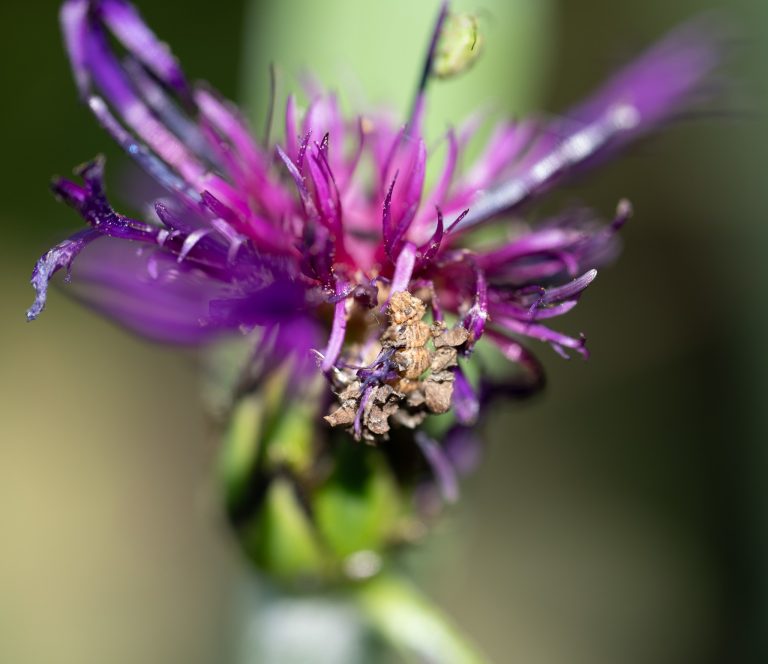
You’re probably familiar with the idiom “don’t forget to stop and smell the roses,” reminding us to slow down and enjoy life. Well, if you go so far as to stop and contemplate each of the flowers in your path, you could be in for a delightful surprise. Every now and then, you’ll find that some bits of the flowers appear to be moving! That’s right, mobile petals creeping around just as if they had feet. In fact, they do have feet — belonging to a clever caterpillar called the camouflaged looper.
Loopers are inchworms in a large family of moth species known as geometrids. During their larval stage, these caterpillars move around by attaching their front legs to a surface, and arching their backs to bring their hind legs forward. Once their hind legs are secured, they stretch out their front legs and repeat the process, each time forming the “loop” that they are named for.
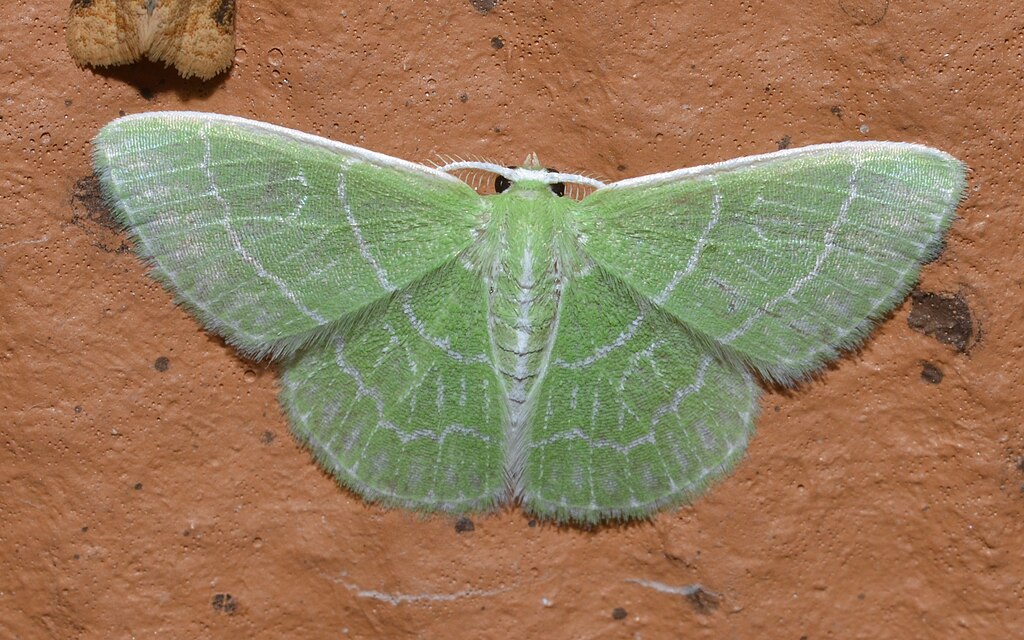
After a pupal stage (often through the winter), the emerald moth emerges. These partially-nocturnal feeders only live 10 to 12 days; but during their brief life — sustained by the nectar of flowers — they mate and the females lay between 300 and 600 eggs.
Most geometer moth larvae feed on tree leaves, and they can do considerable damage; but the cabbage looper (a common agricultural pest), is actually a member of a different moth family called Noctuidae.
Going undercover
Most caterpillars are easy prey for predators like birds, ladybugs and parasitic wasps. Of the 35,000 looper species in the world, many are good at disguise — but the camouflaged looper takes this trick to a whole new level.
Success
You are now signed up for our newsletter
Success
Check your email to complete sign up
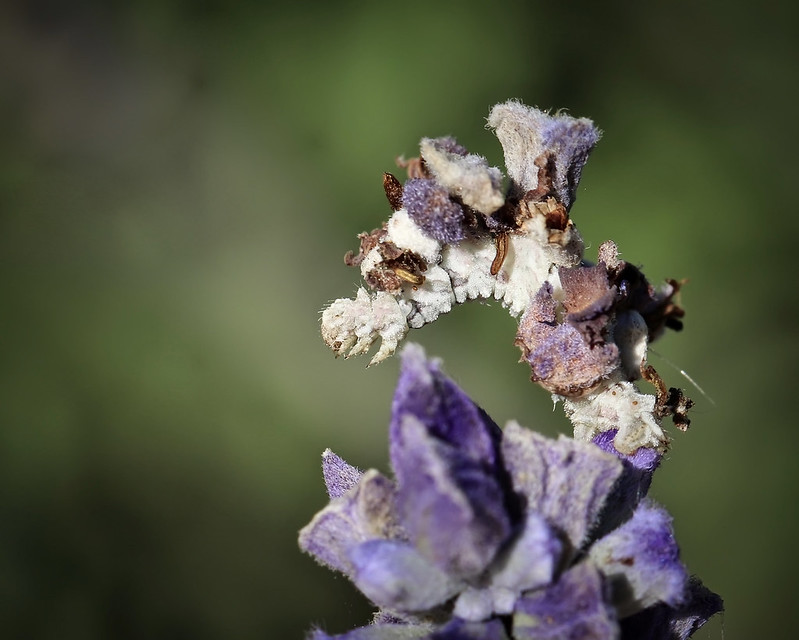
While feeding on flowers, this inchworm takes pieces of petals, and, with its gluey spit, sticks the pieces to the spines on its back. This “spit” also preserves the plant material so that it appears fresh and lifelike. Should any pieces fall off or become wilted, the inchworm promptly replaces them.
When the camouflaged looper needs a new disguise, it just removes the old one and replaces it with pieces of a new flower to match its surroundings.
In a research paper published in 1979 by The Journal of the Lepidopterists’ Society, Dr. Miklos Treiber, of the University of North Carolina, explained how he would remove flower parts from an inchworm in captivity, testing how fast it would replace its disguise.
By moving the inchworms from one type of flower to the next, he found that they would continue to eat as they applied their disguise, switching “between bites of food and bites of costume.” But the camouflaged looper’s disguise is not necessarily limited to plant material.
Chris Helzer of science website Cool Green Science witnessed how adaptable a camouflaged looper can be. As he was looking for insects at the Niobrara Valley Preserve, he found a camouflaged looper and a sunflower for photographic subjects. He put the sunflower in a jar of water with the looper and covered the jar with a paper towel. Then he left them alone, expecting the looper to change its camouflage.
When he checked his subjects the next morning, the looper had actually used bits of the paper towel instead of the sunflower!
“It was taking advantage of its surroundings and blending in with what was there. I love it even more now!” Helzer wrote.
The camouflaged looper is not the only creature capable of creating costumes.

The decorator crab, similarly, plucks pieces of seaweed, coral, rocks or even other sea creatures to blend itself in with the ocean floor. The bristles all over its body, also called setae, function much like Velcro for holding the disguise in place.
The larvae of the green lacewing are even more opportunistic in their creative disguise. Besides bits of debris, they use the carcasses of their prey (aphids) to fool their own predators — especially ants, which will kill them to defend the aphids that they farm for their honeydew secretions.
What a fascinating world we live in, if we only take the time to experience it in detail!
READ MORE: